University Records Center Mobile Compact Shelving Layout: 7 Standards for Inactive Archives
📑 Table of Contents
- Introduction
- 1. Core Traits and Pain Points of University Inactive Archives
- 2. University Records vs. Corporate Records: Storage Layout Differences
- 3. Traditional Cabinets vs. Mobile Compact Shelving: Capacity Compared
- 4. Compact Shelving Layout Design for High‑Volume Low‑Frequency Records
- 5. Zoned Archiving Layout Standards for University Records Centers
- 6. Compact Shelving Selection for Inactive Archive Scenarios
- 7. Long‑Term Sealing and Maintenance Standards
- 8. Frequently Asked Questions
- Conclusion
- University Records Center Project Inquiry
Introduction: Mobile Compact Shelving Layout for University Records Centers
Why a University Records Center Needs a Layout Built for Inactive Archives
University records centers accumulate massive volumes of student records, historical administrative documents, research project archives, and governance files. Of these, more than 80 percent are low‑frequency records that need long‑term or even permanent retention. Year after year, these files stack up. Traditional scattered cabinets waste aisle space, limit room capacity, and quickly lead to mixed storage, full rooms, and damp‑damaged legacy documents. Renting off‑site storage or stacking files temporarily cannot meet the standardized archiving and long‑term compliance requirements of a modern university.
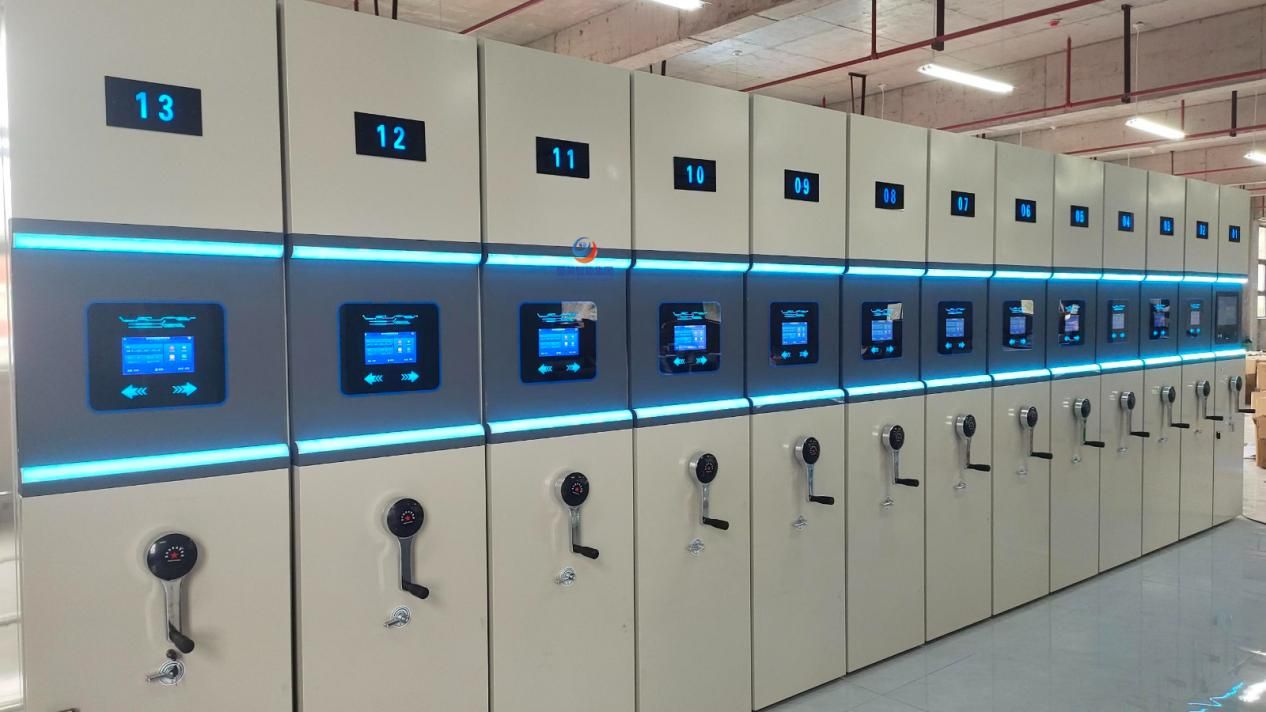
Built specifically for the high‑volume, low‑frequency, long‑retention reality of university records, a well‑designed mobile compact shelving layout unlocks dense storage, dynamic‑static zoning, and sealed dust‑proof and moisture‑proof structures. Without extending walls or adding new floor space, the right mobile compact shelving layout doubles the room's capacity and safely absorbs the long‑term bulk sealing of inactive archives. It is the preferred choice for record center projects at modern universities, vocational colleges, and research institutions.
1. Core Traits and Pain Points of University Inactive Archives
University inactive archives are the closed, very‑low‑use, long‑term or permanent retention files that form the bulk of every university record room. Their storage pain points are unique to the academic sector and differ sharply from any commercial archive scenario.
1.1 Massive Inactive Archive Volume, Continuously Increasing
Every graduating class adds student records; every year adds administrative documents, closed research projects, legacy admissions files, and institutional history archives. The base volume is already large, and the growth is steady and stable. Ordinary cabinets fill up in three to five years and cannot absorb long‑term archive growth.
1.2 Extremely Low Retrieval Frequency for Inactive Archives
Inactive archives are only retrieved occasionally for transcript re‑issuance, historical verification, university history compilation, or special tracing. Daily usage is close to zero. Traditional archive rooms, designed for high‑frequency access with wide aisles and many empty slots, waste space on a massive scale.
1.3 Long Retention Cycles, Demanding Storage for Inactive Archives
University student files and institutional history archives are required to be kept permanently or for many decades by law. Old paper records are fragile, the ink fades easily, and open storage invites dust, moisture, and light‑induced aging. Long‑term open storage leads to damage and loss and cannot meet long‑term traceability needs.
1.4 Mixed Old and New Records Crowd Out Active Storage
Without a dedicated zoning layout, large volumes of old inactive archives are piled haphazardly and mixed with active files. They occupy high‑frequency space, slow down retrieval of current files, and turn the archive room into an unmanaged mess.
1.5 Scattered Layout, No Bulk Standardization
Traditional standalone cabinets are spaced apart and arranged in pieces. They cannot support bulk sorting, batch sealing, or unified custody. This blocks university records from being managed to standardized and digital ledger standards.
2. University Records vs. Corporate Records: Mobile Compact Shelving Layout Differences
Many archive rooms copy corporate or audit‑firm layouts that do not fit universities at all. Core needs, retrieval frequency, and layout logic are fundamentally different. This drives the differentiated design of the mobile compact shelving layout:
| Comparison Dimension | Corporate / Audit Archive | University Records Center | Layout Design Focus |
|---|---|---|---|
| Archive Activity | Medium‑high; monthly / quarterly retrieval | 80%+ low‑frequency inactive archives | University prioritizes sealing over high‑frequency access |
| Core Need | Fast retrieval, audit traceability, efficient search | High‑volume storage, long‑term retention, complete sealing | University maximizes capacity and long‑term protection first |
| Retention Period | Mostly 5–10 years | Often decades or permanent | Reinforced sealed, dust‑proof, moisture‑proof, anti‑aging design |
| Space‑Waste Pain Point | Cumbersome retrieval paths | Redundant fixed aisles, low space utilization | University focuses on eliminating unused aisle space |
| Zoning Logic | By retrieval frequency | By year, confidentiality, activity level | University separates active and inactive zones |
This shows that a university records center must adopt a mobile compact shelving layout built around high‑volume sealing, not a high‑frequency retrieval layout, to genuinely fit the campus records management scenario.
3. Traditional Cabinets vs. Mobile Compact Shelving: Capacity Compared
Under the same room area and the same ceiling height, different storage devices vary dramatically in how much high‑volume inactive archive they can absorb. This directly decides the ceiling for university archive expansion and the level of archiving standardization:
| Storage Option | Space Utilization | Bulk Storage Capacity | Long‑Term Sealing | Archive Standardization | University Fit |
|---|---|---|---|---|---|
| Traditional standalone filing cabinet | 35–40% | Weak; scattered layout, limited capacity | Average; open design, easy to damp and dust | Poor; stacking and mixing easy | Not suitable; cannot absorb high‑volume stock |
| Fixed multi‑layer shelving | ~45% | Medium; bulk storable but aisle‑wasteful | Average; no sealed enclosure | Medium; zoning difficult | Barely suitable; long‑term expansion insufficient |
| Manual mobile compact shelving | ~75% | Strong; whole‑room dense storage | Excellent; fully sealed long‑term protection | High; refined zoned sealing | Best fit; outstanding value |
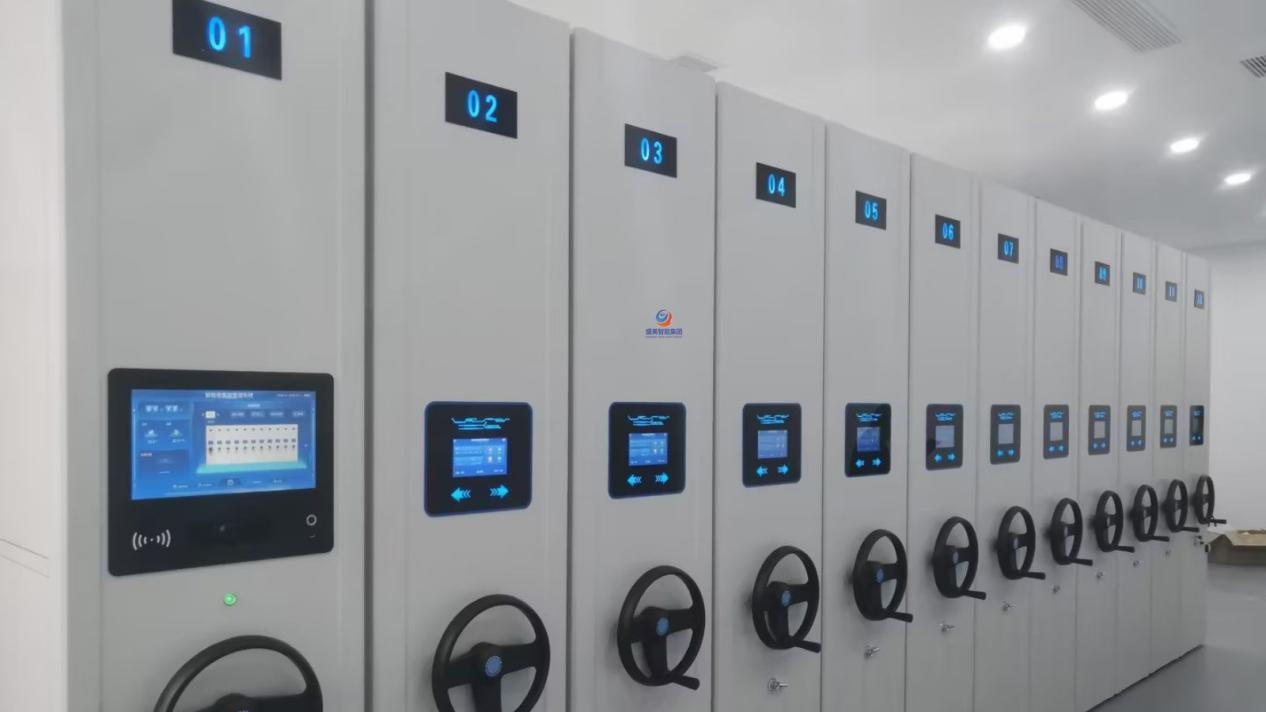
| Smart mobile compact shelving | 80%+ | Maximum; space used to the full | Top‑tier; environment‑linked control | Highest; traceable digital ledger | Fits key universities and confidential archives |

4. Mobile Compact Shelving Layout Design for High‑Volume Low‑Frequency Records
For university inactive archives—high volume, low retrieval, long retention, batch archiving—the mobile compact shelving layout logic must put high‑density consolidation first, with a small active zone second. This maximizes the storage potential of the room. The full plan can be deployed in any university or college records center.
4.1 Long Continuous Compact Rows in the Mobile Compact Shelving Layout
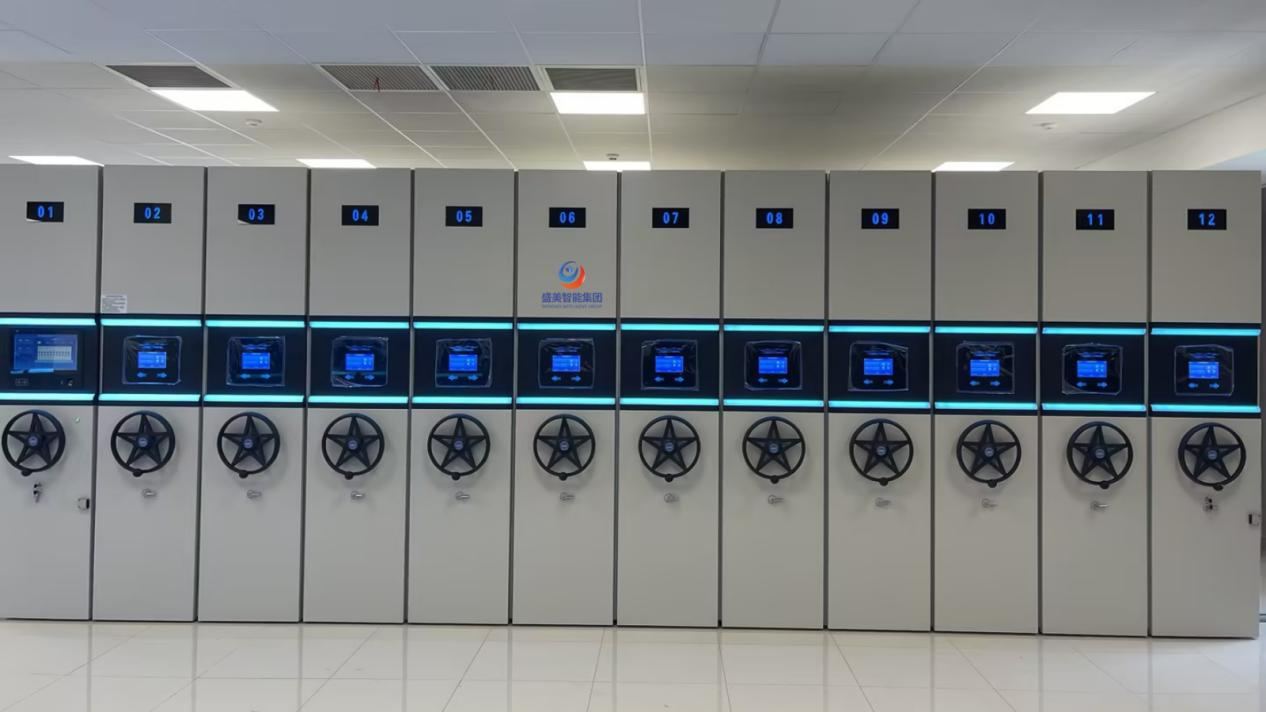
Drop the scattered single‑cabinet layout. Use long, continuous compact shelving rows across the entire room. Eliminate the gaps and dead slots between cabinets. With the sliding mechanism, multiple fixed aisles become a single dynamic access aisle. More than ninety percent of the room area becomes effective storage space, dedicated to bulk inactive archive storage.
4.2 Vertical Layout: Fine‑Tuned Layering to Full Ceiling Height
Adjust each shelf spacing based on the standard height of university archive boxes, student files, and administrative ledgers. Eliminate empty layer waste. Use the vertical ceiling height fully. Every layer is fully fitted and precisely matched, lifting single‑unit storage capacity and absorbing decades of archive growth.
4.3 Narrow Aisles for Low‑Frequency Inactive Archive Retrieval
Different from wide‑aisle high‑frequency office archive rooms, university records centers can moderately narrow the aisle to a width that allows one person to operate normally. Without compromising basic retrieval, narrower aisles free up more storage space, fitting low‑frequency use. Note: aisle widths must still comply with local fire codes and emergency egress standards so that people can evacuate quickly in an emergency.
4.4 Space Ratio: 8:2 Active‑Inactive Zoning
Adopt the 80 percent inactive sealing zone plus 20 percent active retrieval zone golden ratio inside the mobile compact shelving layout. The vast majority of the space is used to bulk store legacy, historical, and closed inactive archives. A smaller prime area near the entrance holds current‑year, high‑frequency, in‑progress archives. Active and inactive zones stay separate and never interfere with each other.
5. Zoned Archiving Layout Standards for University Records Centers
Combined with university records management standards and the nature of inactive archives, this standardized four‑zone mobile compact shelving layout is clean, easy to seal for the long term, and supports occasional traceability retrieval:
5.1 Main Bulk Inactive Archive Zone (Core Area)
Occupying the core majority of the room, this zone centrally stores past‑year student records, historical administrative documents, closed research project files, expired admissions ledgers, and prior institutional history archives. Sorted by year and category, batch sealed, this zone fits the long‑term zero‑maintenance sealing model.
5.2 Annual Active Records Zone (Near‑Entrance Area)
Set near the room entrance at convenient mid‑layer operation heights, this zone holds current‑year freshman files, in‑progress administrative materials, current research documents, and un‑archived work in progress. Easy to organize, enter, and archive daily. Once a year is closed, files transfer into the inactive main zone for sealing.
5.3 Institutional History and Confidential Archive Zone (Independent Locked Area)
This separate zone houses valuable institutional history documents, confidential research materials, and special project archives. Use independent shelving, dedicated labeling, and—for smart systems—dedicated access permissions. Private sealing, secure retention, fits university confidentiality needs.
5.4 Temporary Processing Zone (Edge Area of the Compact Shelving Layout)
Use the corners and leftover space for a temporary processing zone. Sorting, classifying, binding, and entry work happens here so the main archive zones stay tidy and sealed.

6. Mobile Compact Shelving Selection for Inactive Archive Scenarios
University inactive archives prioritize high‑volume sealing, low‑frequency operation, and long‑term preservation. Selection does not need to chase high‑frequency smart features. Focus on stability, strong load capacity, good sealing, and high value. Two selection tracks fit precisely:
6.1 Manual Mobile Compact Shelving
Fits the vast majority of university records centers. Smooth sliding, stable structure, even load, sealed dust‑proof and moisture‑proof. Meets bulk high‑density storage and long‑term sealing. Easy to maintain, outstanding value. Fully adapts to low‑frequency retrieval and long‑term retention in the campus archive scenario. This is the mainstream choice for university archive renovation and new builds.
6.2 Smart Mobile Compact Shelving
For very large archive volumes, confidential institutional history and research materials, and standardized ledger needs, smart shelving supports zoning management, operation logs, environment monitoring, and access control. On top of high‑volume sealing, it enables standardized, intelligent, traceable archive management and meets high‑tier compliance standards.
7. Long‑Term Sealing and Maintenance Standards for University Inactive Archives
Inactive archives sit sealed for many years. They need a simple, long‑lasting, low‑maintenance management mechanism to stay intact for decades:
7.1 Annual Batch Archiving and Yearly Zoned Sealing of Inactive Archives
Each year, closed archives are sorted, labeled, and zone‑sealed together. Sorted and stored by year, no mixing of old and new, so future traceability retrieval is straightforward.
7.2 Fully Sealed Day‑to‑Day Storage
The inactive archive zones keep bay closed in daily operation. This reduces airflow, dust buildup, and light contact, slowing deterioration and aging of paper and ink.
7.3 Quarterly Environment Inspection
Check the room humidity and ventilation on a regular schedule. Keep the room dry and clean to avoid mildew and damp damage during southern rainy and humid seasons.
7.4 Synchronize the Archive Ledger
Paper archiving and the digital ledger stay in sync. Each file carries sealing year, archive type, and storage zone. This creates a ledger‑based positioning and rapid traceability system, solving the low‑frequency search problem.
7.5 Periodic Full Inventory of Inactive Archives
A full inventory once per year checks the integrity of sealed archives, storage neatness, and quickly flags damage, misplacement, or loss.

8. Frequently Asked Questions
University inactive archives are files whose business process has ended and whose daily retrieval frequency is very low, but which education records regulations require to be retained. Examples include past student records, graduate transcripts, closed research reports, and old administrative documents. Each file is small, but the total is huge. When mixed with active archives, they quickly crowd out active storage space. That is why a high‑density mobile compact shelving layout is needed to set aside a dedicated inactive archive zone for batch archiving.
University inactive archives prioritize store‑fit‑all, keep‑for‑ages, and occasionally find. A mobile compact shelving layout removes fixed main aisles, turning saved floor space into storage slots. The same area stores two to three times more files than traditional cabinets. Sealed rows with dust‑proof and moisture‑proof strips keep low‑frequency legacy archives flat and clean through decades of sealing, exactly matching university long‑term archiving needs.
Normal archive rooms emphasize high‑frequency retrieval efficiency. University records centers prioritize high‑volume low‑frequency sealing. The mobile compact shelving layout maximizes space use, refines layered zoning and batch sorting, prioritizes long‑term protection and retention, reserves multi‑year growth space, and de‑emphasizes high‑frequency access. It is a high‑volume, tidy, long‑term, safe archiving layout.
No. With a high‑density mobile compact shelving layout design, storage capacity doubles without extending walls or adding new area. It fully absorbs high‑volume inactive archive storage, fitting the renovation and upgrade of legacy university records centers.
Standard universities and vocational colleges should pick manual mobile compact shelving for the best value, stability, durability, and fit for low‑frequency sealing. Key universities with confidential institutional history and research records can opt for smart mobile compact shelving, gaining permission control and smart ledger management.
Conclusion
The real storage pain point in a university records center has never been a one‑off retrieval speed problem. It is the high volume of university inactive archives, the saturation of room capacity, the non‑standard storage practice, and the unsafe long‑term preservation. Traditional archive rooms designed around high‑frequency retrieval do not fit the reality that more than 80 percent of university records are low‑frequency sealed files. They cause massive space waste and archive management gaps.
A targeted mobile compact shelving layout design—with high‑density consolidation, active‑inactive zoning, long‑term sealed protection, and refined layering—perfectly matches the storage profile of university student records, institutional history, administrative files, and research materials. Without extending walls or adding new floor space, storage capacity grows significantly, while legacy archives are sorted, sealed for the long term, and upgraded to standardized management. The mobile compact shelving layout solves the year‑on‑year growth pressure of university archives once and for all, fits decades of long‑term archiving and retention needs, and is the standardized go‑to choice for new and renovated university records centers.
University Records Center Project Inquiry
University Records Center Project Inquiry
Need a mobile compact shelving layout drawing, an inactive archive zoning plan, or renovation parameters for a university records center? Shengmei Cabinet provides free custom layout design and project plan coordination for universities, vocational colleges, and archives worldwide.
📩 Business inquiry email: info@shengmeicabinet.com
💬 Overseas project WhatsApp: Kerwin +86 189 3280 1260