What Is a Smart Compactor Shelving System?
Definition, working principle, structure, core advantages, limitations, best-fit overseas archive scenarios, and a full comparison with manual mobile shelving and static shelving.
In the construction of archive repositories for large overseas archives, hospitals, universities, and law firms, smart compactor shelving is the core hardware that combines high-density storage with digital management. Many procurement leads ask: what exactly is smart compactor shelving, and how does it differ from manual compactor shelving or ordinary static shelving?
Put simply, a smart compactor shelving system is an integrated archival storage unit built on the mechanical structure of mobile compactor shelving, equipped with motor drives, an electronic control system, and the ability to connect to archive management software. It inherits the space-saving advantages of compactor shelving while adding intelligent capabilities such as electric operation, file positioning, status monitoring, and system linkage — bridging physical records storage with digital archive management. This guide walks through smart compactor shelving from definition and working principle to structure, core functions, pros and cons, suitable scenarios, and overseas procurement essentials, helping overseas buyers build a clear picture quickly and start their selection evaluation with confidence.
What Is Smart Compactor Shelving? Definition and Working Principle
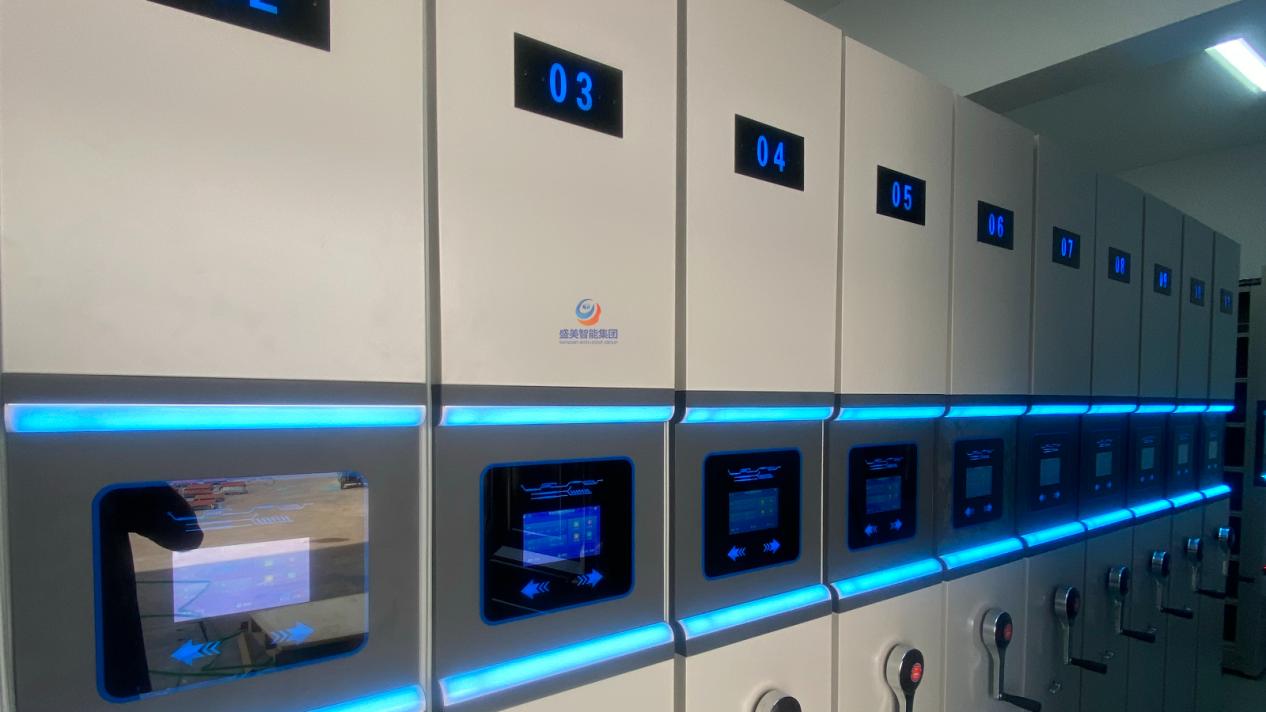
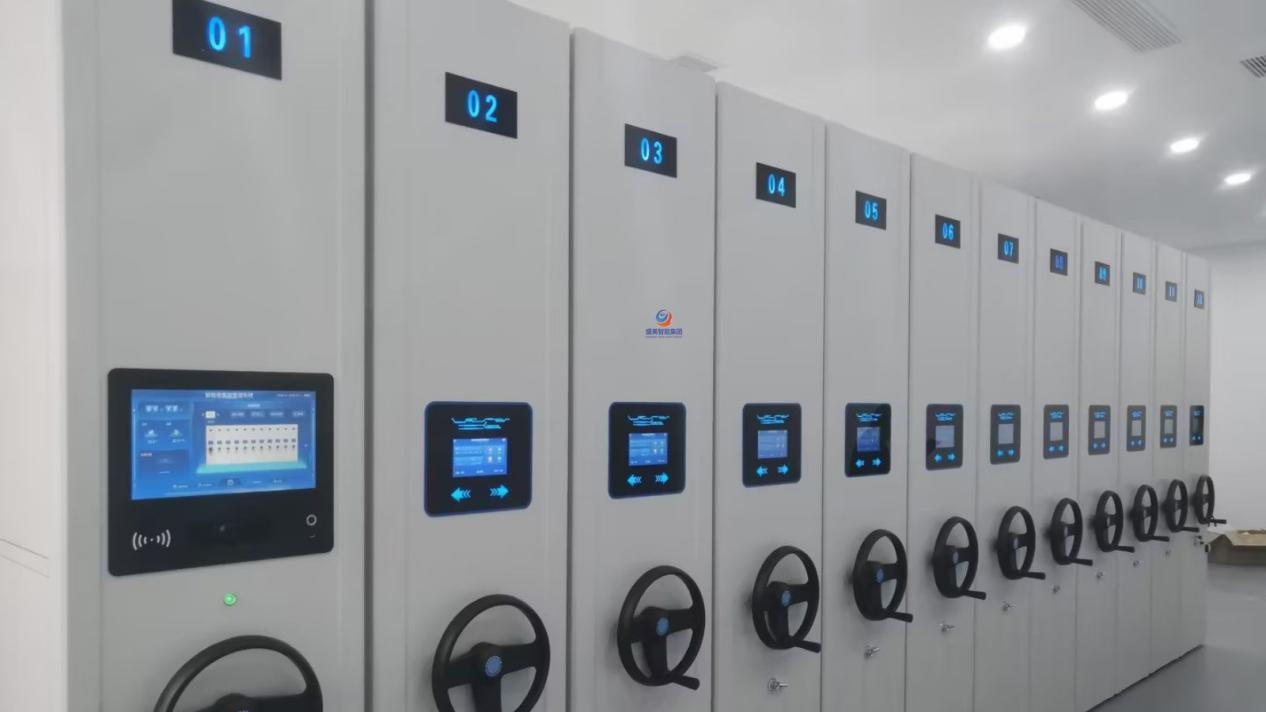
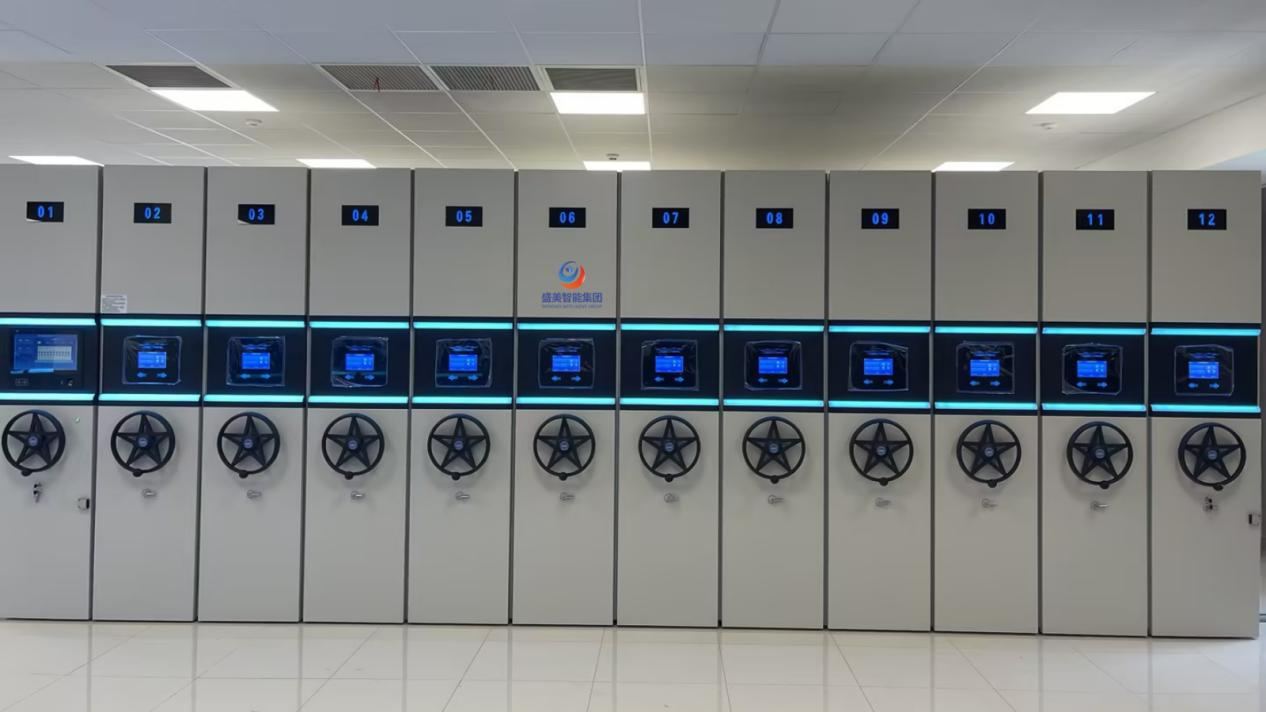
Smart compactor shelving — also called electric smart mobile shelving — retains the rail-mounted moving body of a compactor system and adds motor drive units, a touch control panel, sensors, and communication modules. Some versions can connect to a higher-level archive management system.
Working Principle
The system moves laterally along floor rails. Beyond an emergency hand-crank function, the bays are opened and closed mainly by motor drive.
Users open and close specific bays through the local touch panel or touch buttons.
Once connected to archive management software, the digital archive system can issue commands that automatically open the bay holding the target files.
After retrieval is complete, all bays close with one tap — eliminating redundant fixed aisles and raising space utilization in the archive repository.
Main Structural Components of a Smart Compactor Shelving System
Floor Rails
Embedded or surface-mounted, carrying the full moving load. Overseas projects must confirm the repository's floor load-bearing conditions at the design stage.
Mobile Bays
Multiple movable shelving units with adjustable shelf heights, fitting archive boxes, files, medical records, drawings, and other media.
Electric Drive & Transmission
Drive motor, reducer, and transmission chain for motorized movement, with an emergency hand-crank mechanism for manual operation during power failures.
Local HMI Module
Touch display / operating buttons and per-bay control panels for local open, close, and status viewing.
Safety Sensor Protection
Infrared anti-pinch sensors, presence detection, limit protection, and anti-tip devices. The system detects people or obstructions during movement and stops automatically — meeting overseas project safety requirements.
Communication & Integration Module
Data communication hardware for exchanging information with the archive management system, enabling location-linked file retrieval.
Environmental Monitoring (Optional)
Repository temperature and humidity sampling plus smoke detection, feeding environmental data back in real time.
Sealing & Locking Accessories
Sealing strips between bays and overall electronic locking keep out dust and moisture, protecting paper originals.
Core Advantages of Smart Compactor Shelving
High-Density Storage, Less Floor Area
Inherits the high space utilization of compactor shelving, eliminates large fixed aisles, fits more physical records into a limited repository, and relieves capacity pressure.
Electric Operation, Effortless Retrieval
No repeated hand-cranking of heavy bays — one tap on the panel opens the aisle. Ideal for institutions with frequent access, and the emergency hand crank keeps it usable during outages.
Linkage with Archive Management Software
The system's core value: the archive software locates a file and automatically opens the corresponding bay — "search the digital archive, position the physical record" — connecting digital and physical records management.
Multi-Layer Safety Protection
Infrared anti-pinch, presence detection, and limit sensors stop moving bays automatically when people or obstacles appear; electronic locks and permission management assign operating rights by role, raising records security.
Optional Environmental Monitoring
Optional temperature, humidity, and smoke monitoring tracks repository conditions in real time, helping you avoid moisture and heat damage to paper originals.
Supports Phased Expansion
Rails are laid in one pass; as budget allows, extra bay units can be added later to match a growing collection.
Limitations of Smart Compactor Shelving
Higher Procurement Cost
Motors, controls, sensors, and communication modules raise the overall equipment cost, so the upfront investment exceeds manual compactor shelving.
Power Infrastructure Required
Operation depends on a stable power supply; retrofit projects in older repositories need wiring planned in advance.
Higher Maintenance Complexity
With both mechanical parts and electronic components, controls, sensors, and communication modules need periodic inspection — lifecycle O&M cost runs above manual systems.
Demanding Site Conditions
Beyond floor loading, power and network wiring must be considered, so upfront retrofit work exceeds a purely mechanical manual system.
Which Overseas Archive Scenarios Suit Smart Compactor Shelving?
Recommended Scenarios
- Large government archives and university repositories with high retrieval frequency, pursuing integrated digital–physical records management
- Large hospital medical-record repositories with heavy file circulation that need faster retrieval
- Large law firms and corporate headquarters archives with vast records that want to integrate existing archive management software
- Projects with sufficient budget and repositories that can be retrofitted with power and network wiring
- Institutions with high requirements for operational safety, permission management, and environmental monitoring
Not a Good Fit
- Small and mid-sized institutions focused on long-term sealed storage, with very low retrieval frequency and tight budgets
- Older repositories that cannot accommodate power and network rewiring
- Simple filing scenarios that only need basic storage — no system linkage or electric operation required
Smart Compactor Shelving vs. Other Archival Storage Systems
The table below compares smart compactor shelving with manual compactor shelving and static archival shelving across power method, space utilization, O&M cost, software integration, and best-fit use cases.
| Storage System | Power Method | Space Utilization | O&M Cost | Software Integration | Best Suited For |
|---|---|---|---|---|---|
| Smart compactor shelving | Motor drive + emergency hand crank | 85–90% | Medium–High | Links with archive software | High-frequency retrieval; integrated hardware–software management |
| Manual compactor shelving | Hand crank | 85–90% | Low | Not supported | Tight budgets; sealed long-term storage; no power supply |
| Static archival shelving | Fixed structure | 35–40% | Very low | Not supported | Small collections; ample repository floor space |
Key Considerations for Overseas Procurement
- Assess repository conditions early. Confirm floor load capacity, evaluate power and network wiring, and choose embedded or surface-mounted rails to match the building. Related reading: Floor Load Requirements for Compactor Shelving.
- Define integration requirements. Confirm the interface protocol of your existing archive management system before purchase to ensure data interoperability and avoid hardware–software integration failures.
- Never omit safety configurations. Overseas projects must include infrared anti-pinch sensors, presence detection, anti-tip limit protection, and the emergency hand crank to meet the EN 15095 storage safety standard.
- Clarify optional modules. Temperature, humidity, and smoke monitoring are optional features — choose them by project budget and actual needs rather than stacking functions.
- Reserve room for expansion. Lay the rails fully in one pass so additional bay units can be added directly as the collection grows.
Frequently Asked Questions
It suits high-frequency, large-scale archive operations — large government and university archives, hospital medical-record repositories, and law firm or corporate archives that want to integrate archive management software — provided the budget covers power and network retrofitting and the facility values retrieval efficiency, permission management, and environmental monitoring.
For small and mid-sized institutions with long-term sealed storage, low retrieval frequency, and tight budgets; for older buildings that cannot be rewired; or for simple filing scenarios that need neither system integration nor electric operation, manual compactor shelving or static shelving is usually the more economical choice.
85–90% space utilization, one-tap electric operation, integration with archive software for automatic file positioning, multi-layer sensor safety protection (infrared anti-pinch, presence detection, limit protection), optional temperature, humidity, and smoke monitoring, and phased expansion by adding bay units.
Higher purchase cost, dependence on a stable power supply, more complex maintenance covering both mechanical and electronic components, and stricter site requirements for floor loading, power, and network wiring.
With a rational layout, both smart and manual compactor shelving reach about 85–90% space utilization per the EN 15095 reference standard, versus roughly 35–40% for static archival shelving — roughly doubling capacity within the same footprint.
The Bottom Line
In short, smart compactor shelving is an intelligent mobile archival storage system with motor drives, electronic controls, and sensor protection that can connect to archive management software. It inherits the high-density advantage of compactor shelving, resolves the disconnect between physical and digital records, and markedly improves efficiency in high-frequency retrieval scenarios.
But smart compactor shelving costs more to buy and to maintain, and it requires power and wiring conditions. When selecting storage for an overseas repository, don't chase "smart" for its own sake — weigh retrieval frequency, existing software systems, repository hardware conditions, and project budget together, and choose the solution that truly matches your project.
Disclaimer: This article is a reference guide for overseas archive projects. Project implementation should follow local archival regulations and applicable industry standards such as EN 15095.
Archive Repository Project Inquiry
Need capacity calculations for smart compactor shelving, tender parameter templates for overseas projects, or repository layout plans? Shengmei Cabinet provides a free project assessment service.
Email subject format: Smart Compactor Shelving Inquiry + repository size + project region.