
Manual, electric or smart — pick by how often you retrieve, not by brochure.
All three drive the same steel carriages on the same rails. What changes is who — or what — opens the aisle, and what that costs across ten years of daily use.
Same shelving, three ways to move it.
Every SHENGMEI system below uses identical cabinets, shelves and rails — so you can upgrade the drive later without replacing the storage.
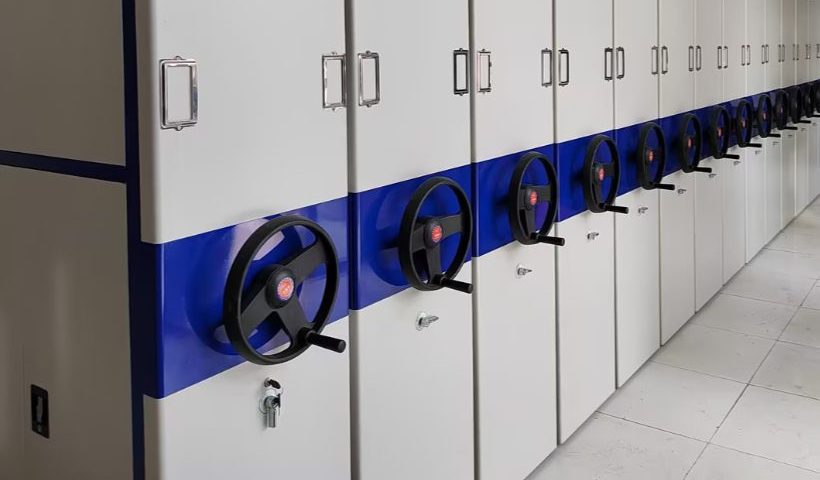
Manual
- Aisle movement
- Hand crank
- Power required
- None
- Retrieval rate
- Low · under ~20 pulls/day
- Access control
- Physical lock
- Indicative budget
- Lowest
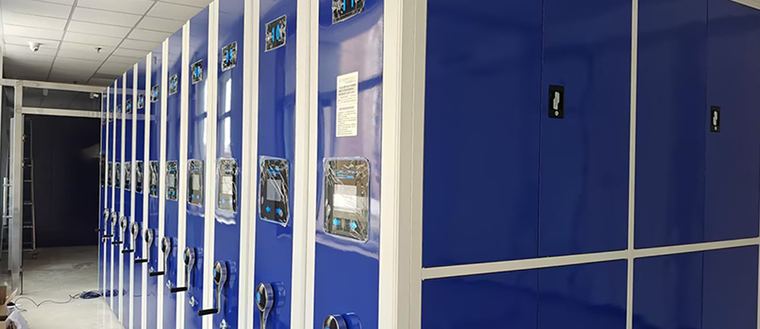
Electric
- Aisle movement
- Push button
- Power required
- 220 V rail line
- Retrieval rate
- Medium to high
- Access control
- Keypad option
- Indicative budget
- Mid
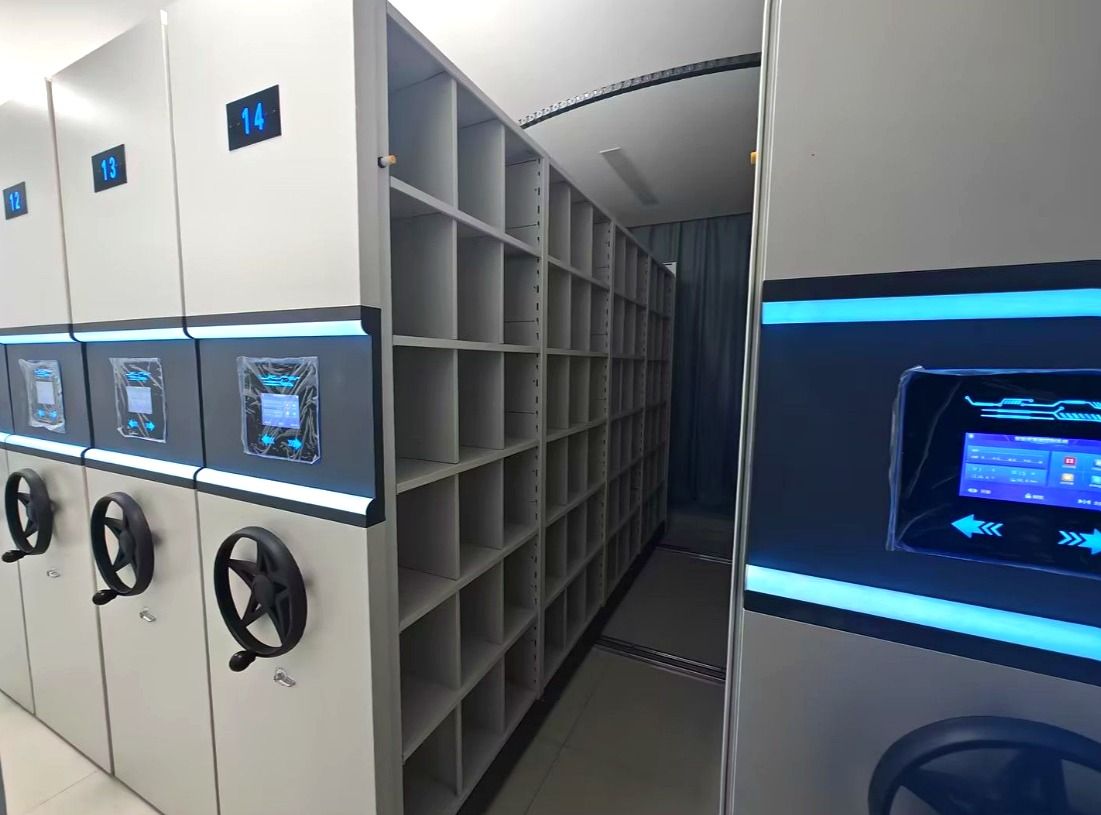
Smart
- Aisle movement
- One-touch + remote
- Power required
- 220 V + network
- Retrieval rate
- High · multi-user
- Access control
- Card / RFID levels
- Indicative budget
- Premium
The full comparison, line by line.
| Criterion | Manual | Electric | Smart |
|---|---|---|---|
| How the aisle opens | Crank wheel on the end panel | Button on the carriage face | Terminal touch, card tap or software |
| Who can open it | Anyone with the key | Anyone at the keypad | Only authorised RFID cards, per cabinet |
| Finding a file | Paper index or spreadsheet | Paper index or spreadsheet | RFID reader locates the file and opens its aisle |
| Audit trail | None | Event log on controller | Who opened what, when — exportable |
| Safety sensing | Aisle locked while in use | Infrared sweep on carriage faces | Infrared + aisle occupancy lockout |
| Installation impact | No power, no data | Rail power line | Rail power + network drop per run |
| Service profile | Bearing grease, annual | Motor + sensor check, annual | Annual check + software updates |
| Best fit | Long-retention archives, low traffic | Shared records rooms, daily pulls | Compliance-driven archives, many users |
What we recommend, honestly.
Buy manual.
If staff visit the archive weekly, a crank wheel does the same job as a motor for a fraction of the price — and keeps working through every power cut.
Buy electric.
Once the archive becomes part of the daily routine, buttons beat cranks. Safety sensing matters as soon as visitors who don’t know the system walk through.
Buy smart.
When auditors ask who touched a file, or forty people share one room, RFID locating and access logs pay back the premium — usually within the first audit cycle.
Start with the affordable drive. Upgrade without throwing anything away.
Cabinets, shelves and rails are identical across all three drives. The electronics bolt onto the same steel — which changes how a first purchase can be justified: buy for today’s budget, add capability when the workload earns it.
Bolt on the drive motor
Any manual run accepts a motor drive kit and an infrared safety sweep later. Cabinets stay loaded; the conversion happens bay by bay over a weekend, not a refit.
Manual → electricAdd terminals and RFID
Terminals mount on the carriage faces and draw from the same rail power. Tag the boxes once and the room can locate any file from a card tap at any bay.
Electric → smartConnect the room
Smart rooms roll up into archive-management software: aisle calls from a desk, usage reports per cabinet, and audit exports your compliance team can file.
Smart → managedStill between two drives?
Tell us your retrieval count and staff size. We will specify one drive and show the ten-year cost of both options.