
Closed stacks, open only to the collection’s standards.
Library stacks and museum depots share one rule: the room serves the collection, never the reverse. High-density mobile storage earns its place here by holding ISO 11799 climate targets while doubling capacity behind a single moving aisle.
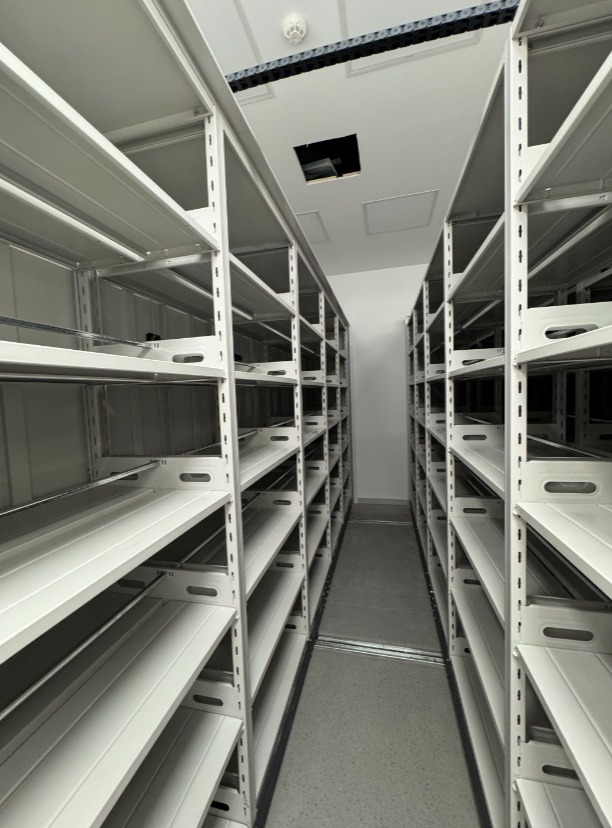
The environment each material actually needs.
ISO 11799 sets the reference points. The storage system’s job is to fit inside them: steel that does not off-gas, clearances that let air move through closed ranges, and monitoring that proves stability.
| Collection material | Temperature | Relative humidity | Storage note |
|---|---|---|---|
| Paper documents & bound volumes | 18±2°C | 50±5% | Never above 26°C; stability matters more than any single setpoint. |
| Photographs (B&W) | 18°C or below | 30–40% | Lower RH band protects emulsions inside closed enclosures. |
| Colour photographs & film | Cold vault | 30–40% | Acetate film needs cold storage; vestibule staged for acclimatisation. |
| Mixed collections | 18±2°C | 35–45% | Compromise band when one room serves several media types. |
| Framed works & textiles | 18±2°C | 45–55% | Plan drawers and wide trays keep items flat, uncreased and supported. |
Stack lighting is held to 50 lux or less with UV-filtered fittings; daylight is excluded from the depot. Filtration targets MERV 13 or better where pollutants demand it.
Built around the object, not the box.
Museums and rare-book libraries store shapes no records room sees. The carriage platform is the same — what sits on it is configured per collection.
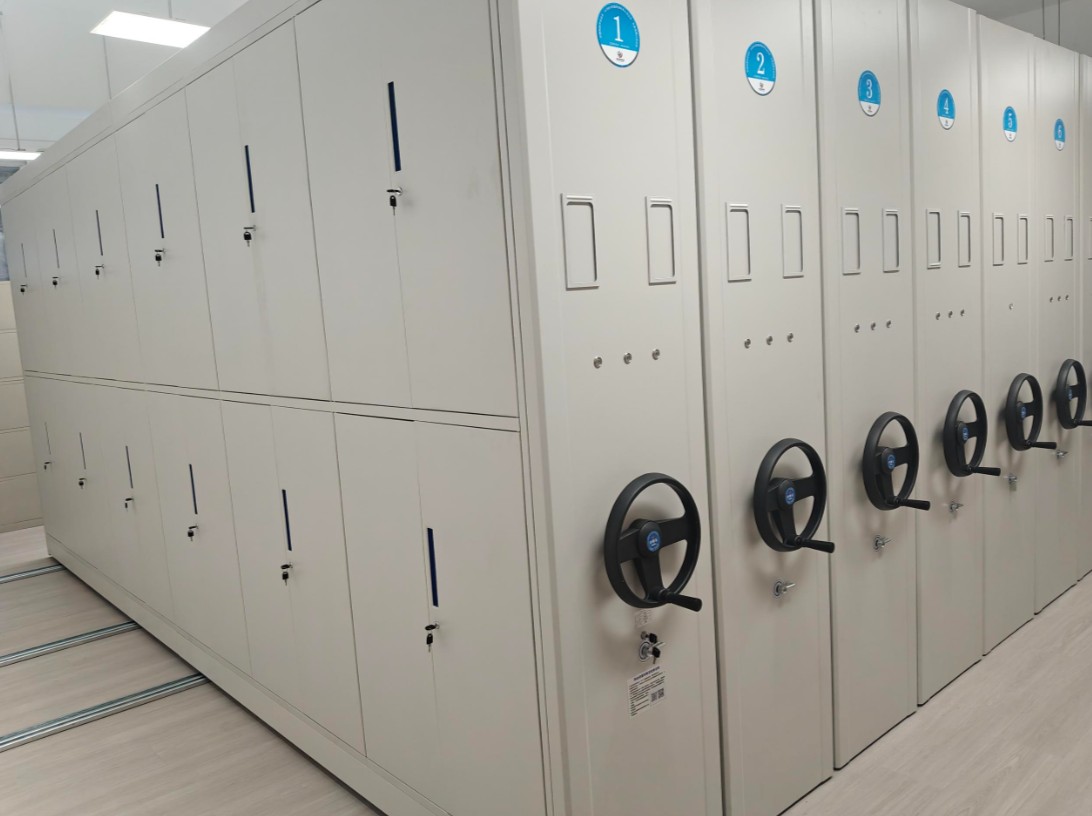
One aisle, the whole collection
Rows of mobile shelving hold the reserve collection at double density; a single aisle opens where the retrieval happens.
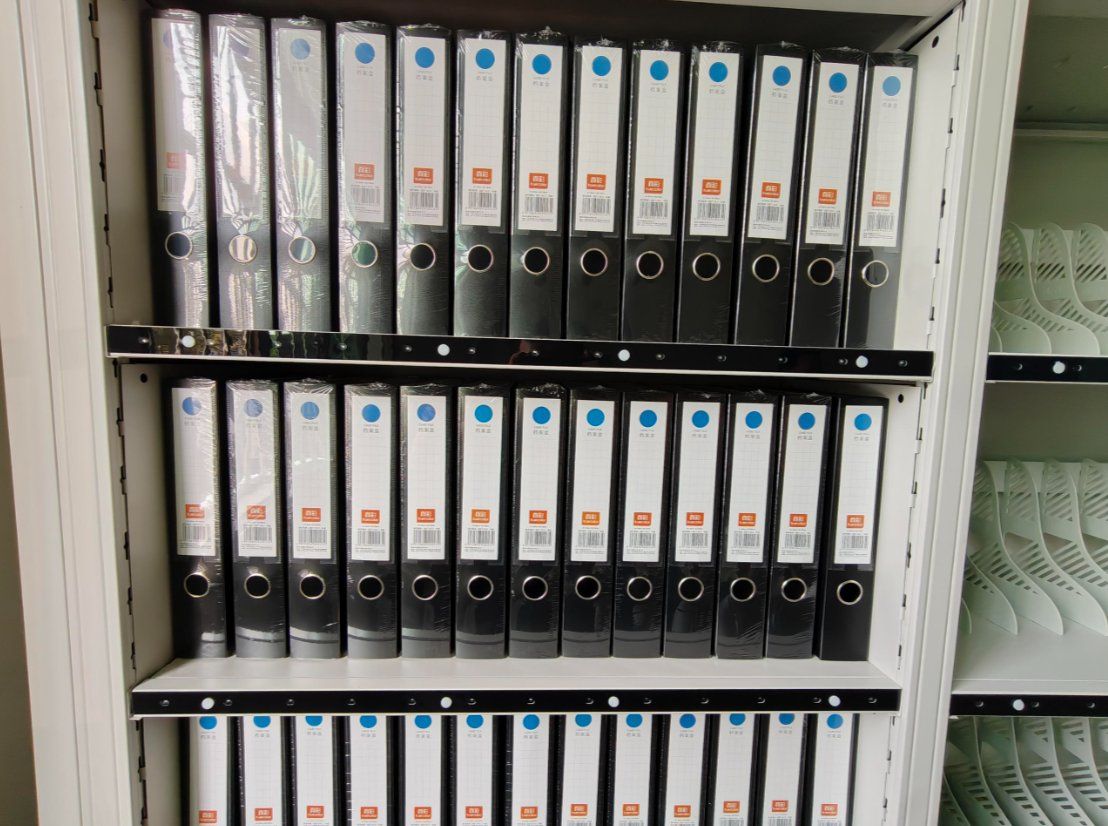
Shelf-marked archive boxes
Every box carries a shelf mark and an RFID tag keyed to the accession register, so a call slip resolves to one exact bay.
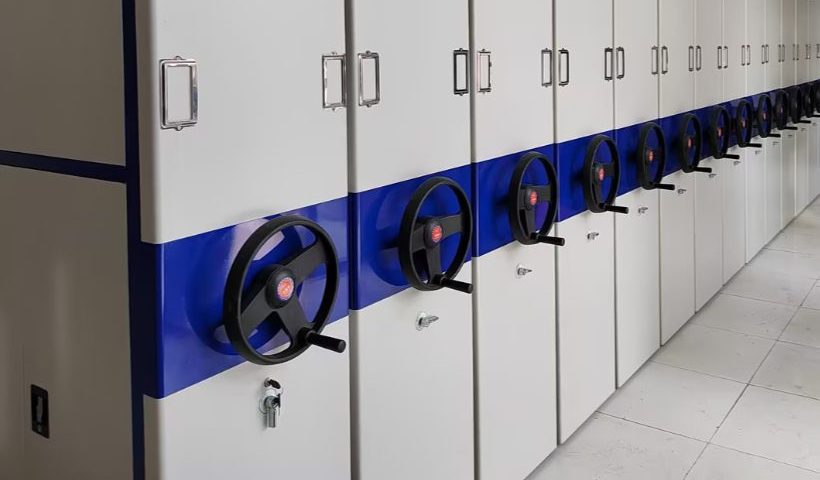
Mechanical-assist carriages
Hand-wheel carriages need no motors to maintain, carry full archival loads, and open one aisle at a time.
High density changes the fire plan — so we design for it.
Compressing a collection raises the fuel load per square metre and narrows the paths suppression can take. ISO 11799’s mobile-stack provisions are therefore part of the layout from day one, not a retrofit argument.
- Metal partitions between block sections at configured row intervals, limiting spread inside closed ranges
- Minimum clearance maintained between closed carriages so extinguishing agent can penetrate
- Aspirating smoke detection (ASD) recommended ahead of standard point detectors in stack rooms
- Suppression choice — inert gas, water mist or pre-action — assessed against collection tolerance for secondary damage
- Structural fire resistance and compartmentation sized to the room’s risk assessment
From request to reshelving, without touching the standards.
Closed-stack service lives on controlled handling. The room layout, the aisle schedule and the reading room work as one sequence.
Request logged
The call slip carries the shelf mark; the target aisle is identified before anything moves.
Aisle opened
One range opens; the rest of the collection stays sealed in the dark at stable climate.
Supervised handling
Items travel in supports to the reading room; gloves, cradles and no-food rules apply.
Reshelved same day
Returned to the exact shelf mark; the accession register closes the loop on every movement.
Exhibition out, exhibition back, without breaking the depot’s rules.
Museum collections travel. The depot has to send objects to the gallery and receive them back under the same conditions — so rotation is designed into the shelving, not improvised on the floor.
Condition report
Objects are inspected and photographed before leaving their trays, with the report keyed to the accession number.
Quarantine shelf
Incoming loans sit on a dedicated shelf range away from the main collection while environmental checks run.
Padded transit trays
Framed works and textiles travel in wide trays that keep them flat and supported end to end.
Return & re-slot
Every item returns to its marked tray and shelf; the register reconciles the loan the same day.
Buy the steel once, add carriages on the next budget cycle.
Institutional funding rarely arrives in one envelope. The platform is designed so year one does not have to guess what year five needs.
Bolt-on carriages
New bays join an existing run without touching the ends — no re-engineering, no relocation of the collection.
Finish continuity
Powder-coat batch records are kept, so additions ordered years later still match the original installation.
Aisle upgrades later
Mechanical-assist runs accept motor drives in a later phase, keeping the first phase capital-light.
Design the depot around the collection.
Send the collection profile and room dimensions — the configuration proposal includes climate provisions, load calculations and the fire-strategy layout.