Smart Compactor Shelving Complete Procurement Guide
From Site Survey, Seven-Layer Safety, Cost Estimation to Final Acceptance
Introduction
Archive room capacity running out is a real and recurring challenge faced by government agencies, hospitals, law firms, financial institutions, universities, and enterprises. Paper archives carry legally mandated retention periods — contracts, patient records, case files, audit working papers, engineering drawings, compliance documents — none of which can simply be scanned digitally and then destroyed outright. Archives keep growing year over year, yet the physical footprint of an archive room is rarely expandable: heritage buildings are often protected from structural modification; new construction projects face long permitting cycles; expanding an existing archive facility carries a heavy capex; and outsourcing archives to a third-party offsite storage vendor brings its own risks — slow retrieval, information leakage, and audit-compliance concerns.

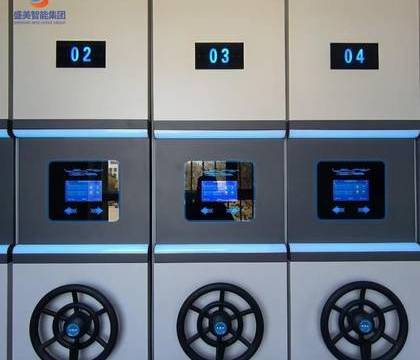
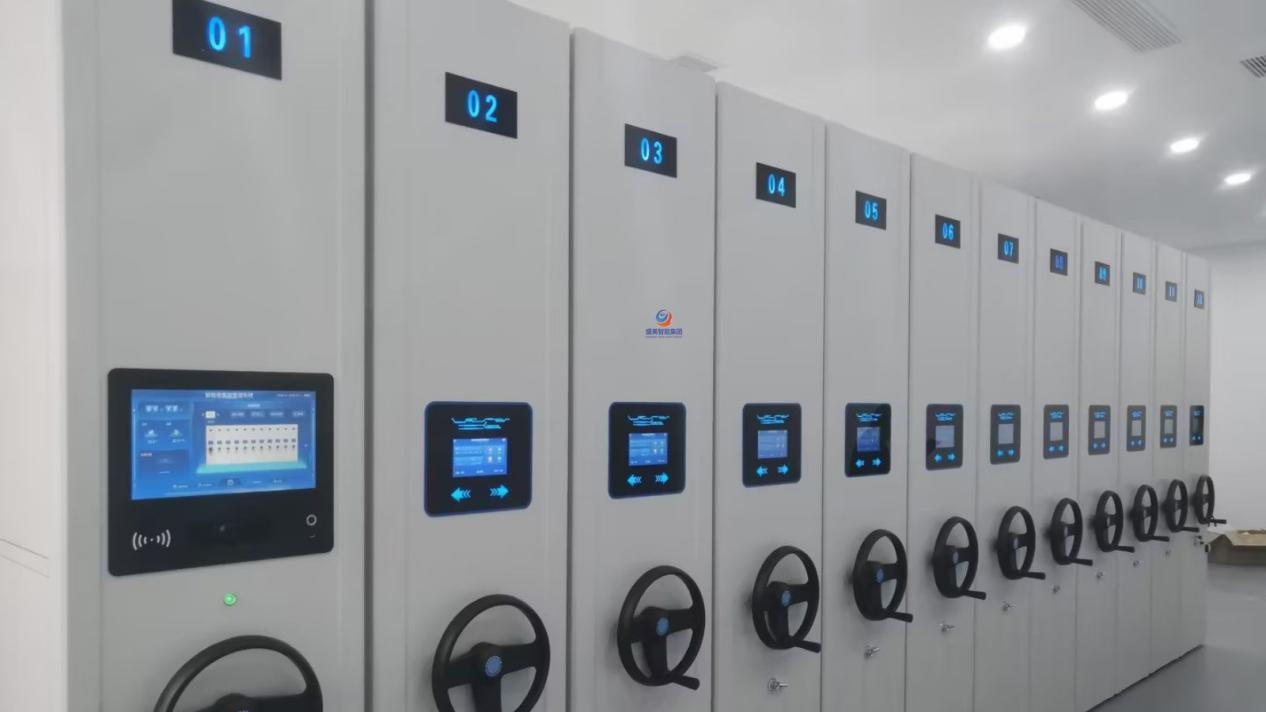
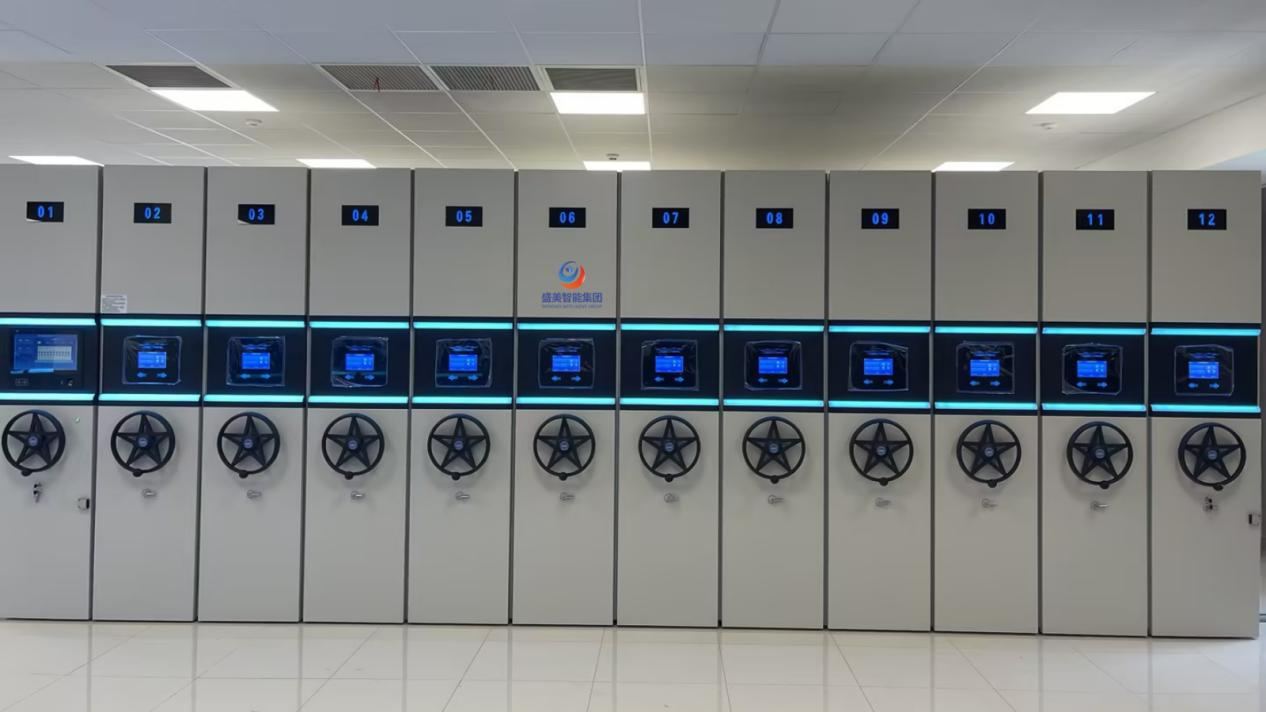
Smart Compactor Shelving, as the core equipment for high-density archive storage, is built on a floor-track mobile architecture that eliminates the inefficient fixed access aisles of traditional filing cabinets. Without expanding the physical footprint of the archive room, storage capacity increases by 50%–70%, and in some optimized layouts the increase can exceed 150%. It has become the mainstream solution for upgrading and retrofitting existing archive rooms.
But Smart Compactor Shelving is a high-value, large-scale, purpose-built archive system. The procurement chain is long, covering needs analysis, on-site survey, floor load-bearing verification, the seven-layer anti-pinch safety system configuration, CAD layout design, hardware and software selection, total-cost-of-ownership (TCO) calculation, contract terms, production, installation, on-site acceptance, and long-term after-sales service. The current domestic market is full of mixed-quality products — many OEMs and resellers push low-priced, low-specification systems. Many buyers only look at the headline price, ignoring the actual floor load-bearing condition of the archive room, the seven-layer anti-pinch safety rating, the openness of the RFID system interface, hardware and software compatibility, and long-term operating costs. Down the line, this results in cabinet deformation, jamming carriages, safety-protection failures, control systems that cannot connect to existing archive software, and gaps in after-sales support — wasting significant capital while creating safety risks for both archives and personnel.
This complete procurement guide is benchmarked against the international ISO 13849-1 functional safety standard. It comprehensively covers every stage of a Smart Compactor Shelving project: front-end investigation, site survey and assessment, hardware selection, safety-protection verification, industry-specific configuration, TCO calculation, key contract clauses, on-site acceptance checklist, common procurement pitfalls, and FAQs. It will help buyers avoid the hidden traps of the industry and choose a Smart Compactor Shelving system that truly fits their business and their archive room conditions.
- Pre-Procurement: Needs & Archive Room Audit
- On-Site Archive Room Survey: 5 Core Assessments
- Hardware Selection: Structure, Drive & Seven-Layer Safety
- Smart Feature Selection: Avoiding "Pseudo-Smart"
- Industry-Specific Selection Reference Table
- Total Cost of Ownership (TCO) Calculation
- Five High-Frequency Procurement Pitfalls
- Contract & Delivery: Clauses You Must Include
- Post-Installation Acceptance Checklist
- FAQ — Frequently Asked Questions
- Get Your Free Customized Layout
1. Pre-Procurement: Needs Analysis & Archive Room Audit
Many procurement projects fail because buyers skip the needs-analysis stage and jump straight to comparing quotes. You're not just buying a set of cabinets — you're buying a storage solution that should serve the next 10–15 years of archive growth. Before contacting a vendor for an on-site survey, your team should complete a basic internal information audit.
1.1 Archive Volume & Profile Statistics
The core data points you need to collect include: current archive volume, archive media type, annual archive growth, projected total storage volume over the next 10–15 years, average daily retrieval frequency, and archive confidentiality level.
- Archive media: Standard archive boxes, medical records, case files, engineering blueprints, optical discs, and physical artifacts — different media place completely different demands on per-shelf load, shelf style, and special accessories.
- Retrieval frequency: High-frequency retrieval rooms (hospital medical records, law firm case files) should prioritize full Smart Compactor Shelving; for low-frequency, long-term storage rooms, Manual Compactor Shelving is a viable option.
- Confidentiality level: Confidential archives require a domestically-produced operating system, tamper-proof operation logs, and tiered access control to meet compliance requirements.
1.2 Archive Room Infrastructure Self-Audit
Before the vendor's on-site survey, gathering the archive room's basic parameters internally can dramatically improve the efficiency of subsequent communication:
- Net length, net width, and clear interior ceiling height of the archive room;
- Floor load-bearing test report (if available). Standard office floor live load is typically 2.0–2.5 kN/㎡; archive room retrofits should target a live load of ≥ 5 kN/㎡;
- Door width, corridor width, and lowest beam height — to confirm the cabinet components can be transported into the room;
- Interior obstructions: load-bearing columns, ventilation ducts, wall-mounted electrical conduits, smoke detectors, sprinkler heads;
- Power supply: whether 24V DC power-supply cabling can be routed;
- Environmental conditions: humidity, basement archive rooms, dehumidification, temperature and humidity monitoring requirements.
⚠ Important Note: Floor load-bearing is the hard line for any retrofit. If the floor is insufficient, no compactor shelving design — no matter how well engineered — can be safely installed. Never skip the load-bearing assessment and go straight to procurement.

1.3 Three Capacity-Expansion Paths — Pre-Assessment
When the archive room runs out of space, buying Smart Compactor Shelving is not the only path. You should compare the three mainstream approaches before choosing a direction.
| Expansion Path | Core Advantage | Main Drawback | Best-Fit Scenario |
|---|---|---|---|
| Archive Room Civil Expansion | Adds fixed floor area, high storage ceiling | High construction cost, long permit cycle, major site disruption; will saturate again in 5–10 years | Adequate budget, building permits allow expansion, long-term mass-archive growth |
| Third-Party Offsite Storage | No need to retrofit the existing archive room; instantly frees local space | Ongoing hosting, logistics, and scanning fees; leakage risk for highly sensitive archives; slow retrieval | Low-frequency, sealed long-term archives; short-term transitional use |
| Install Smart Compactor Shelving (No Expansion) | Uses existing room footprint, one-time equipment investment, archives remain on-site, fast retrieval | Limited by existing floor load and fire-code conditions | Most existing archive rooms, organizations that cannot expand the room and want archives kept on-site |
ℹ Tip: Manual Compactor Shelving is a branch of the compactor shelving family — no motor or electronic control, no power supply required, with a different safety-configuration baseline from the smart version. It is well-suited to low-frequency sealed-storage archive rooms.
2. On-Site Archive Room Survey — 5 Core Assessments a Vendor Must Complete
A qualified vendor should not produce a quotation based solely on drawings you provide. An engineer must visit the site in person and deliver a survey report plus an initial CAD layout. These five assessment items also become the important contractual annexes later in the project.
| # | Assessment Item | Verification Points |
|---|---|---|
| 1 | Floor Load-Bearing Capacity | Floor live load should be ≥ 5 kN/㎡; if insufficient, a localized reinforcement plan is required |
| 2 | Room Dimensions & Transport Path | Door width, corridor turns, lowest beam height — must allow cabinet components to enter; suitable ceiling height 2.0–2.7 m |
| 3 | Interior Obstructions | Load-bearing columns, ventilation ducts, wall conduits; CAD layout must avoid obstructions and split the shelving accordingly |
| 4 | Existing Floor Condition | Prefer surface-mounted tracks (no floor grooving required); cracked or uneven floors must be leveled first to ensure track flatness |
| 5 | Power Supply (Electric / Smart Models) | Smart Compactor Shelving uses 24V DC safety power; if no pre-routed lines are available, cabling can run along the skirting; Manual Compactor Shelving requires no power |
After the survey, the vendor should deliver: a site survey report, a CAD floor plan of the archive room, a capacity calculation table, and a track installation specification. If a vendor refuses to visit the site and quotes purely from dimensions you provided online, that is a high-risk behavior — proceed with caution.
3. Hardware Selection: Cabinet Structure, Drive System & Seven-Layer Anti-Pinch Safety
Many buyers compare prices using only the words "compactor shelving," overlooking steel-plate thickness, drive components, and especially the seven-layer anti-pinch safety system. For overseas projects, the safety rating directly affects insurance coverage and legal liability; for domestic government and enterprise projects, personnel safety is equally critical.
3.1 Cabinet Steel Structure — Hardware Specifications
The steel structure is the foundation of any compactor shelving; smart functions are add-ons. If the structure is substandard, no amount of smart features will matter.
- Upright steel plate thickness: ≥ 1.5 mm recommended;
- Shelves: standard archives ≥ 1.0 mm; high-frequency heavy-load scenarios ≥ 1.2 mm; uniform per-shelf load ≥ 80 kg;
- Chassis: integrally welded, thickness ≥ 3.0 mm — the chassis is the core load-bearing component;
- Track: high-quality cold-rolled steel, surface-mounted, levelness error ≤ 1 mm;
- Surface finish: acid pickling & phosphating, electrostatic powder coating, low VOC, rust-proof and corrosion-resistant, compliant with archive room environmental requirements.
3.2 Drive & Electrical Control — Base Requirements
- Motor: 24V DC safety-voltage brushless motor, eliminating high-voltage leakage risk; AC high-voltage motors are prohibited;
- Drive train: precision roller-chain drive, operating noise ≤ 38 dB;
- Operation modes: Smart Compactor Shelving must retain three control modes — touchscreen electric, PC-software remote, and hand-crank manual emergency. After power loss, the carriage must be movable by hand crank.
3.3 Seven-Layer Anti-Pinch Safety System (ISO 13849-1 Compliant)
The seven-layer anti-pinch system is not a marketing slogan — it is an engineered solution that addresses seven distinct equipment-injury failure modes. Each layer mitigates a different safety risk; no single layer can cover all hazards. The seven layers should be written into your technical specification for tendering.
Important Distinction: Manual Compactor Shelving has no motor or electrical control — only the mechanical pressure-sensitive edge and mechanical locking remain. The other five electrical safety layers do not apply, and the two product lines have different safety baselines.
3.4 Eight Standard Alarm Log Categories (Mandatory for Smart Compactor Shelving)
A qualified smart controller must fully log 8 alarm categories, with timestamps, tamper-proof, and exportable to CSV for audit. A controller that only generically labels "anti-pinch alarm" is a low-spec unit.
| Alarm Type | Trigger Condition | Operator Action |
|---|---|---|
| Pinch Alarm | Mechanical edge triggered or motor current overload | Inspect aisle for obstructions, confirm safety before resuming operation |
| Run-Timeout Alarm | Carriage runs continuously beyond set threshold | Check for carriage jam, recalibrate parameters under heavy load |
| IR Fence Blocked Alarm | Aisle IR beam blocked for extended time | Confirm no personnel trapped in aisle |
| Motor Fault Alarm | Motor current persistently deviates from learned baseline | Lock that carriage, contact service, do not force-bypass |
| Tilt / Tip-Over Alarm | Carriage tilt exceeds threshold | Stop all operations on this group, redistribute archive weight |
| Over-Travel Alarm | Carriage runs past soft limit | Execute manual return-to-origin, recalibrate travel parameters |
| Communication Loss Alarm | Mobile column lost contact with main controller | Check wiring; persistent fault — contact service |
| Cabinet-Door Open Alarm | Control panel cabinet opened without authorization | Inspect on-site, confirm no tampering of equipment |
3.5 PL / SIL Safety Levels Explained
ISO 13849-1 defines Performance Level (PL); IEC 62061 defines Safety Integrity Level (SIL).
- PLc: Acceptable for non-EU, low-frequency access archive rooms;
- PLd: Mandatory minimum for EU CE-marked projects, and recommended best practice for high-risk archive rooms domestically;
- PLe: High-end configuration for industries with strict regulation.
⚠ Procurement Reminder: A vendor's verbal "our equipment is very safe" carries no weight. You must require a written statement of the PL safety level for anti-pinch functions, and that must be written into the procurement contract.
4. Smart Feature Selection — Reject Pseudo-Smart, Choose Truly Business-Adapted Modules
Many vendors pile on flashy but impractical features to inflate their quote. Buyers need to clearly distinguish between must-have core features and optional add-ons.
✅ Must-Have Core Smart Features
- RFID Archive Identification & Positioning: Every archive box bound to an electronic tag; the system records archive location and movement history. When retrieving an archive, the carriage automatically opens the corresponding aisle;
- Tiered Permission Management: Different roles — administrator, regular archivist, visitor — are assigned different permissions with strict isolation;
- Complete Operation & Alarm Logs: All opening, closing, alarms, and E-stop releases are logged with timestamp and operator ID. Logs are tamper-proof and exportable for audit;
- Multi-Terminal Control: Local touchscreen + PC archive management software dual-terminal control. After network disconnection, the local touchscreen must continue to operate independently without external network;
- Temperature & Humidity Monitoring: Real-time collection of room temperature and humidity, with optional linkage to dehumidifiers and air-conditioning equipment.
⚙ Optional Add-On Features (Buy as Needed)
- In-carriage smart lighting;
- Video surveillance linkage;
- Local audible and visual alarms;
- Domestic Xinchuang OS adaptation (Kylin, UOS — must-have for confidential units);
- Open API interface to integrate with the unit's existing archive management system.
✓ Pitfall to Avoid: Confirm whether the system offers open standard API interfaces and interface documentation. Some closed systems cannot connect to existing archive software, forcing a full replacement during later digitalization — a massive waste. Prefer products that reserve an RFID interface at the factory and support phase-2 upgrade without replacing the entire shelving.

5. Industry-Specific Selection Reference Table
Different industries have very different archive media, retrieval frequency, and compliance requirements. The table below can serve as a selection reference.
| Industry | Typical Archives | Core Pain Points | Recommended Configuration | Special Requirements |
|---|---|---|---|---|
| Government / Public Institutions | Administrative documents, real-estate, household-registration records | Many archives in heritage-protected buildings, expansion prohibited, high compliance audit requirements | Smart Compactor Shelving; seven-layer anti-pinch PLd; full audit logs; Xinchuang adaptation for confidential scenarios | Reserve permanent fire-evacuation aisles; CAD layout strictly follows fire code |
| Hospital Medical Records | Patient medical records | High retrieval frequency, legally mandated long-term retention, high safety risk | Smart Compactor Shelving, full seven-layer anti-pinch PLd, temperature & humidity monitoring | Connect to hospital HIS system; on-site storage to avoid emergency-retrieval delays from offsite hosting |
| Law Firms & Courts | Case files, trial materials, contract files | Premium city-center rents, files accumulate year over year, frequent audit retrievals | Smart Compactor Shelving, RFID case-file positioning, tiered permission control | Full operation traceability to meet judicial audit traceability requirements |
| Financial Institutions | Loan documents, audit working papers, financial vouchers | Audits require fast retrieval of originals; high archive confidentiality | Smart Compactor Shelving, tamper-proof operation logs, tiered permission management | Avoid offsite storage delays; safeguard audit efficiency |
| Universities & Research Institutes | Student records, theses, research archives | Continuous archive growth, long campus construction permitting cycles | Manual / Smart Compactor Shelving — choose based on retrieval frequency; low-frequency rooms can use Manual Compactor Shelving | Support future RFID phase-2 upgrade to adapt to future digitalization |
| Enterprise HQ & Industrial Plants | Engineering drawings, HR files, business contracts | Want to defer or even cancel new archive room construction | Choose by retrieval frequency; prioritize systems with reserved smart-upgrade interfaces | Engineering drawings can be paired with blueprint-hanging accessories |
6. Total Cost of Ownership (TCO) — Don't Compare Initial Purchase Price Alone
Smart Compactor Shelving is a fixed asset with a 15–20 year service life. Comparing initial quotes alone leads to serious misjudgment. You need to calculate the Total Cost of Ownership (TCO) — including equipment purchase & installation, annual maintenance, spare parts, and upgrade costs.
For a mid-size archive room, 15-year service life, and an additional 4,500 archive boxes of storage demand, we compared the three expansion approaches below (figures in USD for reference; domestic projects can convert to CNY).
| Expansion Path | One-Time Capex (USD) | 15-Yr Opex & Hosting (USD) | 15-Yr TCO (USD) | Core Risk |
|---|---|---|---|---|
| A — Archive Room Civil Expansion | 78,000 | 46,500 | 124,500 | Fixed storage ceiling; archives saturate again in 5–10 years, requiring a second expansion |
| B — Long-Term Third-Party Offsite Hosting | 0 | 189,000 | 189,000 | Retrieval delays; high sensitivity archives carry information-security & compliance risk |
| C — Install Smart Compactor Shelving, No Room Expansion | 54,000 | 16,500 | 70,500 | Permanent fixed asset, no recurring rent, low risk |
Core conclusion: From a long-term perspective, Smart Compactor Shelving requires a one-time investment with low ongoing operating costs. The total cost of ownership is significantly lower than civil expansion or third-party offsite storage.
ℹ Domestic Procurement Note: Maintenance costs must be written into the contract. Clearly specify the annual inspection content and the supply lifetime of major spare parts. It is recommended to require vendors to commit to at least 10 years of supply for critical motors, sensors, and mainboards.
7. Five High-Frequency Procurement Pitfalls to Avoid in Tender & Contract
Drawing on many real projects, here are the five most common traps in the industry. Buyers should pay particular attention to these.
Low-priced products retain only a simple infrared + buzzer alarm, lacking the full seven-layer anti-pinch system — exposing personnel to pinch and crush injuries.
Ordering based on room dimensions alone — only to discover later that the floor cannot support the load, doors are too narrow, or columns block the layout — resulting in large-scale rework and losses.
Some salespeople exaggerate storage gains by not deducting fire-evacuation aisles and column-occupied area from their capacity calculations. Actual delivered storage falls short of the marketing claim.
Once compactor shelving is installed, archive density increases dramatically and air circulation drops. If existing dehumidification / HVAC capacity is insufficient, archives can become damp and moldy.
Many projects end delivery right after installation, with no safety training for archive administrators. Compactor operation logic differs greatly from traditional filing cabinets, and operator error can lead to safety incidents.
8. Contract & Delivery — Key Clauses You Must Include
Many disputes trace back to verbal agreements that were never put in writing. The following items are recommended for inclusion in your procurement contract.
- Hardware parameters: cabinet steel-plate thickness, chassis thickness, track material;
- Full configuration list of the seven-layer anti-pinch safety system and the PL safety level of the anti-pinch function;
- Complete alarm log functionality, tamper-proof logging, export capability;
- CAD layout drawing and capacity calculation table, attached as a contract annex;
- Warranty period (recommended: whole machine ≥ 3 years, core electronic components ≥ 5 years);
- After-sales fault-tiered response time, remote support, and on-site arrival deadlines;
- Vendor on-site survey, on-site operator training, and delivery of the operation manual;
- Equipment acceptance criteria, with item-by-item acceptance test list;
- 10-year supply commitment for critical spare parts;
- Liquidated damages: late delivery, safety configuration non-conformance, parameter inconsistency with the bid document.
⚠ Important Reminder: Require the vendor to provide a third-party CMA / CNAS test report that corresponds to the specific model being delivered. Refuse generic reports — the model in the report must exactly match the equipment being supplied.
9. Post-Installation On-Site Acceptance Checklist
Completion of installation does not equal acceptance. Every item below must be tested on-site. This list can be printed and used directly for field acceptance.
- Check cabinet appearance, steel-plate thickness, quantity; verify paintwork has no chips or scratches;
- Check track installation, track levelness, and verify carriages run smoothly along the full travel with no jamming or abnormal noise;
- Test the manual hand-crank emergency function — carriages should be movable by hand crank after power loss;
- Test the seven-layer safety system item by item: mechanical pressure edge, infrared three-beam fence, motor-current anti-pinch, safety light curtain, soft start/stop, tilt alarm, hardware E-stop button;
- Test the eight alarm categories item by item, confirm alarms log correctly with timestamps and support export;
- Test RFID archive positioning & retrieval, verify automatic aisle-opening functionality;
- Test tiered permission management, verify isolation between different accounts;
- Calibrate the temperature & humidity monitoring module readings;
- Check aisle widths in the archive room, confirm the permanent fire-evacuation aisle complies with the fire drawings and is not blocked by the shelving;
- Verify the as-built layout matches the CAD drawing attached as a contract annex;
- Receive all delivery documents: certificate of conformity, test report, CAD drawings, operation manual;
- Complete on-site operator training, and sign the training confirmation record.
10. FAQ — Frequently Asked Questions
Get Your Free Customized Archive Room Layout
If you are facing archive room capacity constraints and planning an upgrade, you can contact the Shengmei engineering team for a free customized CAD space-optimization layout and capacity calculation proposal.
Please provide: archive room length, width and ceiling height · current archive volume · annual archive growth · load-bearing test report (if available) · city · equipment selection preference · whether RFID upgrade is needed