
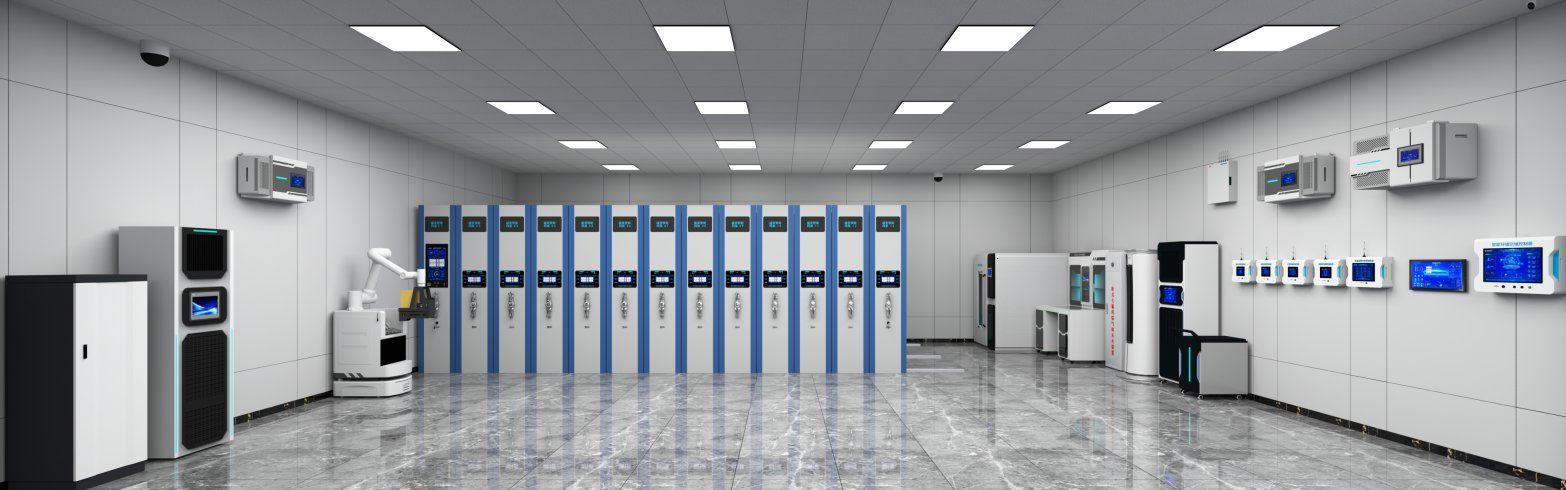
Paper remembers every bad day. The sensors make sure there aren’t any.
Temperature, humidity, dust, gas and leakage are measured continuously in every archive zone — logged for compliance, alarmed within seconds, and corrected automatically through the linked HVAC equipment.
A nervous system for the archive room.
The Shengmei intelligent environment system applies mature IoT and wireless sensor-network technology to archive preservation. Distributed sensing terminals continuously collect temperature, humidity, PM2.5, PM10, CO₂, formaldehyde and TVOC data, and relay every reading to the management host over the archival network.
Management works from desktop, mobile or tiered accounts: staff see real air quality indices for each room in real time, and the system adjusts, filters and purifies automatically to hold the air in the safe, healthy band — instead of only chasing temperature and humidity the way legacy setups do.
Eight metrics, tuned to archival standards.
Thresholds follow national archive storage norms and can be narrowed per room — film, deeds and electronic media each get stricter limits.
Kept stable year-round; drift beyond ±2℃/day raises an early warning.
Prevents mould below and brittleness above the safe band.
Particulates are filtered before they settle into paper grain.
Alerts when cleaning or door discipline needs attention.
Proxy for air renewal in occupied work aisles.
Catches off-gassing from new furniture or deteriorating film.
Guards sensitive documents against cumulative UV fading.
Probe cables under raised floors catch pipe leaks at the first drop.
A drifting reading becomes an action in four hops.
Nobody has to be watching a screen when a compressor fails at 2 a.m. — the cascade reaches a phone instead.
Sensor detects
A probe crosses its threshold or a device drops offline.
Terminal flags
The room terminal shows the zone in amber and starts local logging.
Platform escalates
Dashboard alert with video pop-up and the affected bay highlighted.
Staff notified
SMS and mobile app push reach the duty manager with one-tap actions.
Three loops that hold the storage standard.
Monitoring alone does not protect documents — these control loops close the gap between a reading and a correction.
Temperature & humidity detection
Sensors in every zone feed a signal collector that uploads to the management host. Live values appear as lists, on an electronic map and on the dashboard; when a value crosses its threshold, alerts go out by software prompt, SMS and voice broadcast.
Constant temperature
The system speaks the air-conditioner’s own protocol (or replaces the room thermostat). Below the storage set point heating starts automatically; above it, cooling — holding the archival standard without staff patrols.
Constant humidity & purification
Humidity beyond range starts the dehumidifier and stops it at the set point; purification and disinfection switch on whenever air quality degrades. If readings stay over-limit while equipment runs, the system judges the fault itself and raises an alarm.
Eight terminals, one coordinated system.
Every device in the chain is manufactured and commissioned by Shengmei — sensing, relaying, controlling and treating the air in one integrated loop.
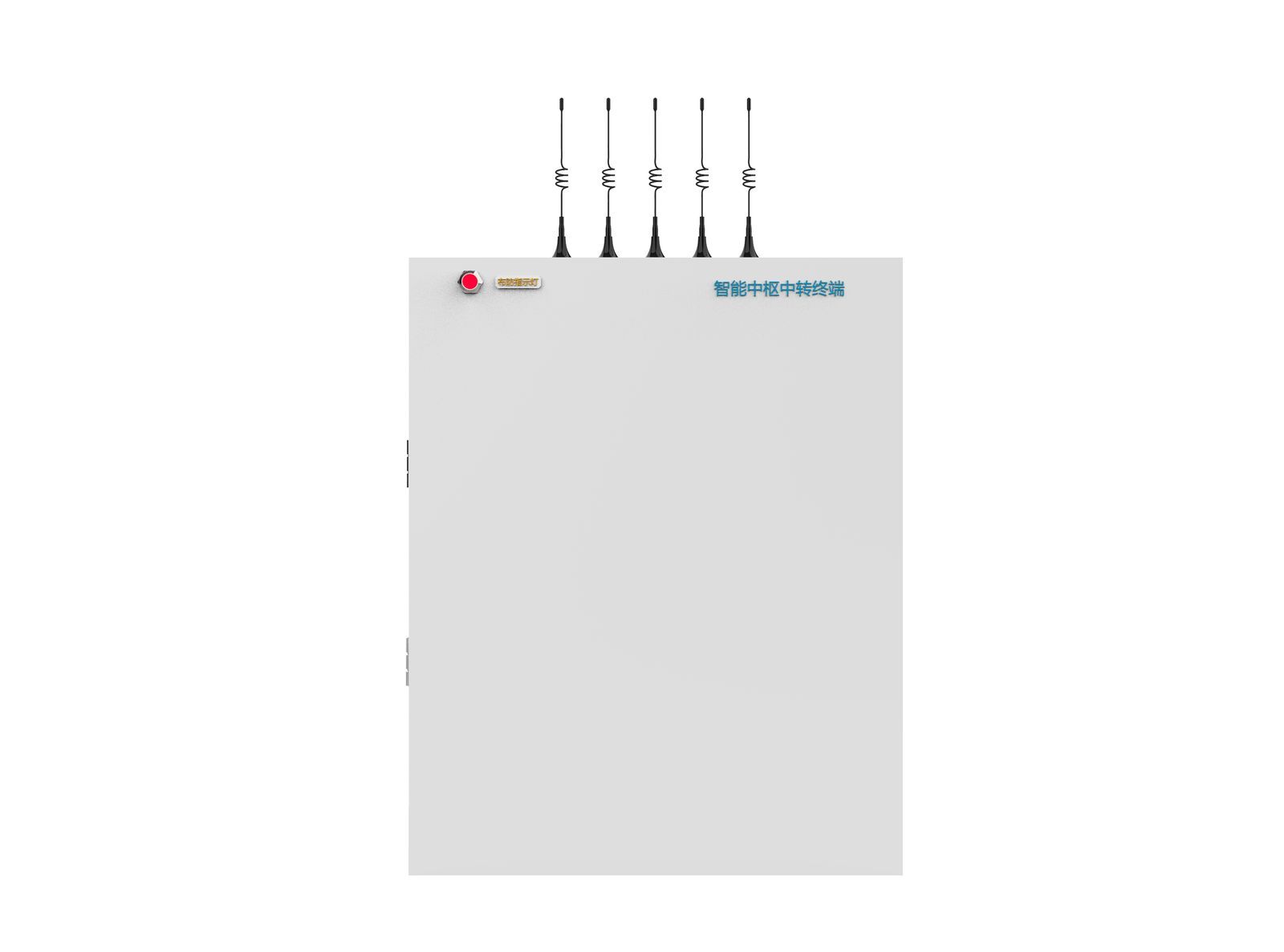
Environment Hub Terminal
Central relay that aggregates every field bus in the room.
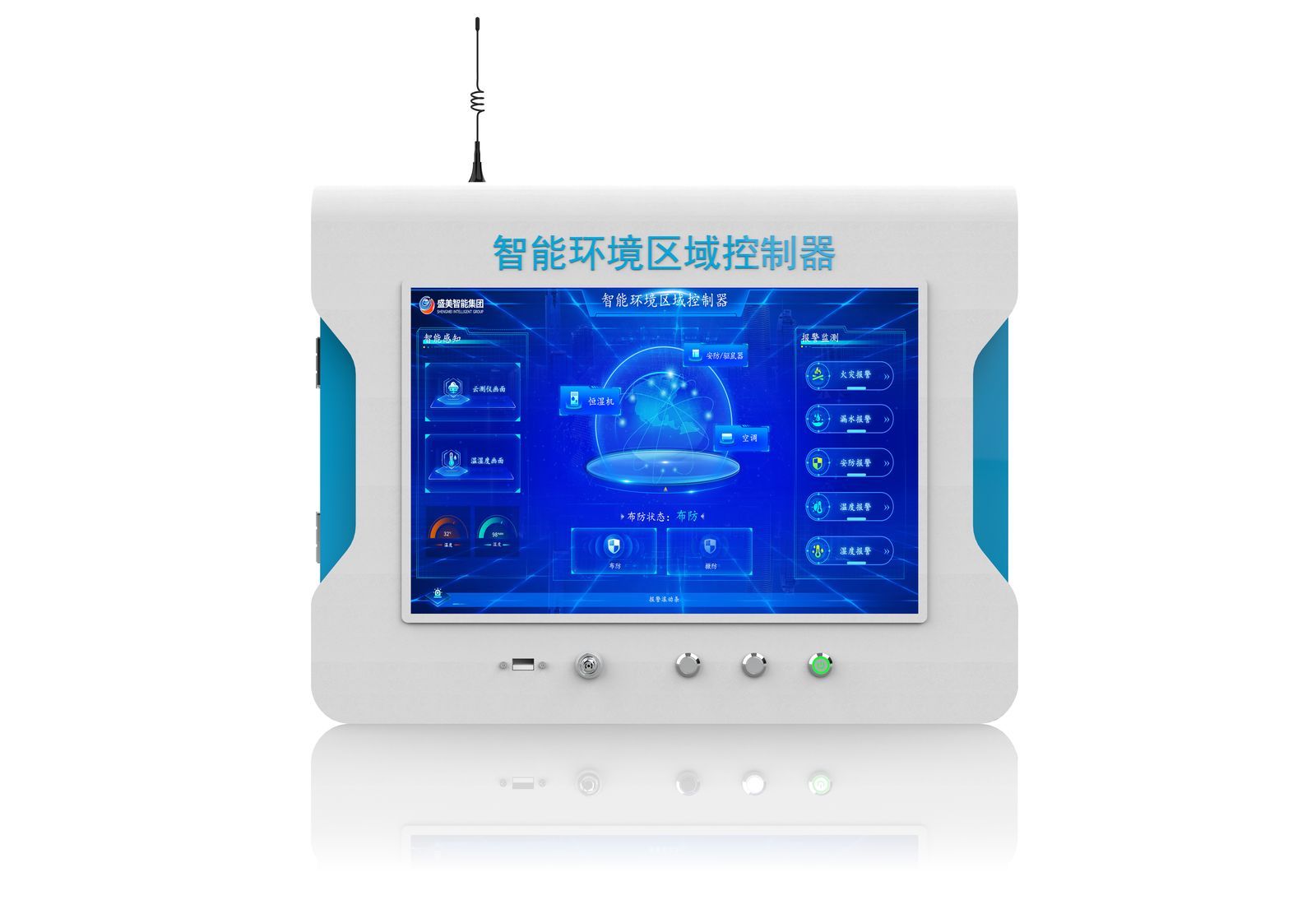
Zone Controller
21.5″ console with voice prompts; runs each storage zone.
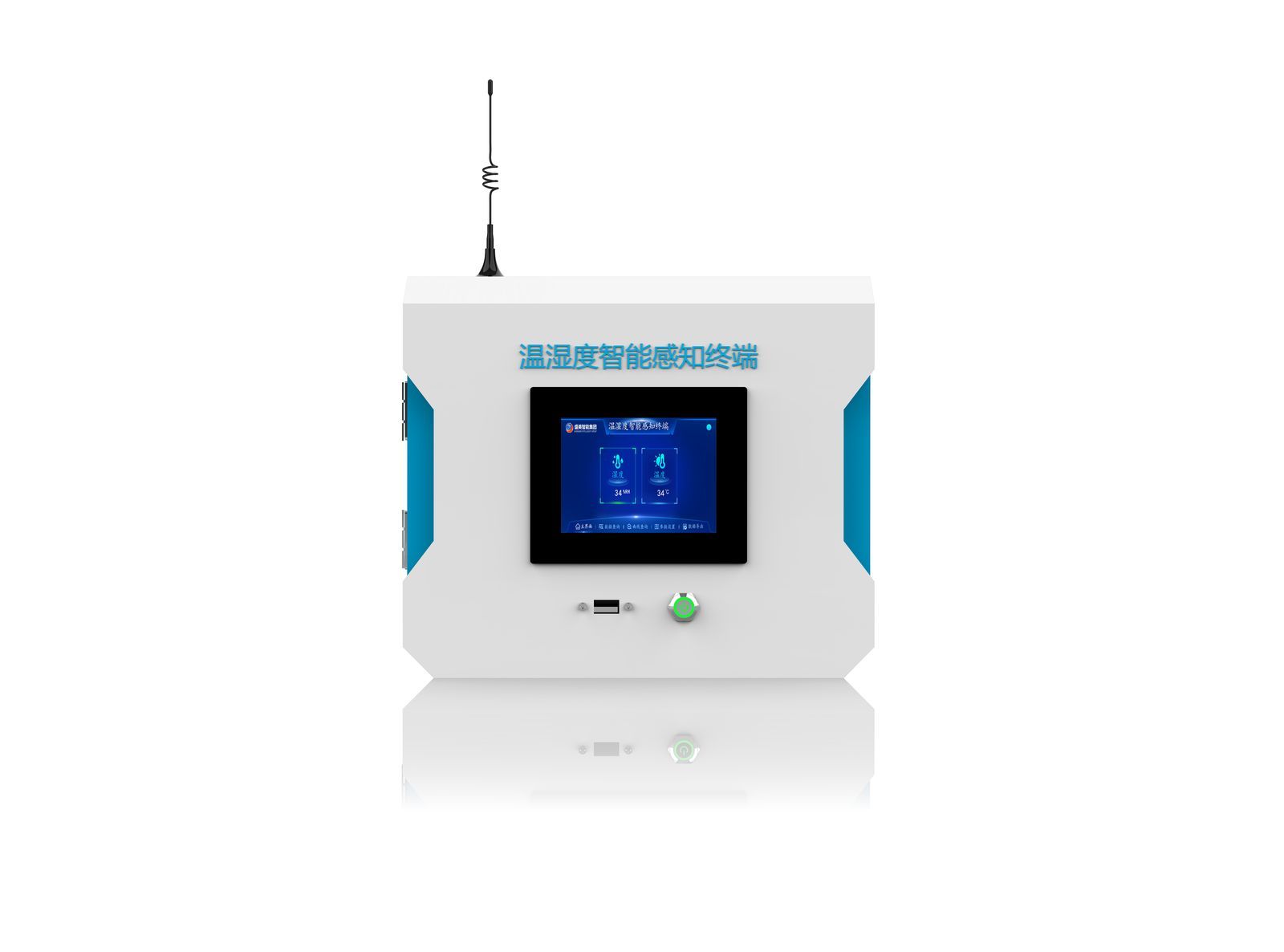
Temp-Humidity Terminal
Distributed probes for exact, zone-level readings.
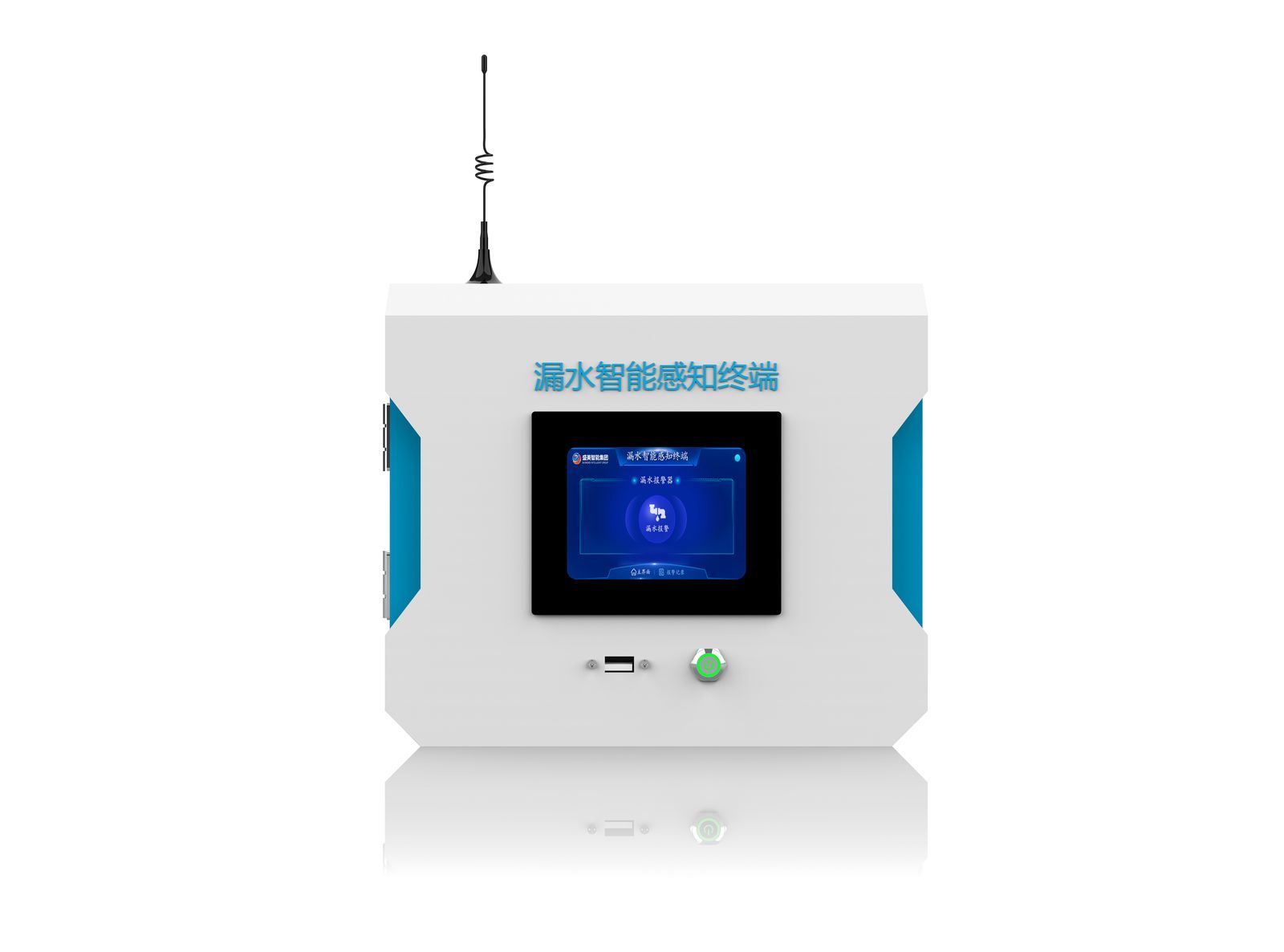
Leak Sensor Terminal
Catches pipe and floor leaks at the first drop.
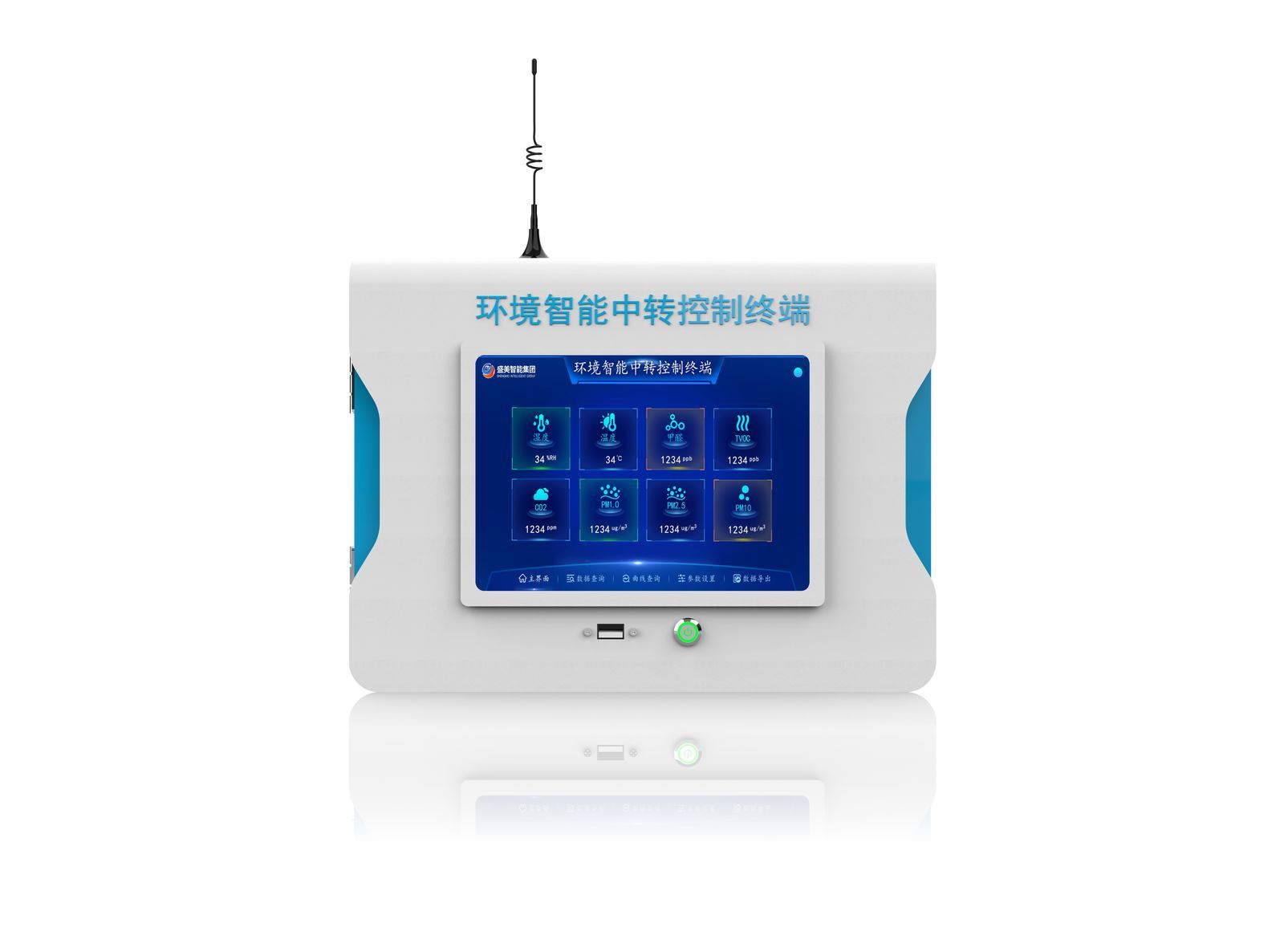
Relay Control Terminal
Switches purifiers, disinfection and ventilation gear.
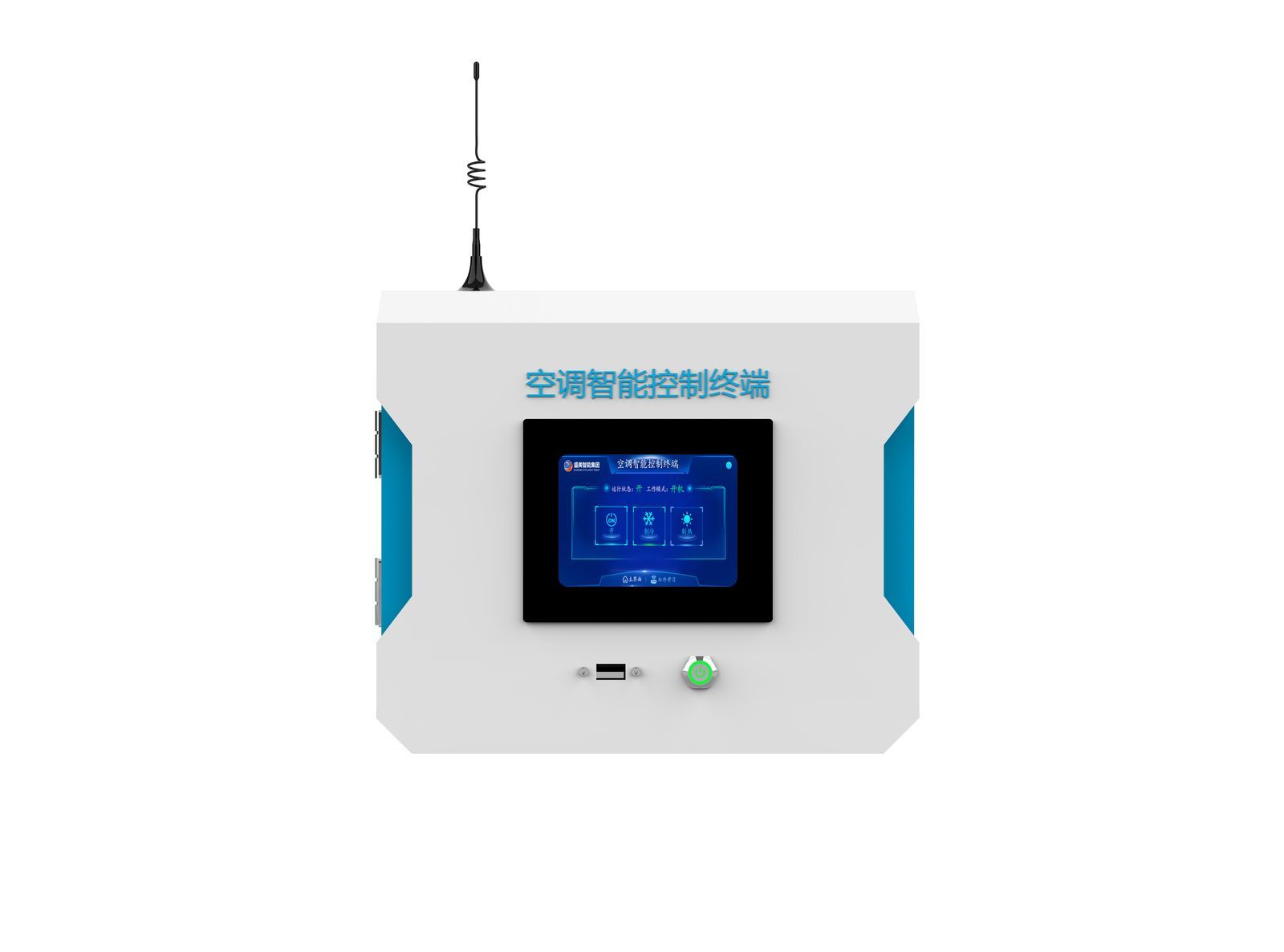
HVAC Control Terminal
Bridges the platform to air-conditioner protocols.
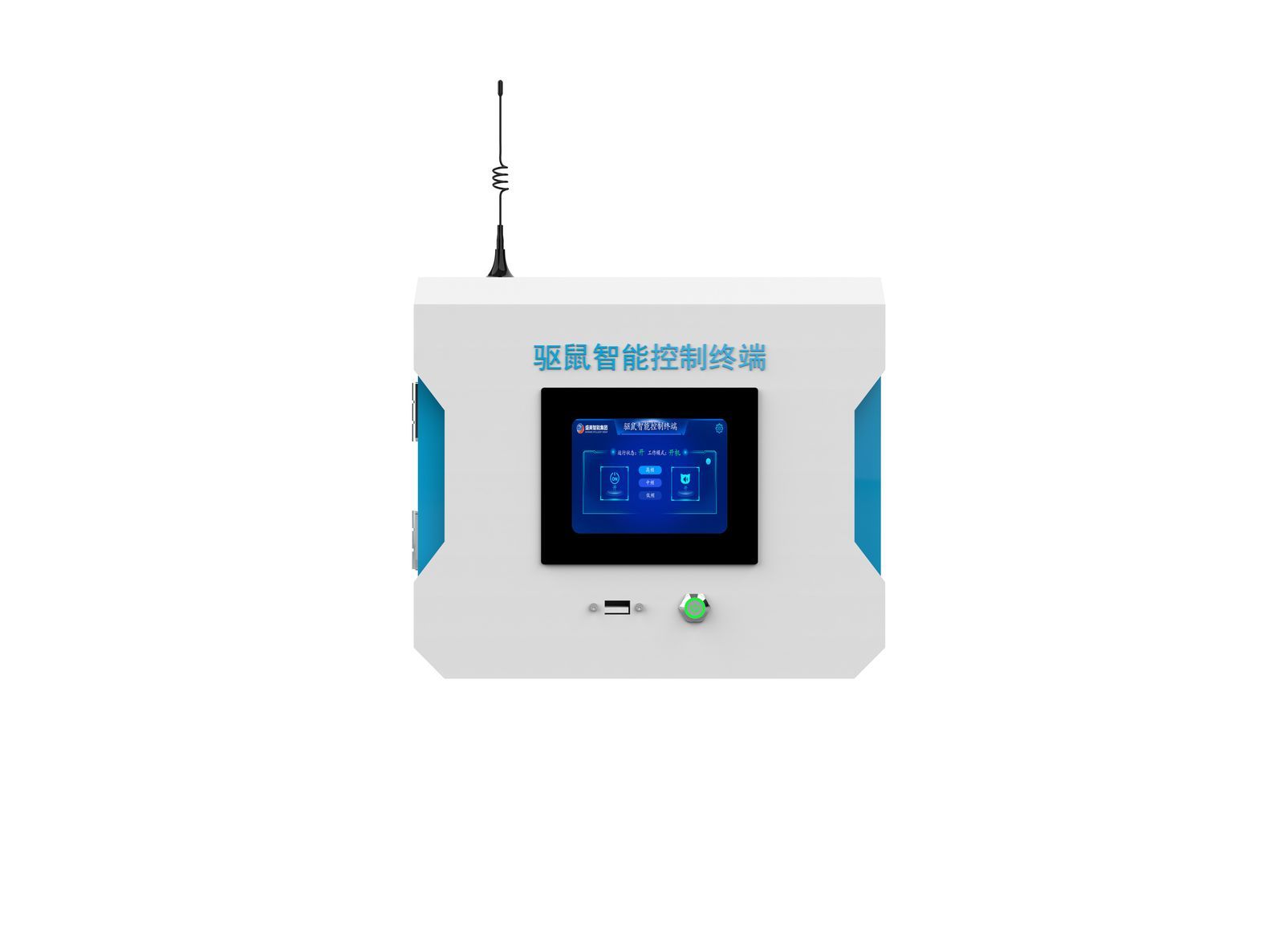
Rodent Control Terminal
Deters pests around shelving bases and logs events.
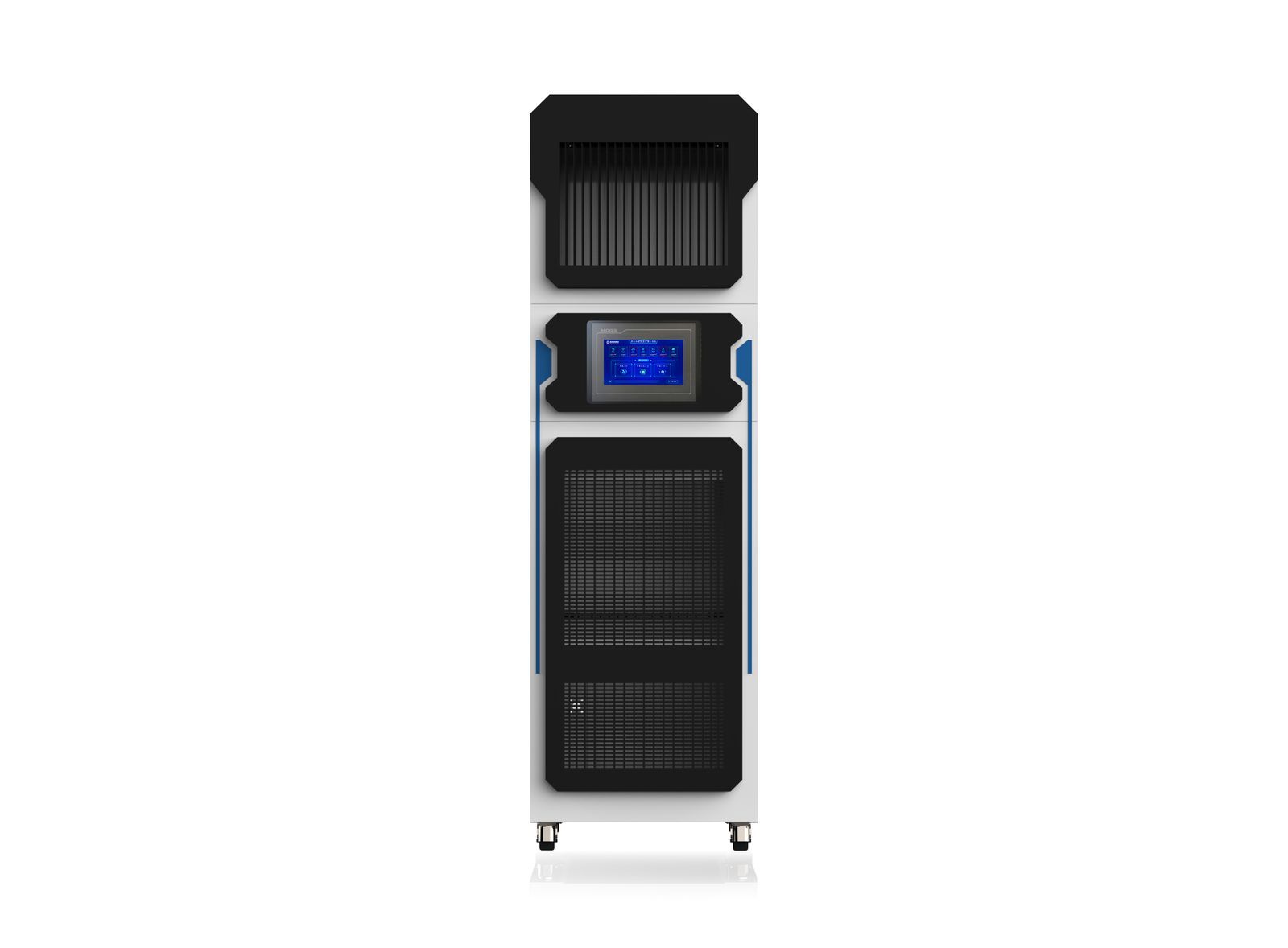
Humidity Purifier Unit
All-in-one dehumidify, humidify and purify machine.
Every zone charted, every limit explicit.
The platform draws continuous curves per archive zone, overlays the safe band, and archives the data for years — so you can prove to any inspector that conditions never left range.
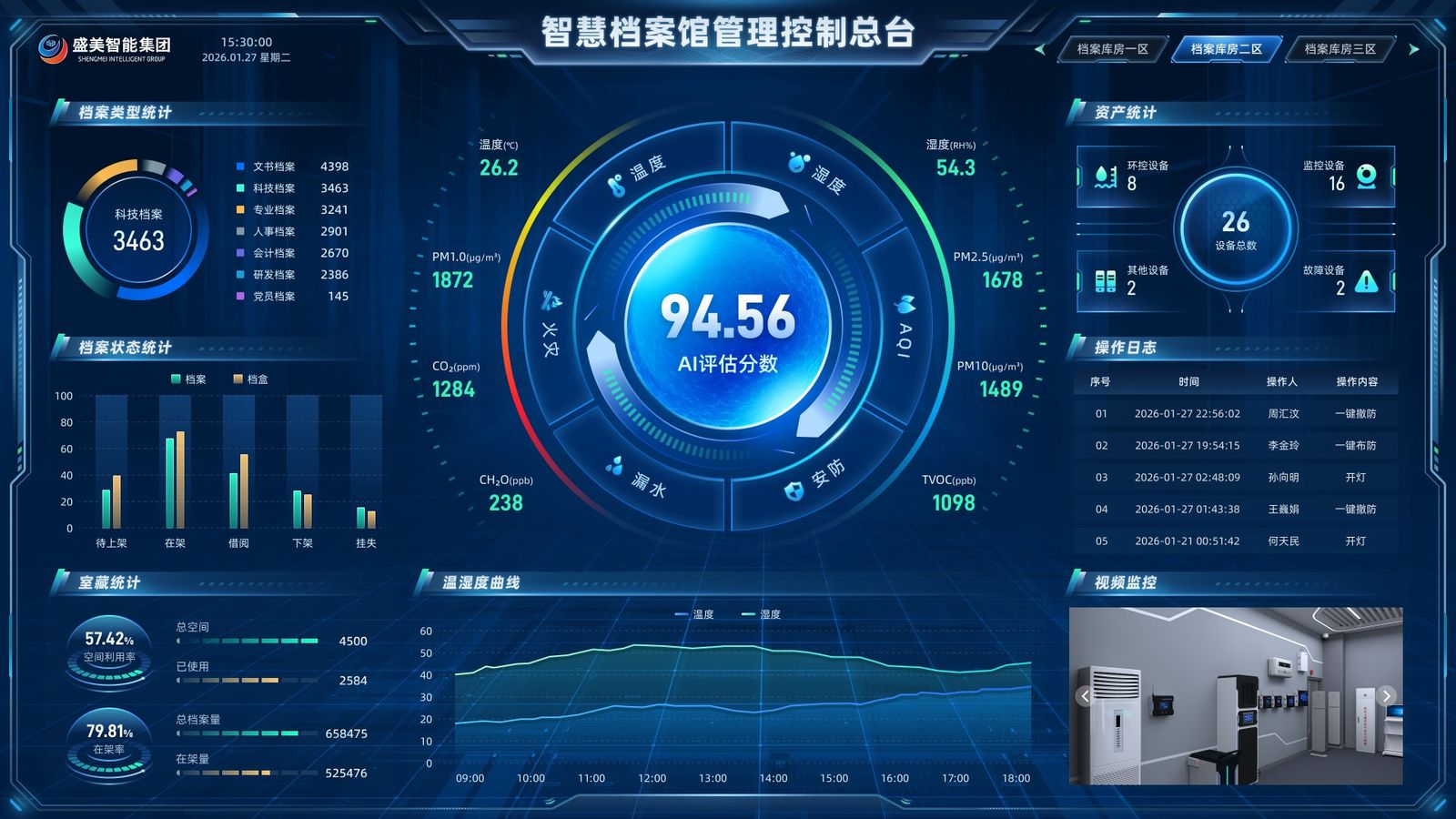
Environment Dashboard · Live Curves
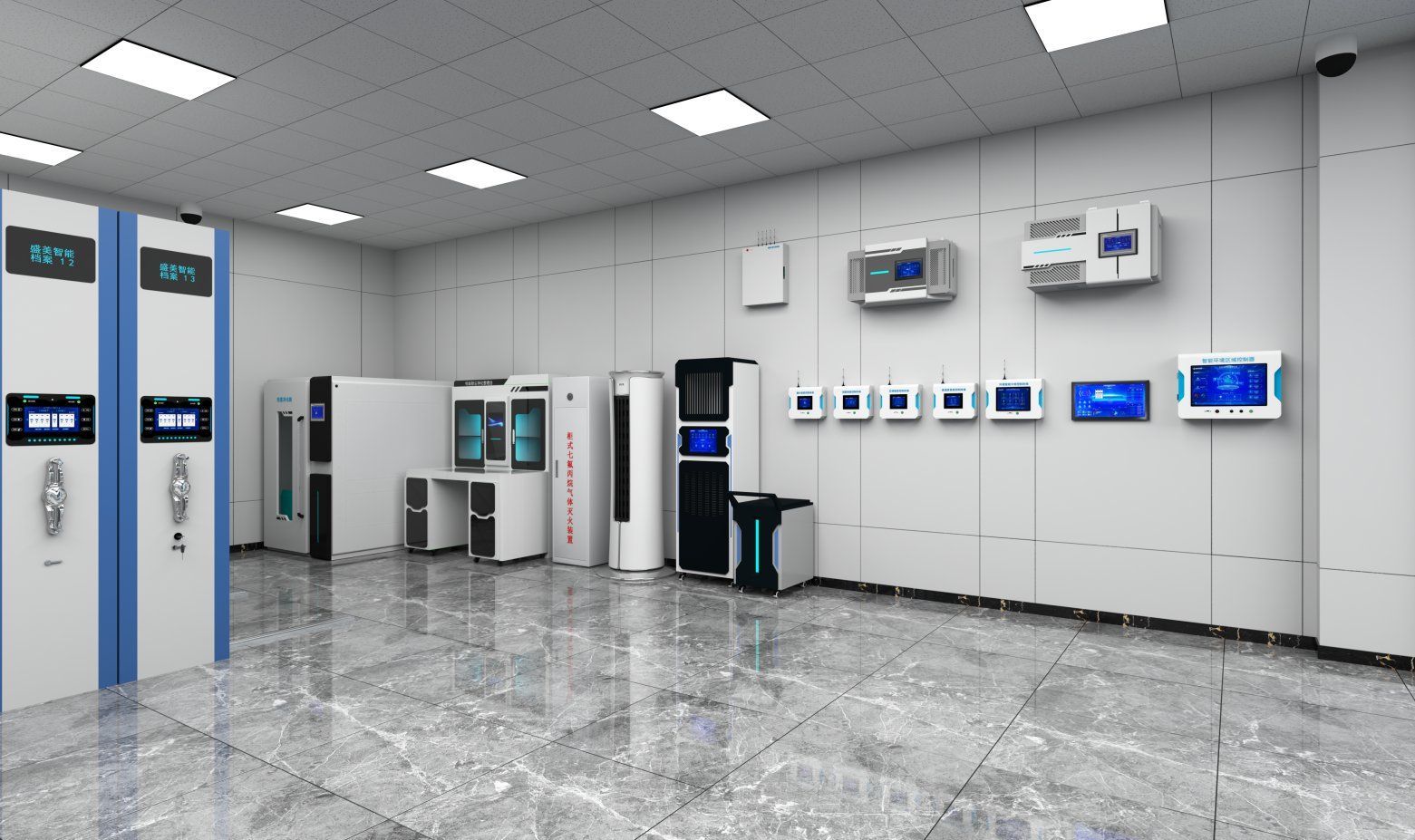
The room corrects itself before staff arrive.
Sensors are wired to the room’s climate equipment through the shelving control system. When a reading crosses its limit, the response starts immediately — not when someone reads the alert.
Dehumidifier
Starts automatically when humidity rises, stops at the safe line.
Ventilation
CO₂ and TVOC spikes trigger fresh-air exchange in the zone.
Air purification
Fine-dust alerts activate filtration until PM readings settle.
Shelf protection
Aisle drives pause while a leak or fire signal is active.
Need a monitoring scheme that passes inspection?
Send us your archive type and local standards — we return sensor placement, thresholds and equipment list.