
What a mobile shelving system is actually made of.
Before choosing manual, electric or smart control, understand the physical platform underneath: rails, carriages, shelving decks and protection hardware. Every Shengmei system is built on the same engineered base.
Mount the rails
Rails are anchored to a levelled floor — embedded flush for new buildings, surface-mounted with ramps for retrofit projects without floor work.
Assemble carriages
Steel carriages roll on sealed bearings and carry the shelving uprights. Anti-tilt locks engage automatically whenever a carriage is in motion.
Fit decks & control
Adjustable decks take files, boxes or volumes; the chosen drive — hand wheel, motor or touchscreen — is installed on the end panel and commissioned.
One aisle does the work of six.
Static shelving spends most of your floor on aisles. Mobile shelving mounts everything on movable carriages, so a single working aisle serves the whole system — typically doubling capacity in the same room, or halving the room for the same archive.
- Up to 2× storage capacity versus static shelving
- Lockable system secures the entire archive in seconds
- Modular bays re-configure as the collection grows
- Compatible with every drive type in the Shengmei range
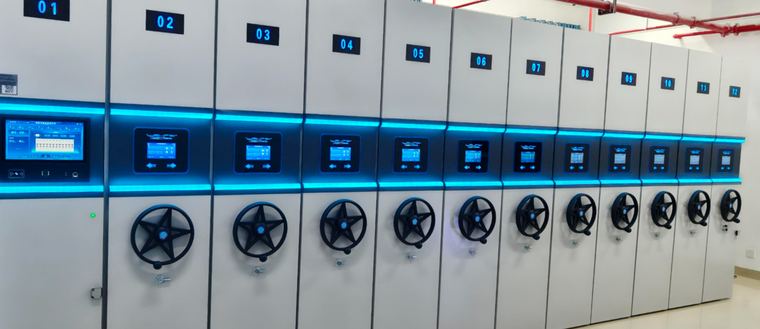
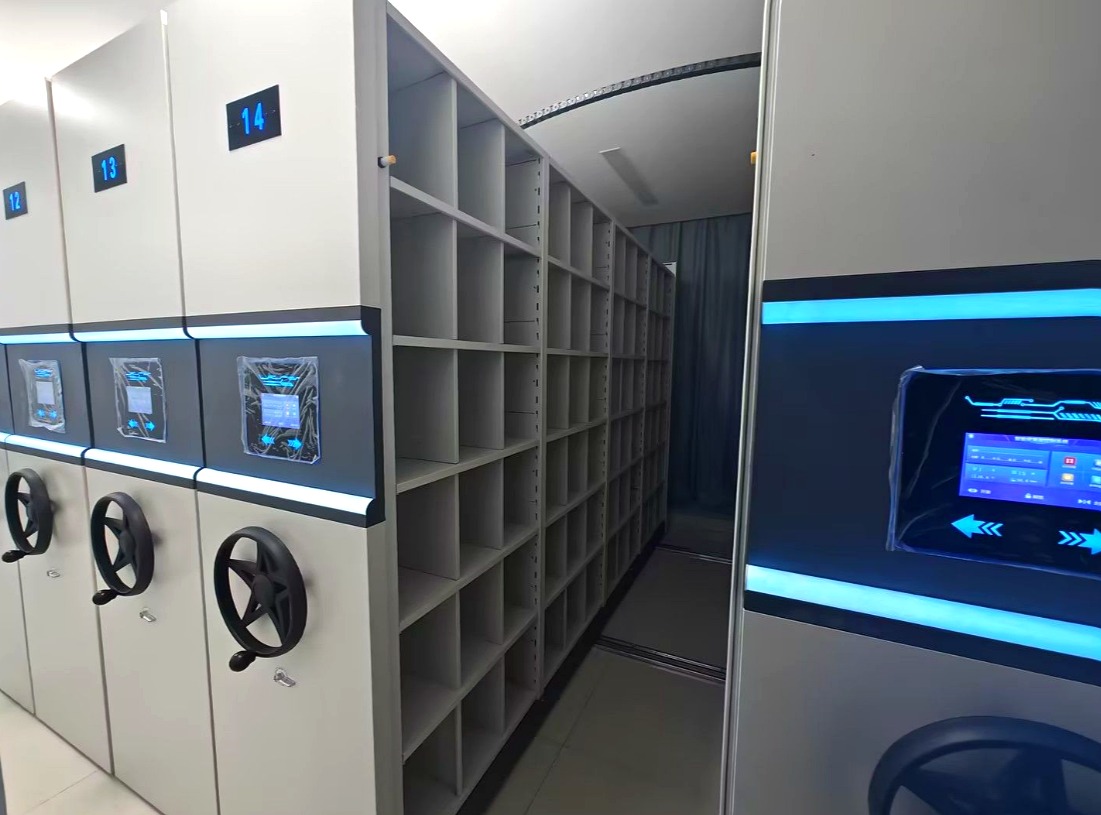
Choose the shelving depth that fits the collection.
All decks adjust on 25 mm pitch and carry 80 kg as standard. Bay width, height and tier count are finalized in the layout drawing for your room.
Accessories specified into the same drawing.
Every accessory below is engineered for the Shengmei carriage platform — no third-party adapters, no field modifications.
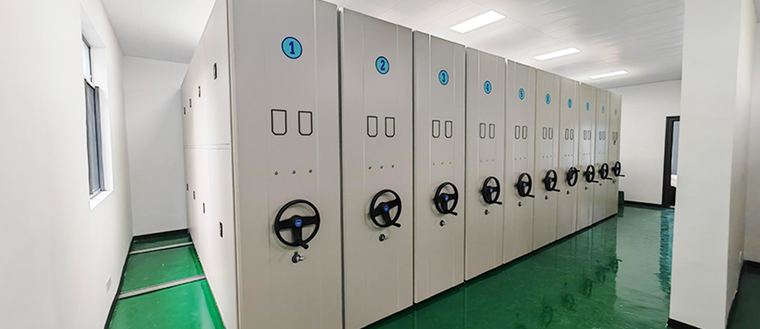
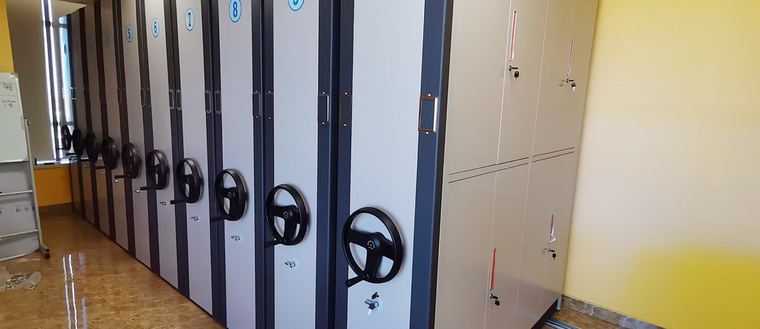
Hand-wheel systems in daily service.
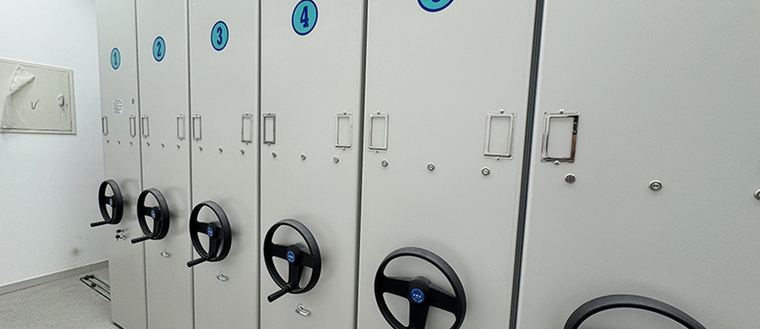
Manual compactor shelving installations on the same rail platform — different rooms, floor types and bay counts, all moved by hand.
Floor, load and layout — answered.
Does mobile shelving require a reinforced floor?
Standard office slabs normally carry a 5-tier system. For dense 6–7 tier layouts on upper floors we calculate point loads per bay and advise the structural review needed. Ground-floor repositories rarely need any reinforcement.
Embedded rail or surface-mounted rail?
Embedded rail sits flush in a chased floor for a seamless finish — best for new construction. Surface rail bolts onto the slab with access ramps and keeps the floor intact — best for retrofit and leased premises. Both use identical carriages.
How many bays can share one rail run?
Rail runs of 8–12 carriages are typical; longer runs are split with intermediate fixed aisles for access safety. The layout drawing shows aisle count, carriage order and drive positions before production.
Send us the room. Get the system drawing.
Dimensions, floor type and collection type are all we need to return a complete mobile shelving layout with bay count and load calculations.