Archive Storage · Industry Insight
Why Overseas Institutions Still Need Mobile Shelving in the Age of Archive Digitization
By the Shengmei Cabinet Editorial Team | 13-minute read | Updated Sep 2026
Archive Digitization · Hybrid Archive Storage · Overseas Archive Projects · Mobile Shelving Selection · Overseas Purchasing Guide
Introduction
Against the backdrop of rapidly spreading archive digitization, mobile shelving remains indispensable hardware for overseas archives building hybrid storage systems that combine digital access with physical preservation. Around the world, government agencies, hospitals, law firms, and university archives across Europe, the Americas, Southeast Asia, and the Middle East are pressing ahead with digitization programs: scanning paper files, cataloging metadata, and deploying cloud-based archive management systems have become routine project work.
This creates a common dilemma for overseas procurement managers: if every file can be scanned into an electronic document, is it still worth budgeting for physical storage equipment such as mobile shelving? Could paper originals simply be retired in favor of a purely digital archive?
Yet judged against the European archive storage standard EN 15095, national records legislation, and the realities of delivered projects, the answer is clear: digitization does not mean abolishing paper originals. The vast majority of compliant overseas institutions run a hybrid model of “digital access + physical preservation.” Digitization handles online retrieval and remote, multi-user access; mobile shelving takes care of high-density, secure storage of original files, legal evidence, and historical archives. The two back each other up — neither replaces the other.
In fact, many institutions continue to buy mobile shelving after completing digitization projects — to store the scanned originals, special-carrier records that resist digitization, and paper vouchers that regulations require them to retain. Drawing on overseas compliance requirements, digital-system risks, and real project experience, this article breaks down the underlying reasons why overseas institutions still purchase mobile shelving in the digital era, and helps buyers avoid the compliance pitfalls of “heavy on digitization, light on physical storage.”
1. Hard Regulatory Constraints: Some Records Must Be Kept as Paper Originals, and Scanned Copies Do Not Carry Full Legal Force
A widespread misconception among buyers is that once files have been scanned, the paper originals can simply be destroyed. But the records-management, healthcare, and commercial administrative regulations of most countries do not accept scanned copies as an unconditional substitute for physical originals.
Archive regulations, medical-records acts, and commercial evidence rules across Europe and the Americas are explicit: legal vouchers, original administrative files, historical manuscripts, and original medical records must be preserved in physical form as carriers of legal evidence; scanned copies serve only as reference copies for daily access. When an audit, a lawsuit, or a provenance investigation occurs, only the physical original carries full evidentiary force — an electronic copy alone is vulnerable to challenge.
In the United States, NARA (the National Archives and Records Administration) requires permanent, high-value records to keep physical backups as a risk safeguard even as it pushes electronic records forward. Several EU member-state archives mandate long-term physical archiving of manuscripts and original paper files, with digitization serving only as the public access channel.
2. Digital Systems Carry Inherent Risks: Mobile Shelving Builds the Physical Cold Backup
The strength of digital archives is fast retrieval and easy sharing, but digital storage itself has security weaknesses that cannot be engineered away. This is precisely why overseas archives dare not abandon paper originals entirely.
Ransomware and cyberattack risk. Extortion attacks targeting archives, hospitals, and government agencies rise year by year. Once an archive management system is encrypted or a cloud server is breached, electronic records can become inaccessible — temporarily or even permanently. Paper stored in mobile shelving is completely air-gapped: it depends on no network, no server, and no software, and no cyberattack can destroy the physical carrier. When digital systems go down, paper serves as the emergency fallback record.
Hardware decay and format obsolescence. Hard disks, optical discs, and flash memory all have finite lifespans. Decades later, obsolete file formats and unsupported software can leave early digitized files unreadable. Paper kept at appropriate temperature and humidity survives for centuries and can be read with no hardware or software at all — format failure simply does not apply.
Human error and system failure. Accidental deletion, software faults, and data-migration losses are among the most frequent digitization failures. Physical originals properly stored in mobile shelving can be used to verify and repair damaged electronic files, acting as the benchmark of authenticity.
Professional overseas archives therefore routinely implement a hybrid strategy: the digitized version serves daily office access, while originals are housed in mobile shelving as the disaster backup and the master copy for authenticity verification — dual protection for archive assets.
3. Many Record Carriers Are Unsuitable for Digitization and Can Only Be Stored Physically
Not every record is a good candidate for scanning. Overseas collections include large volumes of special carriers that digitization can hardly replace; for these, physical storage is the only option.
Fragile historical originals. Handwritten manuscripts, original seals, hand-drawn engineering drawings, old maps, and specially bound files are physically delicate, and repeated scanning accelerates their deterioration. The common practice in overseas archives is to prioritize preserving the physical original and provide access through digital surrogates. Originals are sealed into mobile shelving to reduce handling and lower the risk of damage.
Non-paper carriers. Old microfilm, audio and video media, evidence files, and oversized blueprints are costly and complex to convert. Many institutions choose to store them physically with a simple digital index rather than scan everything.
Budget-constrained archiving. Many small and mid-sized non-profit archives lack the budget to digitize their full holdings. Compared with expensive conversion costs, purchasing mobile shelving to build a compliant archive room is far more cost-effective, with digitization phased in later.
Digitization is a continuous, long-term program — not a one-off project. Until every record has been converted, large volumes of archives still need professional storage equipment.
4. Full Digitization Is Expensive: Not Every Institution Can Afford It
Many assume digitization saves money. In reality, a complete archive digitization program involves scanning labor, quality inspection, metadata entry, archive management software, server hardware, and annual system maintenance — the total cost is substantial.
Based on overseas industry averages, high-precision scanning, verification, and metadata entry for large batches of files generate considerable per-item processing costs. Small and mid-sized archives, local branches, and community record centers with limited budgets can rarely digitize their entire backlog in one pass.
| Storage Solution | Core Investment | Best Suited For |
|---|---|---|
| Full digital archiving | Scanning & processing fees + archive management system + servers + annual maintenance | Large archives with ample budgets and high-frequency access |
| Mobile shelving + partial digitization | Mobile shelving equipment + basic archive-room environment upgrades | Institutions with limited budgets and large backlogs, digitizing in phases |
A pragmatic approach adopted by many overseas mid-sized institutions: digitize high-frequency access records first for daily convenience; house low-frequency, long-term sealed records in mobile shelving; and digitize them as budgets allow. Digital and physical storage are not either-or — they work in phases.
5. Storage Pressure Persists After Digitization: Mobile Shelving Solves the Space Crunch
A mistaken expectation among buyers: after digitization, the volume of paper drops and the archive room will no longer need large-capacity storage. The reality is the opposite:
- First, once scanning is complete, most paper originals may not be destroyed — the physical total does not shrink; only an electronic copy is added.
- Second, institutions keep producing new paper records every year, and the inflow continues.
- Third, digitization itself generates scan printouts, working files, and backup copies — all of which need storage space.
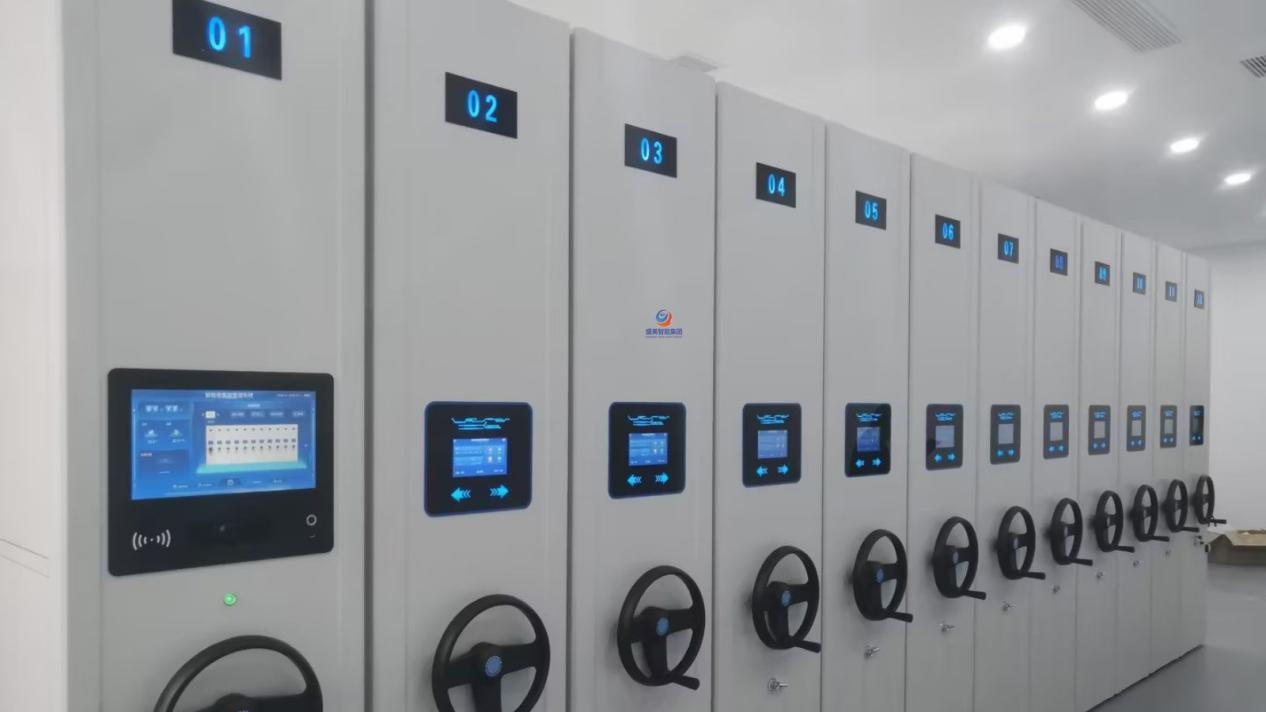
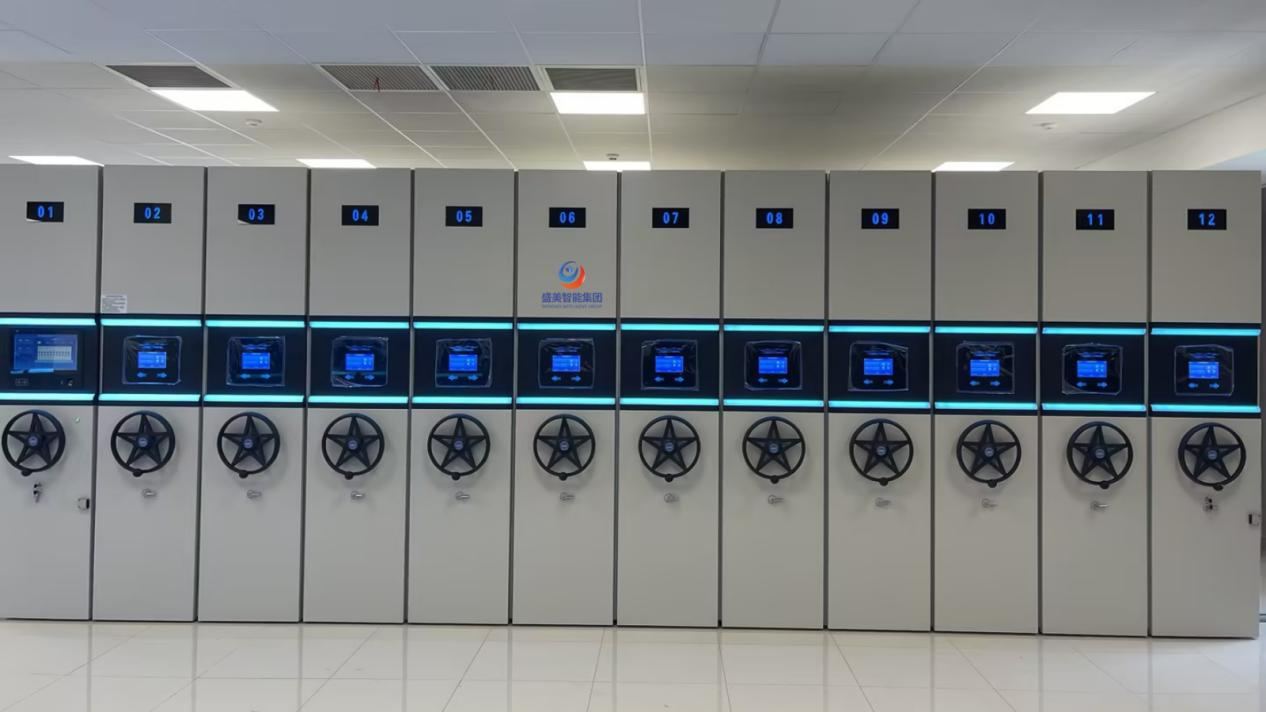
If ordinary open shelving is retained, space utilization sits at only 35–40% and the archive room saturates quickly. With rail-mounted moving structures, mobile shelving raises utilization to 85–90%, fitting more physical records into the same footprint and matching the post-digitization reality of retained originals plus new accessions. As digitization advances, physical storage pressure remains — and so does the value of high-density mobile shelving.
Space Utilization in the Same Footprint
Per EN 15095 test standards; actual utilization varies with archive-room layout.
6. Digitization + Mobile Shelving: The Mainstream Hybrid Archiving Model Overseas
Mature overseas archive projects never let digitization completely replace physical records. The division of labor is clear:
Fast Retrieval, Anywhere
Archive retrieval, online viewing, remote multi-user access, and collaborative work, raising day-to-day efficiency.
High-Density, Secure Storage
Original paper records, legal vouchers, precious historical files, and backups stored at high density, delivering original protection, disaster backup, and evidence retention.
Keys to Implementing Hybrid Archiving
- Sort the collection: distinguish high-frequency access records from long-term sealed records; digitize high-frequency records first; house low-frequency sealed records in mobile shelving to reduce handling and protect the originals.
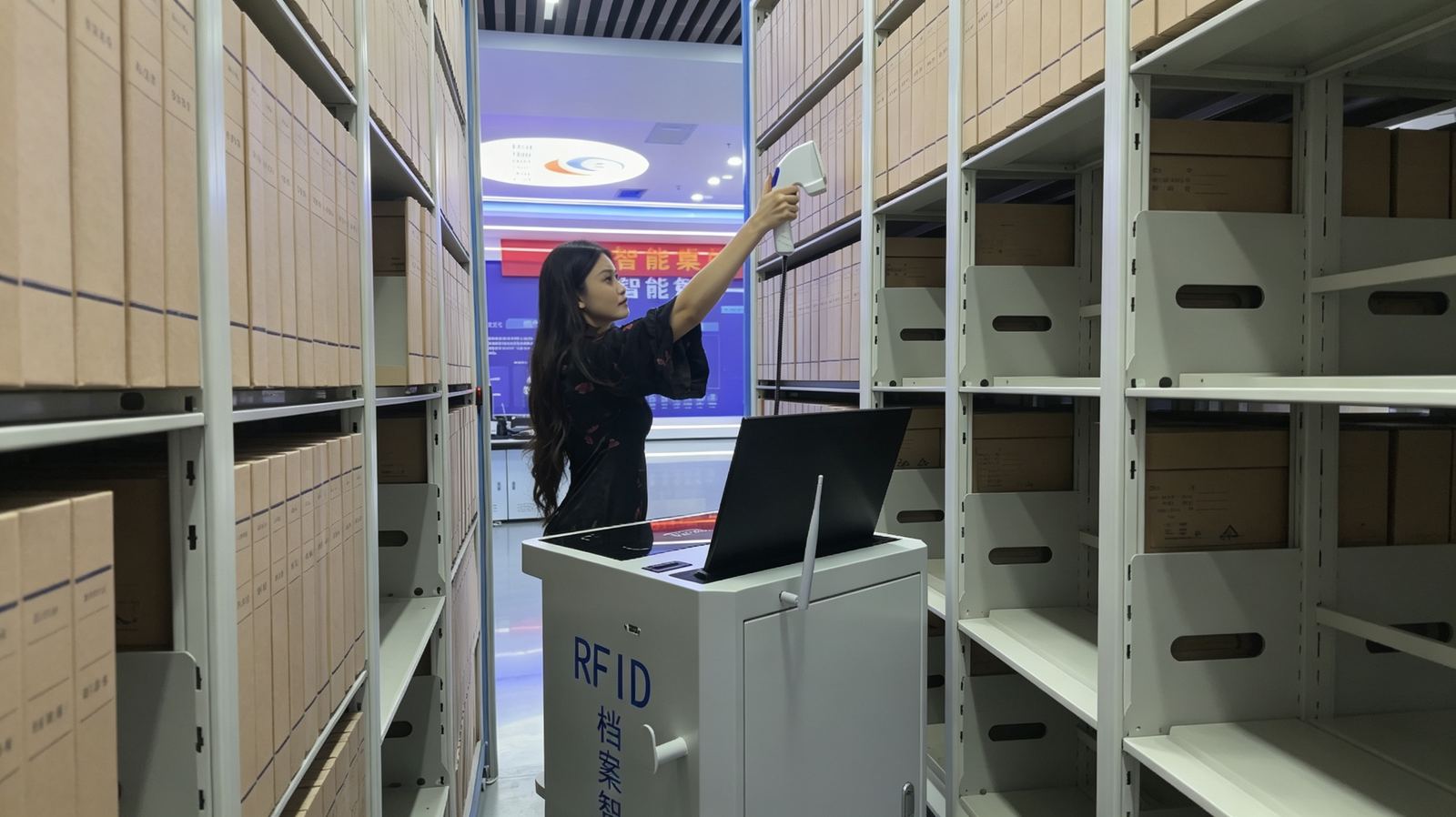
- Bind digital metadata IDs one-to-one with physical locations on the mobile shelving, so the digital system can pinpoint where a physical file sits.
- Choose sealed, dust-proof mobile shelving combined with archive-room temperature and humidity control to slow paper aging and reduce repeated scanning work.
- Run regular two-way verification: check electronic files against physical originals to catch missing pages and scan distortion; use digital indexes to speed physical retrieval.
7. Common Misconceptions — FAQ
Q1: Once everything is digitized, do we still need mobile shelving?+
Q2: After digitization, can scanned originals be stored on ordinary shelving?+
Q3: Which comes first — the digitization project or the mobile shelving purchase?+
Q4: Manual or smart mobile shelving for a hybrid archiving project?+
Conclusion
Digitization is a powerful tool of modern archives management, dramatically improving retrieval and sharing. But it still cannot replace the legal evidentiary value, physical backup value, and historical-original value of paper records.
For overseas archives, the digitization wave does not mark the end of physical storage. Mobile shelving is not the opposite of digitization — it is essential supporting infrastructure for the digital system. Digitization solves access convenience; mobile shelving solves the safe preservation of originals. Together they build a risk-resilient, compliant hybrid archive storage system. When planning digitization, institutions must not overlook storage planning for paper originals — otherwise the digitization project may finish with nowhere compliant to store them.
Archive Room Project Consultation
Need a hybrid archive storage plan, mobile shelving capacity calculation, overseas tender technical-specification templates, or archive room layout planning? Shengmei Cabinet provides a free project assessment.
📧 Business inquiries: info@shengmeicabinet.com
💬 Overseas projects WhatsApp: Kerwin +86 189 3280 1260
Email subject format: Hybrid Archive Storage Inquiry + archive room size + project region
Disclaimer: This article is provided as general reference for overseas archive projects. Records-retention regulations differ by country and region; implementations must follow local records legislation and industry compliance standards.