What Is Manual Compactor Shelving?
Definition, working principle, structure, core advantages, limitations, best-fit overseas archive scenarios, and a full comparison with smart compactor shelving and static shelving — all powered by a simple hand crank.
Across overseas government facilities, hospitals, law firms, and universities, manual compactor shelving is the mainstream equipment for high-density physical records storage. Many first-time archive builders ask: what exactly is manual compactor shelving, and how does it differ from ordinary static shelving or smart compactor shelving?
In short, manual compactor shelving is a consolidating archival storage system driven by a hand crank and moving along floor-mounted rails. By removing the fixed aisles reserved between conventional shelving rows, it dramatically increases storage capacity within a limited repository footprint, and is widely used for the long-term keeping of paper files, medical records, contracts, and historical archives. This guide walks through manual compactor shelving from structure and working principle to core features, suitable scenarios, pros and cons, and overseas project essentials — helping overseas buyers build a clear picture quickly and make a confident selection.
What Is Manual Compactor Shelving? Definition and Working Principle
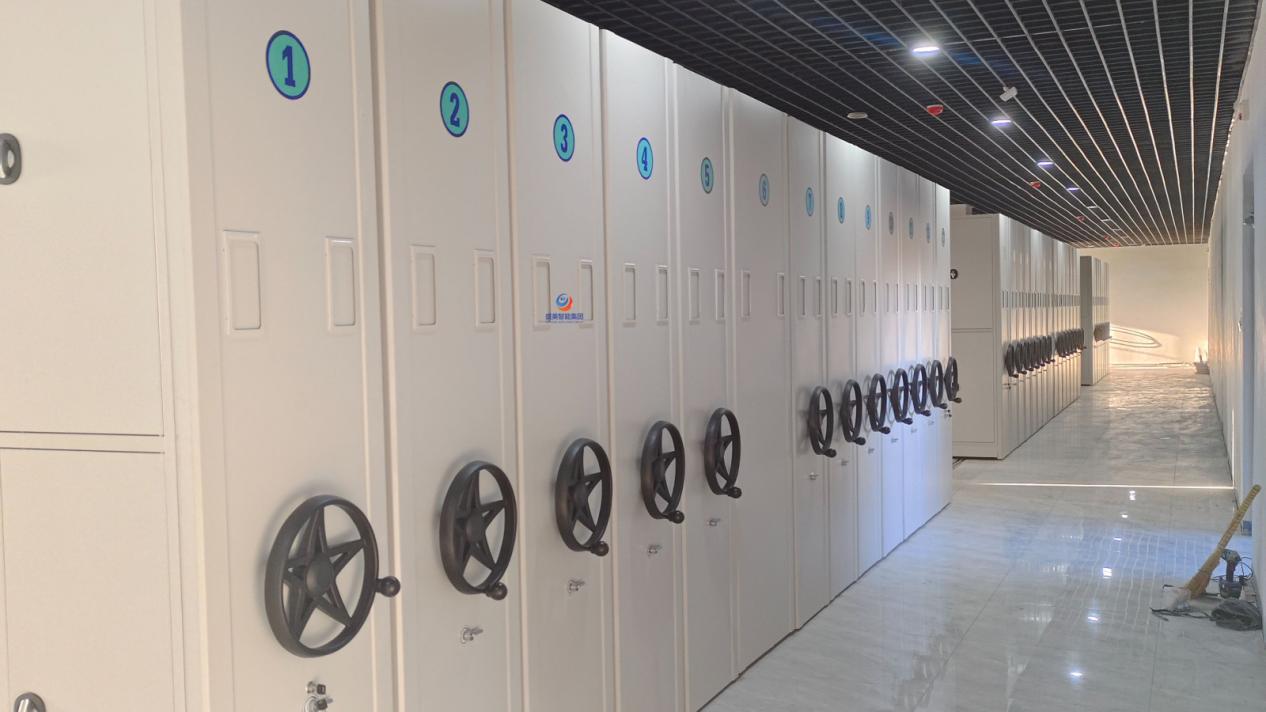
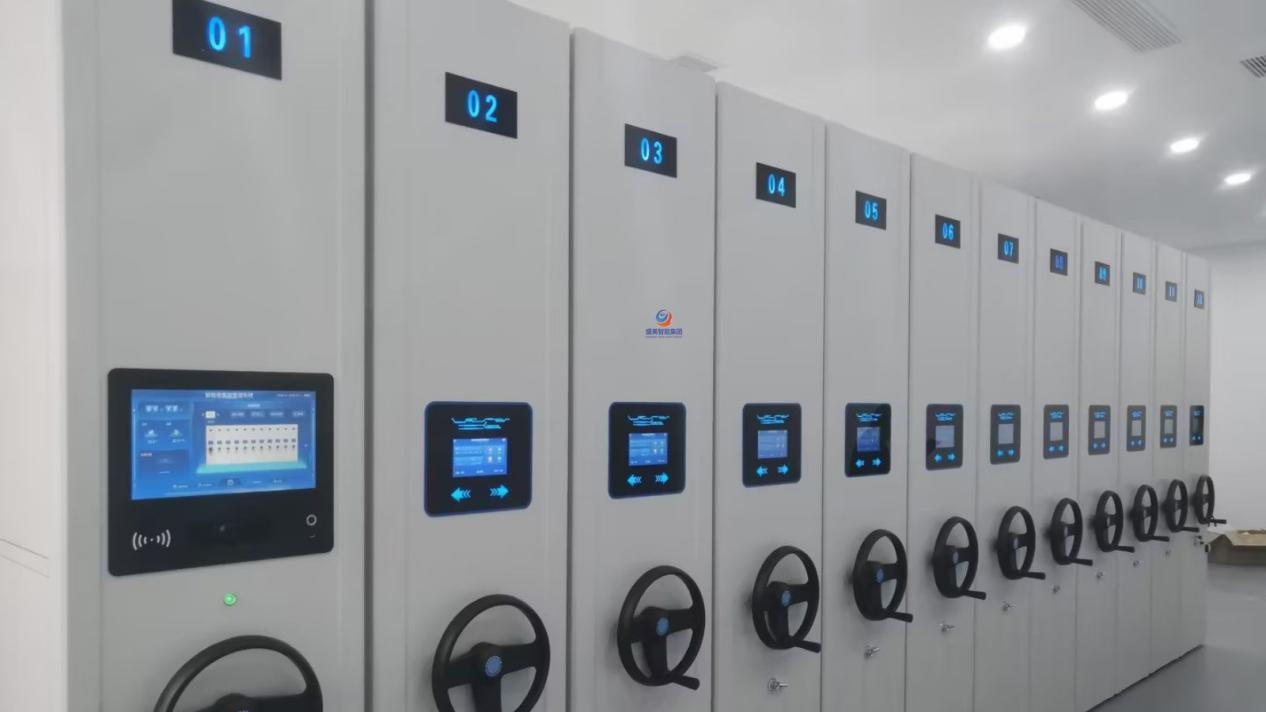
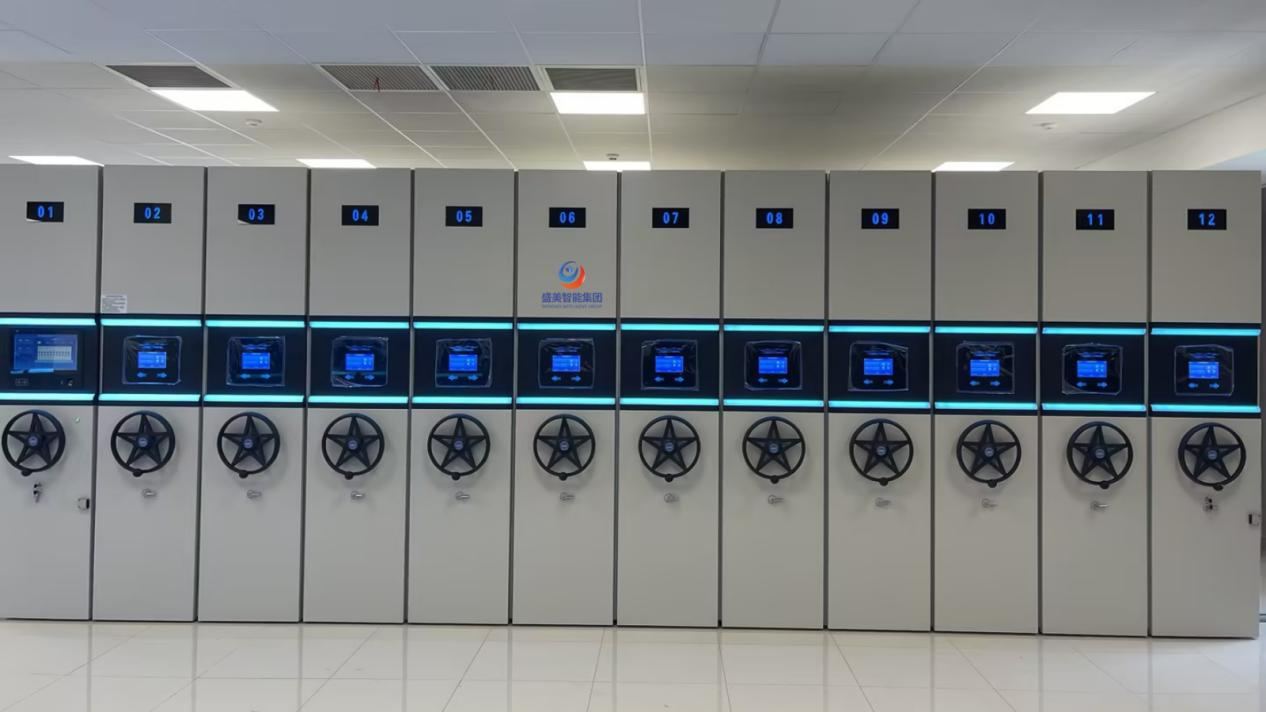
Manual compactor shelving — also called hand-crank mobile shelving — is a complete system made up of floor rails, mobile bays, a hand-crank transmission mechanism, anti-tip safety devices, adjustable shelves, and locks.
Working Principle
Conventional static shelving needs a fixed walkway reserved for every row, and those aisles consume a large share of the repository's floor area. Manual compactor shelving bays slide laterally on embedded floor rails:
Turn the side-mounted hand-crank handle; chain transmission moves the entire row of bays along the rails.
To retrieve a file, crank the handle to slide the adjacent bays aside and open an access aisle.
After retrieval, crank again to close the bays together, eliminating the spare aisle and reclaiming the space.
With all bays consolidated, only one or two working aisles remain — a dramatic capacity gain over static shelving.
Main Structural Components of Manual Compactor Shelving
Six component groups make up a complete manual compactor shelving system. Click each one to see what it does and why it matters for overseas projects.
Available in embedded and surface-mounted types, the rails are the foundation of bay movement. Overseas projects must verify the repository's floor load-bearing conditions before ordering.
Multiple independent shelving units that move back and forth, with freely adjustable shelf heights to fit archive boxes, files, drawings, and other media.
Crank handle, transmission chain, and gear assembly. Pure human power moves a fully loaded row of bays with comfortable, low-effort operation.
Anti-tip limit devices, braking locks, and anti-pinch safety locks. Once an aisle is opened the bays can be locked in place, preventing accidental movement and crushing — a safety configuration overseas archive projects value highly.
A master lock secures all bays simultaneously when the system is not in use, protecting the records inside.
Sealing strips between bays keep out dust and moisture when closed, protecting paper originals over long storage periods.
Core Advantages of Manual Compactor Shelving
High Storage Density, Less Floor Area
Eliminates large stretches of idle fixed aisles — the same repository footprint holds more files. Especially effective for institutions with huge existing collections and tight floor space.
No Power Needed, Simple & Stable Deployment
Fully hand-crank driven: no wiring, no motors, no circuit boards. A power outage or electrical fault never takes it offline — ideal for retrofitting older repositories without electrical upgrades.
Low Failure Rate, Low Maintenance Cost
A mostly mechanical structure with few parts rarely breaks down. Daily upkeep is limited to simple lubrication of rails and transmission — lifecycle O&M workload and cost run well below smart systems, perfect for budget-limited overseas institutions.
Safe & Reliable for Long-Term Sealed Storage
Equipped with mechanical locking and anti-pinch safety mechanisms; the closed state seals tightly against dust, helping paper originals survive long-term storage.
Supports Phased Expansion
Lay all the rails in one pass, then add bay units later as budget allows — matching the phased construction needs of small and mid-sized repositories.
Limitations of Manual Compactor Shelving
All-Manual Operation
Frequent, large-volume retrieval means repeated hand-cranking to move bays — access efficiency is lower than electric or smart compactor shelving.
No Software Integration
No system linkage, file positioning, or automatic inventory — it cannot connect to archive management software.
Strict Floor Requirements
The floor must meet building load-bearing standards, and rails demand good installation flatness. Repositories with substandard floors need ground reinforcement first.
Which Overseas Archive Scenarios Suit Manual Compactor Shelving?
Click the tabs below to switch between the recommended scenarios and the cases where another system is usually the better choice.
- Government agencies, non-profits, community archives, and law firm repositories where records are kept long-term with low-to-medium retrieval frequency
- Hospital medical-record rooms and small-to-mid university archives with limited budgets that need to control both purchase and maintenance costs
- Older repositories being retrofitted where electrical rewiring is impractical and power dependency is unwanted
- Projects planning phased procurement and gradual capacity expansion
- Archives with very large retrieval volume and frequent, high-rate access
- Facilities that need linkage with archive management software, automatic file positioning, or electronic inventory
- Large comprehensive archives pursuing automated, intelligent management
Manual Compactor Shelving vs. Other Archival Storage Systems
The table below compares manual compactor shelving with smart compactor shelving and static archival shelving across power method, space utilization, O&M cost, software integration, and best-fit use cases. Click any row to highlight it.
| Storage System | Power Method | Space Utilization | O&M Cost | Software Integration | Best Suited For |
|---|---|---|---|---|---|
| Manual compactor shelving | Hand crank | 85–90% | Low | Not supported | Limited budgets; sealed long-term storage; no power supply |
| Smart compactor shelving | Motor drive + system control | 85–90% | Medium–High | Links with archive software | High-frequency retrieval; intelligent management |
| Static archival shelving | Fixed structure | 35–40% | Very low | Not supported | Small collections; ample repository floor space |
Tip: click a row to focus on it; click again to release.
Which System Fits Your Project?
Answer three quick questions and get an instant recommendation. Click an option in each group.
Key Considerations for Overseas Procurement
- Assess floor load early. Confirm the repository floor's load capacity before purchase, and choose embedded or surface-mounted rails to match the building. Related reading: Floor Load Requirements for Compactor Shelving.
- Put safety configurations first. For overseas projects, specify anti-pinch protection, anti-tip limit devices, and a mechanical master lock as standard, meeting EN 15095 storage safety requirements.
- Confirm media dimensions. Customize shelf spacing to your archive boxes, files, and drawing sizes so current records fit without retrofitting later.
- Plan phased purchasing. If budget is tight, lay all the rails first and buy part of the bays now — add storage units as funds become available.
Frequently Asked Questions
Government agencies, non-profits, community archives, and law firm repositories where records are kept long-term with low-to-medium retrieval frequency; hospital record rooms and small-to-mid university archives with limited budgets; older repositories where rewiring is impractical; and projects planning phased procurement with gradual expansion.
For archives with very high retrieval volume and frequent access, for facilities that need archive software linkage, automatic file positioning, or electronic inventory, and for large comprehensive archives pursuing automated, intelligent management — a smart compactor system is usually the better match there.
85–90% space utilization, zero power dependency with fully hand-crank operation, a low failure rate thanks to its simple mechanical structure, low O&M cost, mechanical locking with anti-pinch safety, dust-tight closed storage for long-term preservation, and phased expansion support.
All operations rely on hand cranking, so frequent bulk retrieval is slower than with electric or smart systems; there is no software integration, file positioning, or automatic inventory; and the floor must meet load-bearing and flatness requirements, sometimes needing ground reinforcement before installation.
Manual and smart compactor shelving both reach 85–90% space utilization versus roughly 35–40% for static archival shelving. Manual shelving has the lowest O&M cost but no software integration; smart shelving adds motorized operation and archive software linkage at a medium-to-high O&M cost, best suited to high-frequency, intelligence-driven management.
The Bottom Line
In short, manual compactor shelving is a high-density mechanical storage system that moves along rails by hand crank. Its biggest strengths are high storage density, zero electricity, low failure rate, and controllable maintenance cost. It offers no smart-system functions, which makes it best suited to overseas repositories focused on sealed long-term storage, with medium retrieval frequency and a limited budget.
When selecting, don't chase automation for its own sake. Weigh your retrieval frequency, the building conditions of the repository, and the project budget together — that is how you land on the storage solution that truly fits your project.
Disclaimer: This article is a reference guide for overseas archive projects. Project implementation should follow local archival regulations and applicable industry standards such as EN 15095.
Archive Repository Project Inquiry
Need capacity calculations for manual compactor shelving, tender parameter templates for overseas projects, or repository layout plans? Shengmei Cabinet provides a free project assessment service.
Email subject format: Manual Compactor Shelving Inquiry + repository size + project region.