Archive Room Selection

Manual vs. Smart Compact Shelving

A seven-dimension comparative analysis for government, healthcare, education, and enterprise archive-warehouse projects.

By Shengmei Cabinet 15 min read August 2026
01

Core Background and Common Misconceptions

Archive-warehouse construction revolves around five dimensions: secure storage, efficient retrieval, compliant filing, long-term maintainability, and controllable cost. Both manual and smart compact shelving can double space utilization, yet they differ fundamentally in drive mode, intelligence, safety, and compliance.

Two common misconceptions dominate procurement: blindly pursuing smart systems in small or low-frequency warehouses, causing waste; or choosing manual models for high-compliance smart-archive projects, leading to failed ratings. The right approach matches product to warehouse scale, retrieval frequency, audit standards, intelligence level, and long-term O&M capability.

02

Manual Compact Shelving

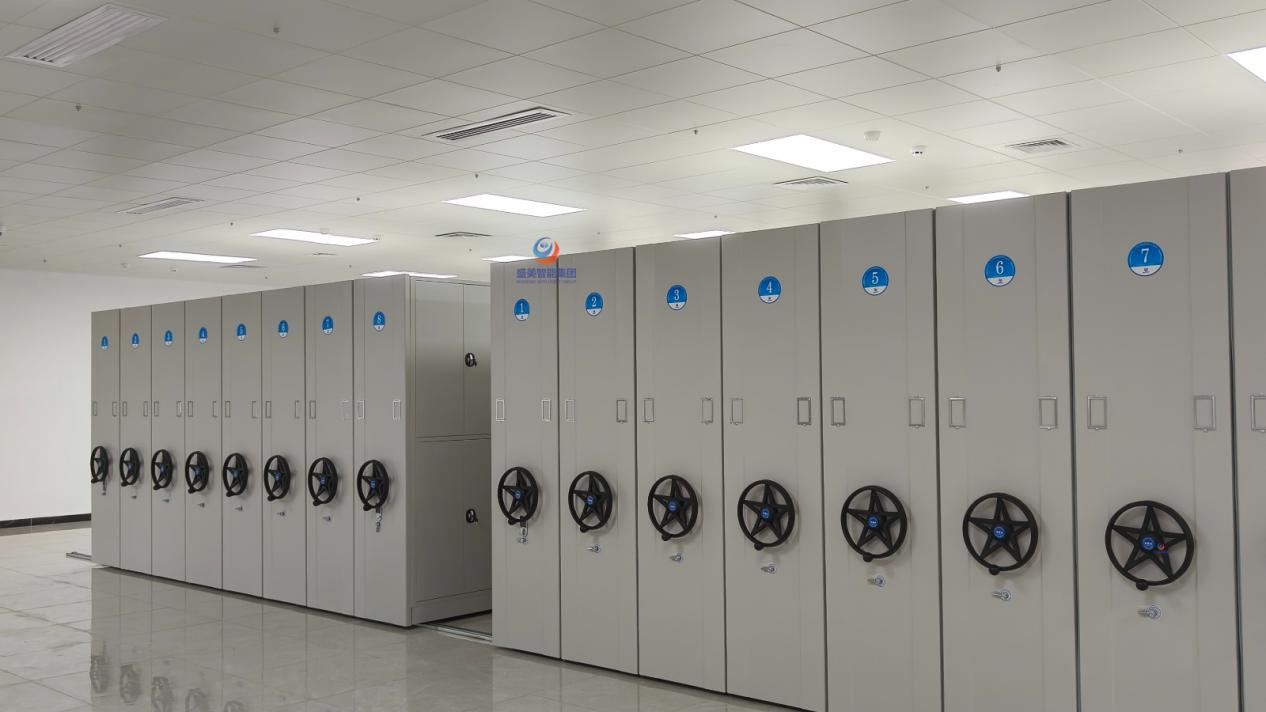
The classic foundational option. It relies on hand-crank mechanical transmission, offers a mature structure, and is ideal for small and medium-sized rooms, sealed archives, and budget-limited projects.

Manual Compact Shelving — Hand-Crank Mechanical Row Configuration

Core Strengths

  • Minimal & StablePure mechanical steel structure; no motors or sensors; stable for 15–20 years.
  • Low Total CostNo control systems or wiring; overall project cost reduced by 30–40%.
  • No Power DependencyWorks without electricity; ideal for older or temporary warehouses.
  • Minimal MaintenanceRoutine cleaning and lubrication only; no professional technicians needed.
  • Zero Learning CurveSimple hand-crank operation; new staff can use it immediately.
  • Core Weaknesses

  • Time-ConsumingManual aisle switching is slow and labor-intensive for high-frequency retrieval.
  • No Smart LedgerManual registration only; poor traceability and risk of misplacement.
  • Basic SafetyLacks infrared anti-pinch, light curtains, and smart limits.
  • No Platform LinkCannot integrate with smart-government or digital-archive platforms.
  • ✦Precisely Matched Scenarios

    Small enterprise, school, and grassroots archive rooms; low-frequency retrieval; long-term sealed archives; older-warehouse renovation; budget-limited projects; sites without dedicated O&M staff.

    03

    Smart Compact Shelving

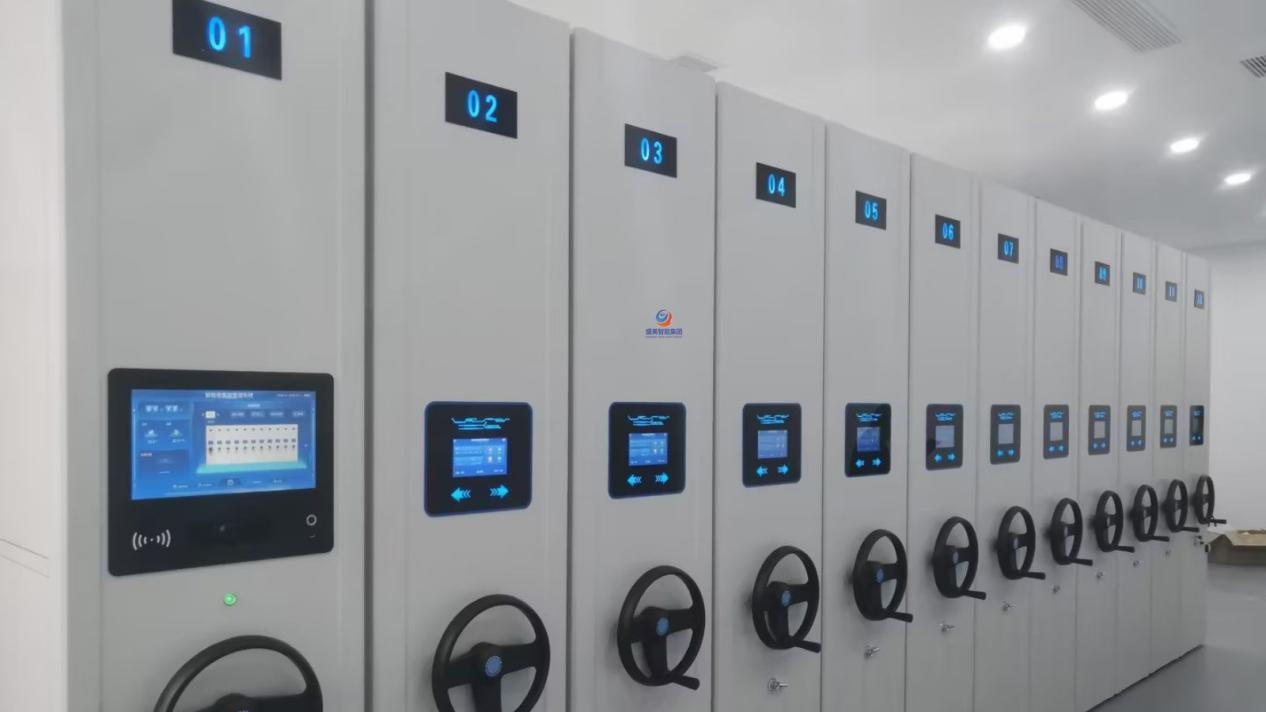
    The core standard for modern smart archive warehouses. It integrates motor drive, electronic control, touch terminals, RFID traceability, and platform linkage.

    Smart Compact Shelving — Integrated Touch Control & Environmental Monitoring

    Core Strengths

  • Automatic ControlOne-click aisle opening and 3-second archive positioning; efficiency up 90%+.
  • Digital LedgerElectronic filing, automatic ledger updates, and full operation-log traceability.
  • Multi-Layer SafetyInfrared anti-pinch, emergency stop, encrypted access, and face recognition.
  • Platform IntegrationStandard APIs connect to OA, government, and digital-archive platforms.
  • Environmental LinkageMonitors temperature, humidity, and air quality to preserve archives.
  • Core Weaknesses

  • Higher CostSmart modules, wiring, and integration raise procurement and engineering costs.
  • Complex MaintenanceElectronic parts need professional inspection, upgrades, and replacements.
  • Power DependentSmart functions are limited during outages; manual emergency mode remains.
  • Risk of OverkillLow-frequency use wastes smart functions and yields poor ROI.
  • ✦Precisely Matched Scenarios

    Government agencies, SOEs, top-tier hospitals, and large university archives; high-frequency retrieval; confidential rooms; smart-archive rating projects; digital-infrastructure initiatives.

    04

    Full-Dimension Comparison

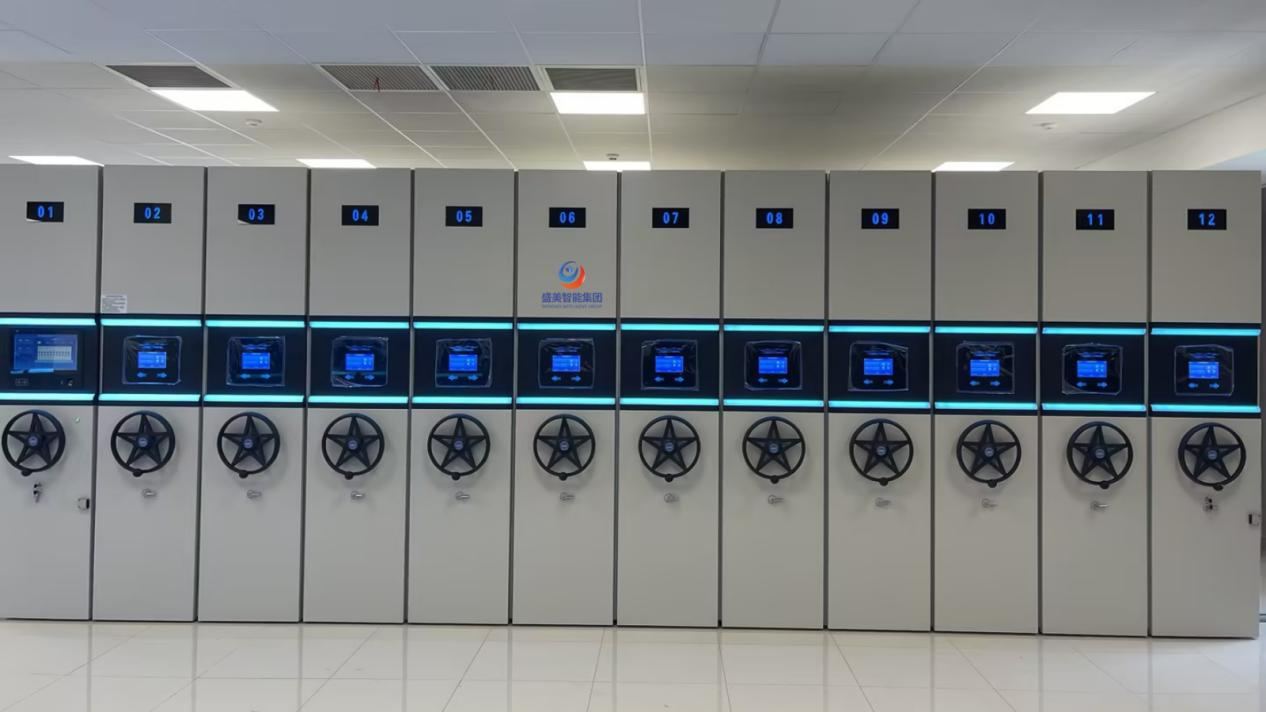
    A side-by-side guide for procurement, tendering, and budget decisions.

    Smart Compact Shelving Array — Multi-Bay Connected Configuration
    DimensionManualSmartSelection Conclusion
    Procurement CostLow; high cost performance; no supporting feesHigh; includes smart system, control, and weak-current costsManual when budget is limited
    Retrieval EfficiencyManual cranking and searching; lower efficiencySmart positioning and one-click opening; +90% efficiencySmart for high-frequency retrieval
    Safety LevelBasic mechanical self-locking; single protectionMultiple smart protections + encrypted accessSmart for confidential projects
    Maintenance CostMinimal; no professional O&M or consumablesHigher; regular inspection, upgrades, spare partsManual without dedicated O&M staff
    Ledger & TraceabilityNo electronic ledger; manual registrationAutomatic ledger; full logs; auditableSmart essential for audit and rating
    Platform IntegrationNo integration; no data linkageAPI integration, digital linkage, remote controlSmart mandatory for smart archive rooms
    Service LifePure steel; stable 15–20 yearsMechanical durable; electronics need periodic replacementManual suits long-term sealed archives
    Scenario ScaleSmall rooms, low-frequency, basic storageMedium/large rooms, high-frequency, smart constructionMatch by need; avoid overconfiguration
    05

    Practical Selection Guidelines

    Four rules to avoid the trap of “under-specification failing standards or over-specification wasting money.”

    1By Usage Frequency

    Low frequency → Manual. Static storage and sealed archives are best served by manual systems with the highest ROI.

    2By Construction Standard

    Basic warehouse → Manual. Smart ratings, digital transformation, and audits require smart compact shelving.

    3By O&M Capability

    No dedicated O&M → Manual. Professional teams can unlock the full value of smart systems.

    4By Budget Scale

    Small budget → Manual. Sufficient budgets should build a smart digital system in one step.

    06

    FAQ — High-Frequency Questions

    No. Small rooms with low retrieval frequency are fully served by manual shelving. Smart systems in such scenarios cause functional idleness and budget waste.
    Yes. All smart systems include a manual emergency mode, allowing hand-crank operation during outages.
    Manual models win on mechanical stability; smart models lead on personnel safety, privacy, and audit traceability.
    Yes. Most rating standards require digital management, smart traceability, and system linkage that manual models cannot provide.
    Higher than manual, mainly for electronic repairs and upgrades, but the digital-management benefits typically outweigh the costs.
    07

    Conclusion: No Best Product, Only Best Scenario Fit

    Manual and smart compact shelving have no absolute superiority. The key is matching usage scenario, management standard, budget scale, and O&M capability.

    Manual shelving is the pragmatic choice for basic rooms, low-frequency storage, and budget-limited projects. Smart shelving is the core standard for smart archive rooms, standardized ratings, high-frequency offices, and high-end infrastructure. The goal is a four-dimensional unity of practicality, compliance, economy, and forward-looking design.

    Customized Archive Room Selection Consultation

    Get a one-to-one selection plan, budget estimate, scenario adaptation report, or tendering technical parameter template based on your warehouse area, archive volume, usage frequency, and rating standards.

    Email: info@shengmeicabinet.com
    WhatsApp: Kerwin +86 189 3280 1260
    Share the Post:
    HAVE QUESTIONS?

    Expert Storage Advice

    Give A Brief About Shengmei Cabinet? ▲

    Shengmei Cabinet is a professional manufacturer specializing in steel storage solutions. We focus on producing high-quality steel furniture including mobile shelving, steel cabinets, wardrobes, and intelligent archive systems. With years of experience, we serve offices, archives, schools, hospitals, and warehouses worldwide. Our commitment to precision fabrication and durable powder coating ensures our products stand the test of time.

    Do You Offer OEM & ODM Customization? ▼

    Yes, we provide comprehensive OEM and ODM services. We understand that every workspace has unique requirements. Our engineering team works closely with clients to customize dimensions, colors, and internal structures to fit specific storage needs and branding guidelines.

    What About The Quality Of Your Steel Cabinets? ▼

    We use high-grade cold-rolled steel for all our products. The surface is treated with environmentally friendly electrostatic powder coating, which makes our cabinets rust-resistant, scratch-resistant, and durable. Every product undergoes strict quality inspection before leaving the factory.

    What Is The Lead Time For Production? ▼

    For standard products, the lead time is usually within 15-20 days after receiving the deposit. For customized projects, the time depends on the quantity and complexity of the design. We always strive to deliver efficiently to meet your project schedule.

    Do You Provide Installation Guides? ▼

    Absolutely. Our products feature a knock-down structure for easy shipping. We provide detailed installation manuals and video guides with every order. For large projects, we can also provide online video support or send engineers to your site if necessary.

    Project support

    Need a storage layout for your archive room?

    Send your room size, storage target and delivery country. Shengmei will help configure a suitable cabinet or compactor shelving proposal.

    Your inquiry is saved for our project team. Include dimensions and country for a more useful reply.