Portable Shelving vs. Rail-Mounted
Mobile Compactor Shelving
Which One Is Right for Long-Term Archive Storage?
Why This Choice Matters
Overseas small and mid-sized archive institutions, community archives, and corporate archive rooms usually start with a tight budget, a modest volume of records, and an unfinished room layout. So the first big question is: low-cost, flexible portable storage shelving, or a one-time investment in rail-mounted mobile compactor shelving that pays off for decades?
In practice, many buyers choose portable shelving to cut initial spending — only to face moisture damage, dust, disorganized filing, and space shortages within one to three years. In short: portable shelving is a transitional tool for short-term turnover, while rail-mounted mobile compactor shelving is the mainstream professional system for long-term, permanent preservation. This guide breaks down their design differences, long-term risks, cost logic, and compliance standards, to help you build a clear selection standard.

Design Positioning: Two Products, Two Logics
To choose the right archive storage equipment, you must first understand what each product was designed for. Structure, materials, workmanship, and functions are all dictated by the usage scenario — and a mismatched scenario inevitably leads to problems later.
Portable storage shelving is a general-purpose product designed for office settings, temporary warehousing, and short-term material storage. Its core advantages: no drilling, no rails, no fixed installation, freely movable, adjustable shelf counts, extremely low unit price, and ready to use upon delivery. It solves the basic problem of “nowhere to put things” — without considering dust-proofing, moisture-proofing, anti-aging, loss prevention, long-term load bearing, or compliant archiving. In small overseas offices, temporary project sites, and short-term document turnover, portable shelving offers excellent value and practicality.
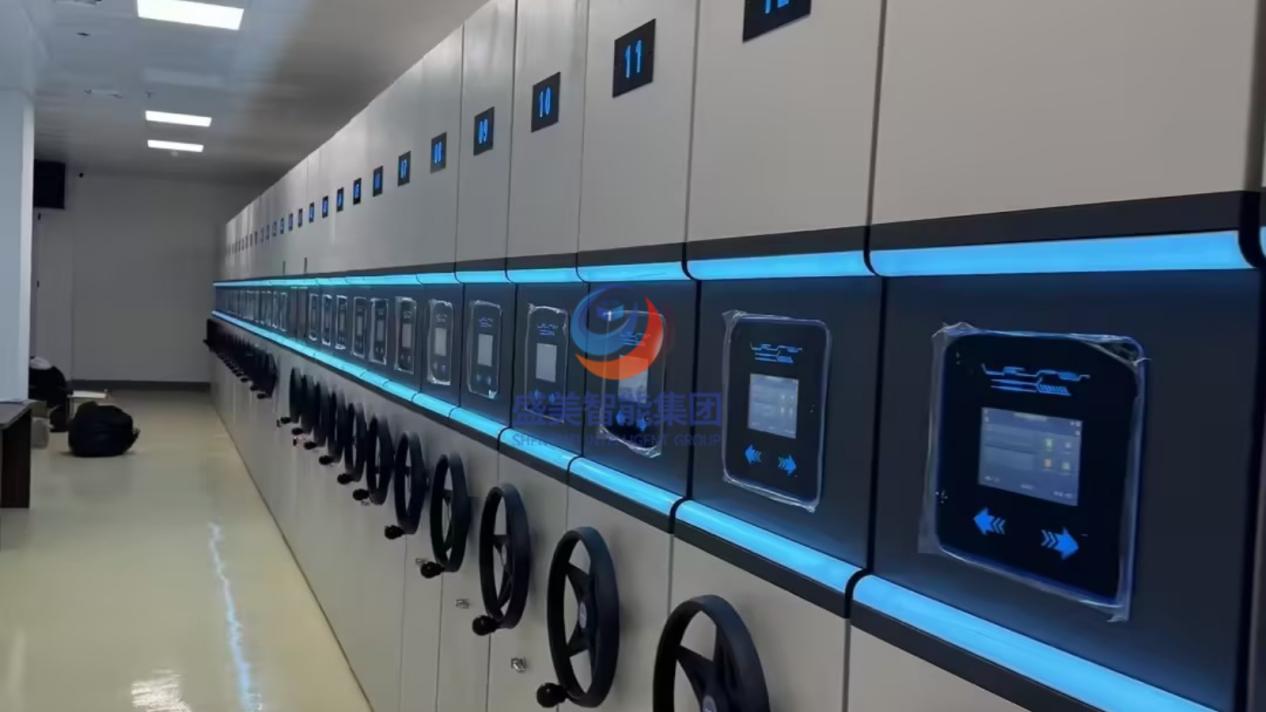
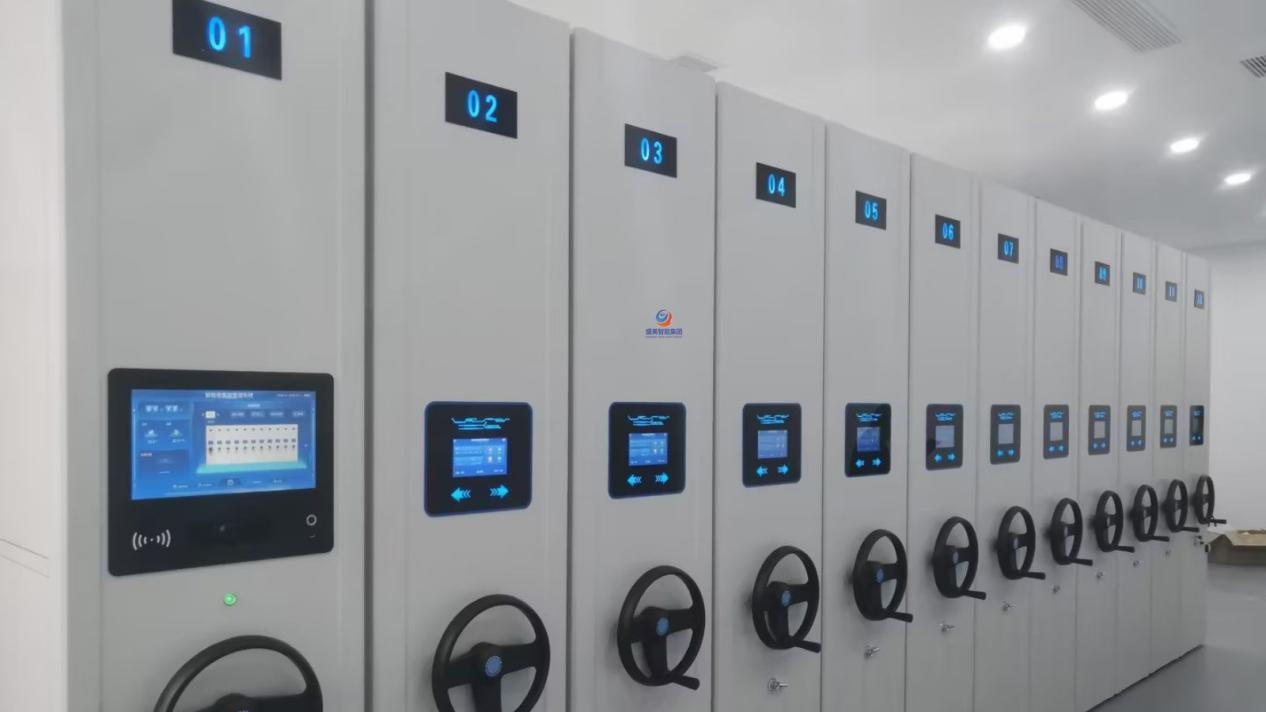
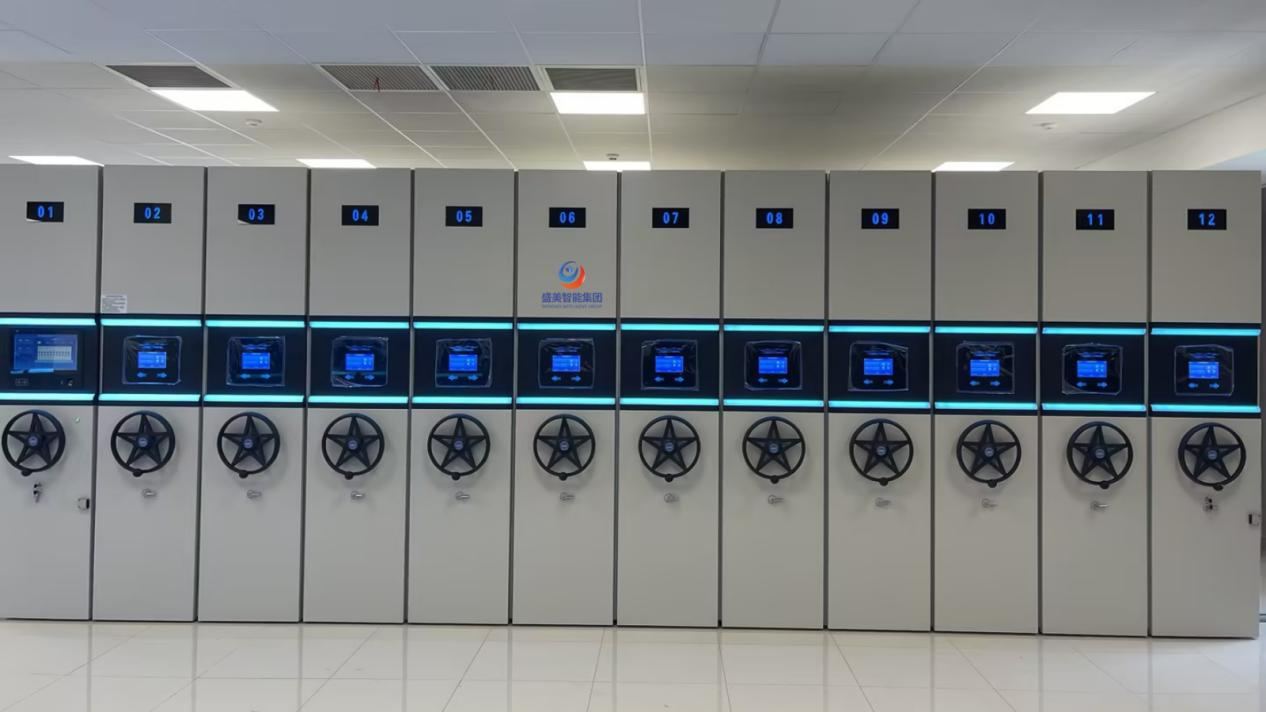
Rail-mounted mobile compactor shelving is professional archive equipment developed specifically for long-term paper-record archiving, permanent preservation, and high-density compliant storage. The entire system is fixed to the floor via ground rails, with a one-piece integrated base chassis, and the cabinet bodies slide left and right to compress aisles — maximizing the use of archive-room space.
Equipment design centers on four core standards: archive preservation, controlled security, long-term stability, and compliance.
In short: portable shelving is a general-purpose storage tool, while rail-mounted compactor shelving is professional archive infrastructure. A general tool cannot replace professional equipment — this is exactly why so many overseas archive rooms save money upfront and pay for reconstruction later.
Full-Spec Comparison Table
For direct use in project benchmarking, tender specification drafting, and archive-room plan reviews, the following compares the two options across seven dimensions: structure, load capacity, protection, space, safety, service life, and compliance.
| Dimension | Portable Storage Shelving | Rail-Mounted Mobile Compactor Shelving |
|---|---|---|
| Positioning | Temporary turnover, short-term storage, office sundries | Long-term archiving, permanent preservation, compliant record storage |
| Structure | Bolt-together simple frame, no fixed base, freely movable | Rail-fixed + fully welded chassis, one-piece rigid structure |
| Load per Shelf | 40–60 kg; sags and deforms under sustained full load | 80–120 kg uniformly distributed archive load per shelf (reinforced industry spec) |
| Protection | Fully open structure; no dust, moisture, or light protection | Fully enclosed cabinet; sealed against dust, slows paper oxidation, moisture-protected |
| Space Efficiency | Fixed multi-aisle layout; utilization below 40% | Single operating aisle; storage space increased by 80–100% |
| Security | No locks, no guards, no limits; records freely accessible | Row locking, master locking, anti-tip limiters; controlled and auditable |
| Service Life | 2–3 years before loosening and replacement (field reference) | 15–20 years of stable use with staged expansion (field reference) |
| Compliance | Simple bolt-together shelving generally fails permanent-archive audit requirements | Meets international archive-preservation norms; suits overseas institutional audits and acceptance |

Eight Hidden Risks of Portable Shelving for Long-Term Archives
Many overseas buyers assume: “They're just paper files — as long as the shelf can hold weight, it's fine.” In reality, paper archives are highly sensitive, high-value, long-cycle assets, and the structural defects of ordinary portable shelving will fully surface within three years, causing irreversible losses.
Load Deformation Damages Records
Paper archives are dense and stored for years. Thin shelves with weak supports sink in the middle and warp at the edges under sustained pressure — deforming archive boxes, curling edges, and permanently creasing the documents inside.
Open Structure Accelerates Aging
Dust, moisture, airborne particles, and mold spores settle continuously onto exposed records. Paper quickly yellows, embrittles, fades, and loses fiber strength — drastically shortening archive life.
Severe Space Waste, Hard to Expand
Every bay of portable shelving needs its own dedicated aisle. As soon as records grow, the archive room overflows — forcing new shelving into walkways and creating a cluttered, disordered facility.
Tip-Over Safety Hazards
No fixed base, no rail limiters, no anti-tip structure. Over-stacking, a light bump, or an uneven floor can make units sway or lean — and in severe cases topple, destroying records and injuring staff.
No Access Control, Chaotic Management
Portable shelving cannot be zoned or locked. Anyone can browse, remove, or swap files — inviting loss, misfiling, leaks, tampering, and disorder, with no way to build a standardized ledger system.
Incompatible with Climate Control
Professional archive rooms need stable temperature and humidity with dust filtration. Open shelving cannot seal a micro-environment, crippling HVAC effectiveness and sharply raising the risk of damp and mold.
Year-on-Year Loosening, Rising Maintenance
Bolt-together frames loosen under long-term load and vibration. Constant inspection and re-tightening drive maintenance costs upward year after year.
Fails Compliance Audits
Annual reviews of formal overseas archive institutions, NGO compliance checks, and government archive inspections explicitly require enclosed, steel, lockable, high-load professional equipment. Simple portable shelving is non-compliant and fails audits outright.
Core Advantages of Rail-Mounted Mobile Compactor Shelving

Against every shortcoming of portable shelving, rail-mounted mobile compactor shelving resolves the pain points of long-term archive storage at the root — it is the core equipment for standardized overseas archive-room construction.
Structurally Stable — No Lifetime Deformation
A fully welded chassis, thickened uprights, and reinforced beams, fixed and guided by floor rails, form a one-piece row of cabinets that stays rock-solid even fully loaded — ideal for 10- and 20-year full-load storage with no tilting, swaying, or deformation.
Fully Enclosed — Slows Archive Aging
When closed, each cabinet forms an independent sealed space that blocks dust, humidity, light, insects, and pollutants — preserving the integrity of paper records to the greatest extent and greatly extending archive life.
Doubled Space for Long-Term Growth
Redundant fixed aisles are eliminated in favor of a single operating aisle, directly doubling usable storage area. No repeated renovations or new equipment needed — the system absorbs year-on-year archive growth.
Complete Security & Standardized Management
Hand-crank brake locks, master locking, anti-tip limiters, and anti-collision buffers enable zoned, permission-controlled management — records stored in order, retrieved with an audit trail, and kept under control.
Built for Overseas Compliance
The powered version benchmarks EN 15095 mechanical safety; overall equipment safety references OSHA industrial guidance. Complete English technical manuals, operating instructions, and maintenance documents support overseas acceptance, audits, and filing.
Staged Expansion, Budget-Friendly
Complete the overall layout and rail installation once, upfront. Note: once rails are installed, their positions cannot be freely changed — but cabinet units can be added in batches within the existing rail span, matching future record growth and budget rhythm while avoiding scattered, mismatched purchases.
Precise Scenario Selection
The Only Suitable Scenarios
Strictly short-term, temporary, non-archival storage: transition phases while a new archive room is being prepared, temporary project-file turnover, documents awaiting sorting or destruction, office sundries, and short-term ledgers. None of these involve permanent archiving, long-term preservation, or compliance audits — here, portable shelving delivers the best value.
Every Permanent-Archive Scenario
All scenarios involving permanent archiving, long-term preservation, or compliance audits call for compactor shelving first: corporate contract archives, legal documents, project completion records, government holdings, community historical archives, medical records, educational institution files, any paper material requiring long-term traceability, and any archive room subject to annual compliance review.
Long-Term Cost Accounting: Cheap Shelving Costs More
The core reason buyers choose portable shelving is “saving money.” But accounted over 5–10 years, its total cost far exceeds that of compactor shelving. The unit price is low, yet full replacement is required every 2–3 years (field reference). Add record-loss costs, archive-room rectification, manual re-sorting labor, audit remediation, and repeat procurement, and the long-term outlay greatly exceeds the one-time investment in rail-mounted mobile compactor shelving — which is installed once, runs 15–20 years, needs no repeated renovation, preserves record value, and stays audit-ready. The genuinely cost-effective long-term solution is the compactor system.
Frequently Asked Questions
The Right Tool for Each Job
Portable storage shelving is a temporary storage tool — it solves short-term placement. Rail-mounted mobile compactor shelving is professional archive infrastructure — it solves long-term preservation, compliant storage, efficient management, and continuous expansion.
Overseas archive institutions that want to escape the cycle of repeated renovation, record loss, and failed compliance must build the right selection mindset:
Temporary material goes on portable shelving; permanent archives go on rail-mounted mobile compactor shelving. Protect long-term record security with professional equipment, and support institutional compliance with standardized storage.
📋 Archive Storage Equipment Selection Consulting
For overseas new-build and renovation archive-room projects, we provide portable-shelving vs. compactor-shelving comparison evaluations, archive-room load-check advisories, and floor-plan layout calculations — delivering procurement risk-control checklists, tender technical-specification templates, and contract risk reference notes. We help you clearly separate temporary turnover equipment from permanent professional archive storage, avoiding selection mismatch, compliance failure, and costly later renovation.
✉️ Recommended email subject format: Archive Equipment Selection Inquiry + Archive Room Size + Project Type
Example: “Archive Equipment Selection Inquiry + 150㎡ overseas community archive room + new archiving project”. When writing, please include your archive-room dimensions, building load conditions, and the retention nature of your records (temporary / permanent archiving) so we can quickly provide targeted selection advice.