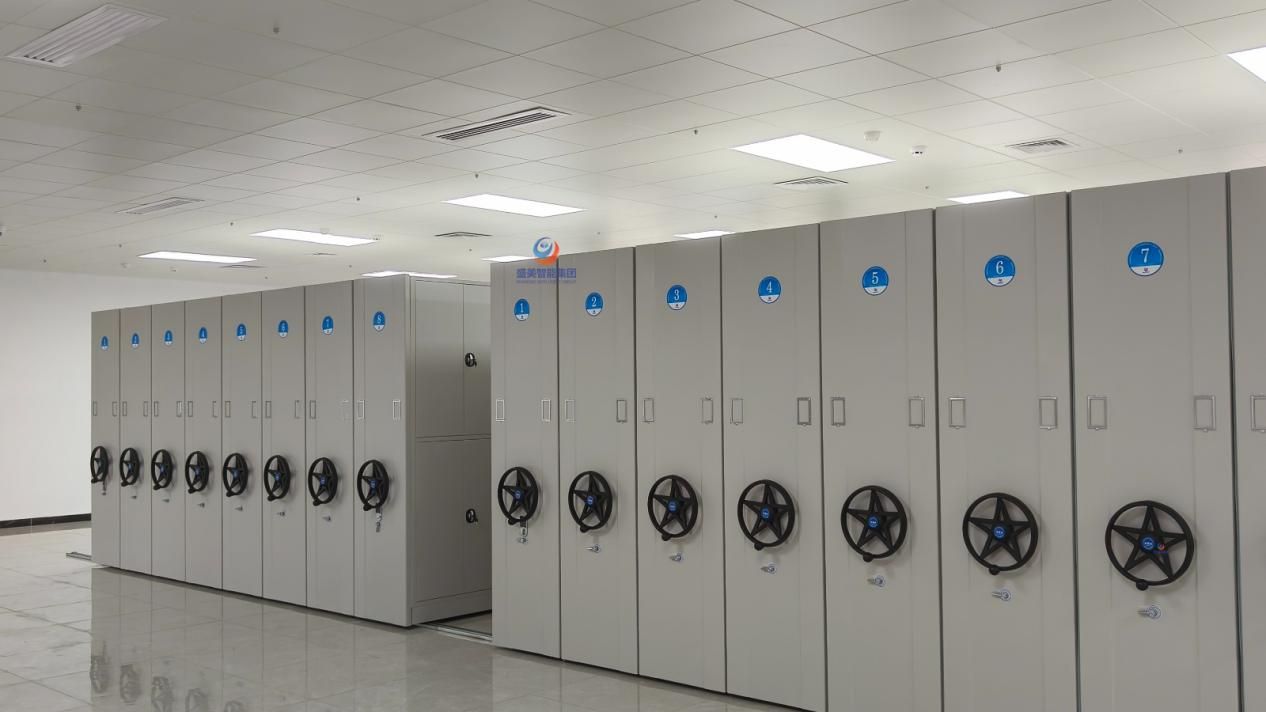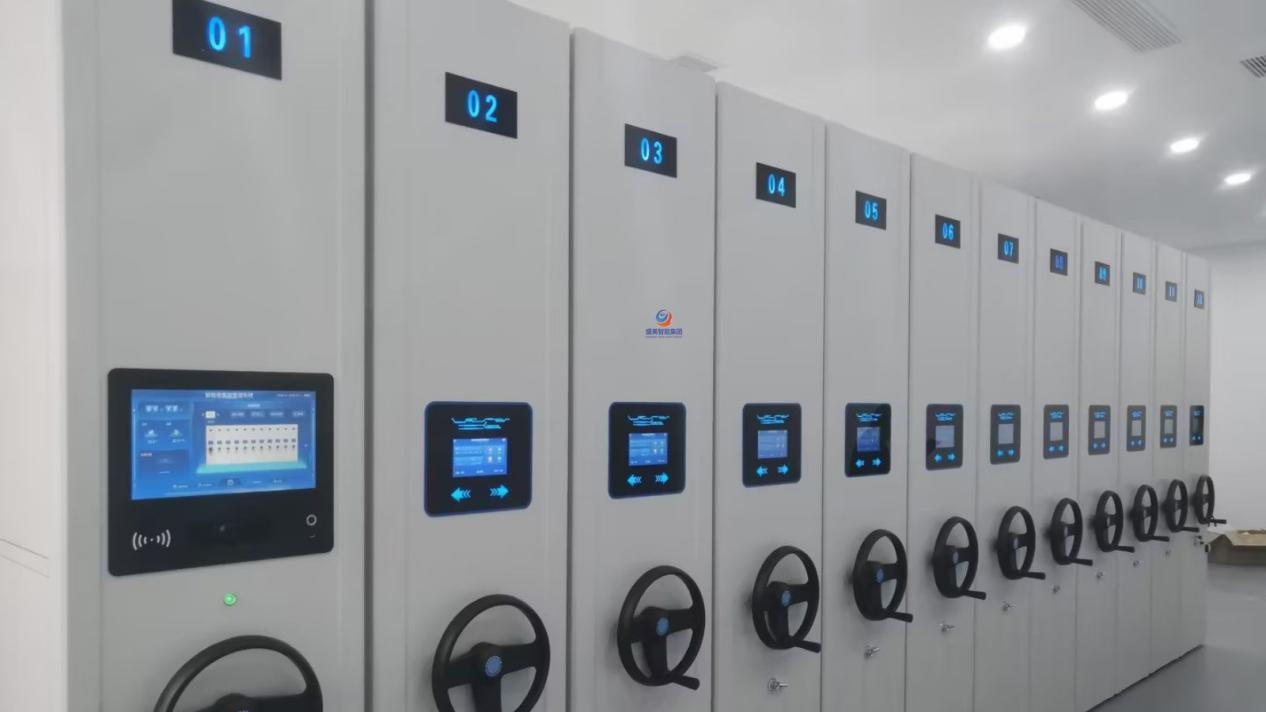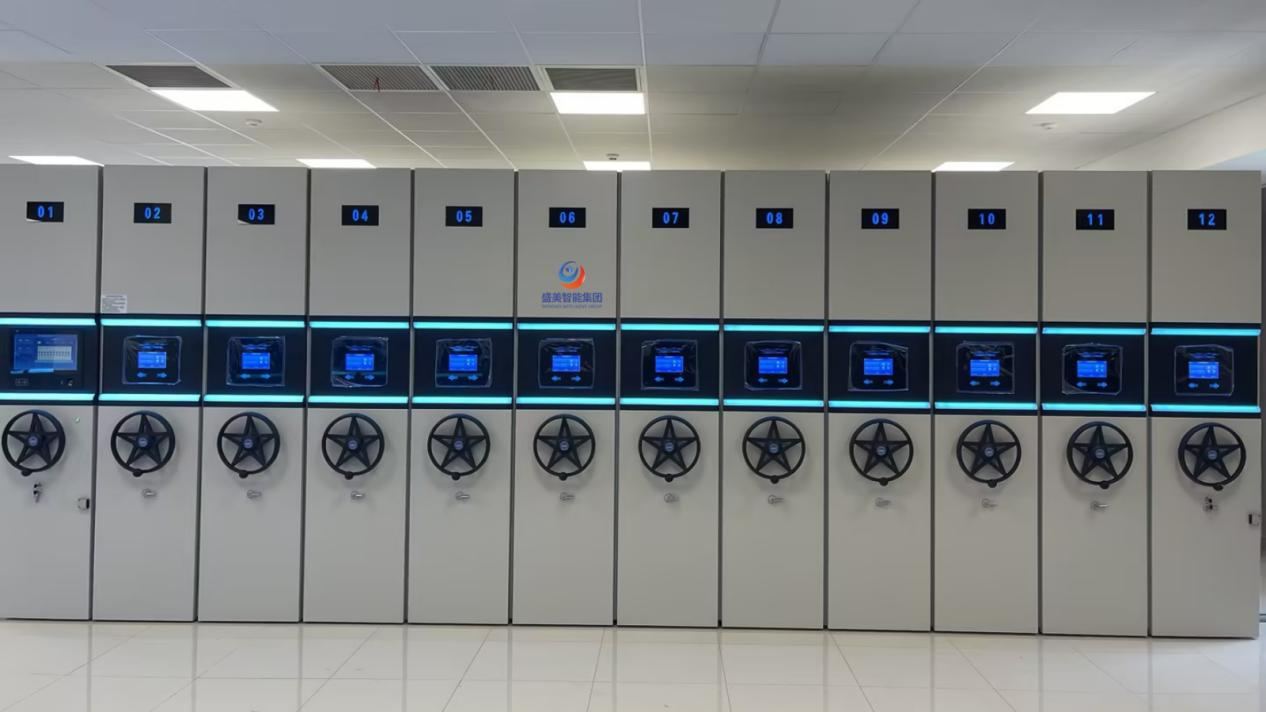
The Complete Lifecycle of a Manual Mobile Shelving Export Project
From first inquiry to on-site commissioning and handover — a standardized, traceable, fully controllable nine-stage SOP for cross-border archive-storage engineering.
This article is a standardized SOP white paper for mobile shelving export projects. Unlike ordinary consumer-goods trade, manual mobile shelving is customized, heavy-duty steel engineering equipment. Its full chain spans survey and design, non-standard customization, engineering production, cross-border logistics, overseas customs clearance, on-site installation and commissioning, and compliance acceptance. This paper breaks down the complete closed-loop lifecycle — from the initial overseas inquiry, technical alignment, proposal and quotation, contract signing, production scheduling, quality inspection, customs declaration and shipment, destination-port clearance, overseas on-site construction, commissioning and handover, through warranty and after-sales maintenance — detailing the core work, risk points, delivery standards, and pitfall-avoidance essentials of each stage. It can be used directly for foreign-trade team training, standardized overseas project execution, and overseas engineering compliance control.
Core Characteristics vs. Ordinary Export Products
An overseas manual mobile shelving project is not standardized stock trade. It is a customized, cross-border steel and mechanical engineering project — long cycle, dense technical detail, high compliance requirements, and heavily field-dependent delivery. It has four distinctive characteristics, which are also the root causes of most foreign-trade execution failures.
Non-Standard, Customized Nature
Every overseas archive room differs in length, width, ceiling height, beam and column positions, floor load capacity, and fire-protection layout. Each project requires one-to-one layout, dimension, and color customization — survey first, then design, then manufacture.
High Overseas Compliance Thresholds
Projects across Europe, Southeast Asia, the Middle East, and Africa commonly require EN 15095 conformity, OSHA safety compliance, CE certification, certificates of origin, and English technical manuals. Incomplete documentation blocks customs clearance and acceptance.
Substantial Logistics & Cargo-Damage Risk
Large panel areas, many accessory types, vulnerability to dents and deformation — combined with salt fog, vibration, and stacking in ocean transit — make export packaging, container reinforcement, and marine protection critical.
Delivery Depends on On-Site Service
Customers cannot use the goods on arrival alone. Delivery must include on-site installation, rail alignment, full-system commissioning, safety self-inspection, and operator training — an integrated “product + engineering + service” handover.
Nine Stages of the Full Export Lifecycle
The full lifecycle divides into nine standardized stages — inquiry and alignment, technical proposal, quotation and negotiation, contract and production commitment, production and quality inspection, customs declaration and shipment, destination clearance and logistics, on-site installation and commissioning, and handover with warranty and maintenance. The entire process is executable, traceable, and controllable.
| No. | Stage | Core Focus | Key Output |
|---|---|---|---|
| 01 | Inquiry & Needs Assessment | Screen the customer, project type, site constraints, and compliance obligations | Requirement dossier |
| 02 | Technical Survey & Solution | Climate-adaptive layout design and bilingual technical drawings | CAD & 3D proposal |
| 03 | Quotation & Negotiation | Itemized pricing under EXW / FOB / CIF / DDP terms with clear scope | Formal quotation |
| 04 | Contract & Technical Freeze | Lock parameters, drawings, schedule, and after-sales terms in writing | Signed contract set |
| 05 | Production & Factory QC | Export-grade manufacturing with multi-process inspection and testing | Inspection report |
| 06 | Packing & Customs Shipment | Reinforced export packaging, container planning, compliant declaration | B/L & full dossier |
| 07 | Destination Clearance | Documentation guidance, arrival tracking, and rapid local delivery | On-arrival check |
| 08 | Installation & Commissioning | Rail alignment, rack assembly, transmission tuning, safety self-check | Acceptance-ready system |
| 09 | Acceptance & Warranty | Compliant handover, bilingual training, spare parts, remote support | Completion dossier |
Table 1 — The nine-stage closed loop at a glance
Overseas Inquiry Reception & Needs AssessmentProject Initiation
Core ObjectiveRapidly identify the customer's real requirements, project nature, delivery scenario, and compliance obligations; filter out ineffective inquiries; lock down core technical parameters.
- Customer and project screening. Distinguish overseas end users, general contractors, trading intermediaries, and agency channels. Confirm the project type — government archive, hospital medical-record store, school archive room, or corporate document room — and judge the budget tier, delivery timeline, and acceptance standard.
- Baseline information gathering. Collect archive-room CAD drawings, on-site photographs, room length / width / clear height, floor load capacity, beam and column obstructions, sprinkler positions, door-opening dimensions, and site-access conditions.
- Localization requirements. Confirm the destination climate — high humidity and salt fog, dry and dusty, or large temperature swings — plus anti-corrosion needs, English labeling, local safety standards, and the full English acceptance documentation package.
- Baseline configuration. Confirm shelf levels, shelf load rating, hand-crank mechanism type, rail type, locking configuration, powder-coated color, dust sealing, and anti-tip devices.
Technical Survey & Custom Solution OutputCore Design Phase
Core ObjectiveProduce a bespoke layout and drawing package that fits the overseas operating conditions, meets local compliance standards, and matches the site dimensions — locking every technical parameter to eliminate later changes.
- Remote survey verification. Where physical survey is impossible, verify dimensions through multi-angle videos, panoramic photos, and CAD files. Mark obstructions, restricted zones, and access difficulties, and compile an overseas survey record sheet.
- Climate-adaptive design. Coastal salt-fog regions get upgraded anti-corrosion coating and rust-proofed hardware; dusty regions get optimized rail and dust-sealed structures; high-temperature, high-swing regions get reinforced fasteners and transmission components.
- 2D and 3D proposal output. Produce the plan-view layout, elevation renderings, dimension detail drawings, and overall layout proposal — specifying aisle widths, total rack height and width, per-bay dimensions, bay count, and total capacity.
- Compliance benchmarking. Complete safety-structure, anti-tip, mechanical self-locking, and travel-limit designs in line with EN 15095, OSHA, and other widely accepted overseas standards.
- Bilingual proofreading. Drawing annotations, parameter notes, and configuration lists are proofread in both languages for foreign client review and local archiving.
Precise Quotation & Commercial NegotiationCommercial Phase
Core ObjectiveIssue a precise quotation based on trade terms, delivery scope, and service content; define responsibilities clearly to prevent later add-ons and disputes.
- Trade-term confirmation. Clarify EXW / FOB / CIF / DDP delivery models and break out equipment cost, packaging, ocean freight, insurance, customs clearance, on-site installation and commissioning, and remote technical service.
- Itemized quotation. List the equipment main body, hardware accessories, rail system, anti-rust upgrades, export fumigation packaging, English documentation, certification files, and technical guidance separately — transparent and traceable.
- Delivery-scope negotiation. Clarify whether installation, commissioning, and training are included; whether a spare-parts kit is provided; warranty period; and remote after-sales response times.
- Risk clauses raised upfront. Non-conforming site civil works, blocked site access, local labor costs, clearance risks, and force majeure are disclosed in advance and written into a commercial memorandum.
Contract Signing & Technical FreezeProject Consolidation
Core ObjectiveLock 100% of technical parameters, configurations, drawings, delivery schedule, and after-sales terms — eliminating production and construction change risk.
- Detailed contract clauses. Specify product parameters, quantities, dimensions, material thickness, load standards, color and finish, export packaging standard, delivery date, payment milestones, liability for breach, and warranty scope.
- Signed drawing approval. All layout drawings, construction drawings, and renderings receive the customer's final signature as the sole production basis, freezing the technical version.
- Compliance documentation list frozen. Confirm the full package — certifications, test reports, certificate of origin, English manuals, and maintenance-log templates.
- Down payment and production release. Collect the down payment per the contract milestone, formally issue the production work order, and start raw-material procurement.
Factory-Scale Production & Pre-Delivery QCQuality-Control Core
Core ObjectiveManufacture strictly to overseas export standards, reinforcing corrosion resistance, rust protection, appearance, and structural precision — ensuring the products survive long-distance transport and meet standards on arrival.
- Export-grade raw materials. Steel plate suited to overseas conditions, thickened rails, wear-resistant transmission components, and highly weather-resistant powder coatings for salt-fog, high-temperature, and humid environments.
- Multi-process QC patrol inspection. Full inspection through sheet cutting, bending, welding, grinding, powder coating, and assembly — focusing on flat welds, even paint, no scratches, no coating loss, no deformation.
- Pre-assembly and testing at the factory. Batch-sampled full-rack assembly, hand-crank transmission tests, chain-tension tests, shelf load tests, and self-locking function tests — smooth mechanical operation without jamming or noise.
- Export-specific quality control. Special QA for long-haul ocean vibration and salt-fog corrosion: reinforcing vulnerable accessories and strengthening anti-rust treatment.
- Customer inspection coordination. Support on-site, video, or third-party inspection, with a factory inspection report issued.
Export Packing, Container Loading & Customs ShipmentCross-Border Logistics
Core ObjectiveStandardized export packaging to eliminate ocean-transit damage, loss, and moisture; compliant customs declaration; smooth shipment.
- Dedicated export packaging. EPE foam + rigid cartons + solid-wood frame reinforcement; hardware packed separately and sorted; fragile parts given extra protection — all rated for long ocean transit.
- Container planning and reinforcement. Precise loading plans per container type — 20GP / 40GP / 40HQ: heavy at the bottom, light on top, sorted stacking, strap reinforcement to prevent shifting and collision — maximizing container utilization and saving freight cost.
- Customs documentation. Commercial invoice, packing list, customs declaration, contract, certificate of origin, fumigation certificate, product description, and compliance certifications — ensuring document-to-document and document-to-goods consistency.
- Declaration release and sailing follow-up. A professional freight forwarder handles declaration; release status, sailing date, and vessel schedule are tracked and shared with the customer promptly.
- Bill of lading and documentation archive. After departure, verify B/L details and compile the complete clearance, acceptance, and maintenance package for the overseas customer.
Destination-Port Clearance & Local DeliveryPre-Landing Phase
Core ObjectiveHelp the overseas customer clear customs smoothly, pick up quickly, and receive goods safely at the project site — avoiding demurrage and detention charges.
- Clearance documentation guidance. Inform the customer in advance of required documents, declaration elements, and cautions; assist the local customs broker in fast filing.
- Arrival tracking. Track vessel arrival, unloading progress, and clearance status; promptly resolve customs queries and inspections.
- Local delivery and on-arrival check. After container pickup, deliver to the project site and assist with counting, external inspection, and accessory verification — catching transit damage or shortages early.
- Contingency handling. For minor dents or missing small parts: immediate remote assessment, expedited replacement parts, and on-site repair — without delaying the installation schedule.
Overseas On-Site Installation, Commissioning & Self-InspectionCore Delivery
Core ObjectiveComplete standardized on-site installation, rail alignment, full-rack commissioning, and safety self-inspection to the overseas compliance standard.
- Pre-entry site re-verification. Re-check floor flatness, rail layout lines, access routes, and construction safety conditions before mobilizing.
- Precision rail installation and alignment. Positioning and drilling, expansion-bolt anchoring, leveling, and straightness correction — ensuring rails are flat and firm as the foundation for smooth rack travel.
- Standardized rack assembly. Base assembly, upright installation, shelf-level construction, top and side panel enclosure, and lock and seal installation — with even gaps, vertical cabinets, and stable structure.
- Transmission system commissioning. Chain tension adjustment, bearing and roller lubrication, and hand-crank mechanism tuning — light cranking, smooth travel, no jamming, no chain skip, no abnormal noise.
- Safety function self-inspection. Testing mechanical self-locking, anti-tip, travel-limit stop, and buffered closing — fully conforming to EN 15095 and OSHA safety requirements.
- Site cleanup and finish protection. Removing construction debris and dust, wiping down the cabinets, and completing finish protection for a clean, professional handover.
- Bilingual training for local staff. On-site instruction in English covering operation, routine maintenance, prohibited actions, and basic fault troubleshooting — with bilingual manuals and maintenance logs delivered.
Acceptance, Documentation Archive & Long-Term WarrantyClosing the Loop
Core ObjectiveComplete compliant acceptance, documentation archiving, and after-sales assurance for long-term, stable overseas operation.
- Overall completion acceptance. Joint acceptance with the customer, general contractor, and supervisor across appearance, structure, operation, and safety — issuing an overseas project acceptance certificate.
- Full compliance documentation handover. English technical manuals, maintenance inspection sheets, fault-handling logs, qualification certificates, test reports, and drawings — meeting overseas annual review and audit archiving.
- Spare-parts kit delivered upfront. A spare kit of wear parts — chains, locks, rollers, fasteners — solves the pain of slow cross-border repairs.
- Long-term warranty service. Remote technical management during the warranty period: real-time answers to maintenance questions, fault-handling guidance, and upgrade recommendations.
- Project retrospective and archiving. Consolidate full-lifecycle records, customer feedback, field issues, and lessons learned into standardized solutions for future projects in the same region.
High-Frequency Risks & Mitigation
| No. | Risk | Mitigation |
|---|---|---|
| 01 | Drawing dimension deviation caused by the lack of a physical survey | Triple verification — video + photos + CAD; production starts only after written drawing approval |
| 02 | Ocean-transit damage or missing parts | Reinforced export packaging; separate packing of accessories; photographed loading records; rapid on-arrival inspection |
| 03 | Missing overseas compliance documentation | Unified bilingual documentation, certification reports, and certificates of origin — pre-audited before shipment |
| 04 | Insufficient on-site installation adaptation | Full remote video guidance; standardized overseas installation SOP; contingency spare parts on hand |
| 05 | Slow after-sales response across time zones | Dedicated export after-sales contact; round-the-clock time-zone-adapted remote support; forward-stocked spares |
Table 2 — The five recurring failure modes and how each is contained
Full-Lifecycle Delivery Checklist
Six document families, one closed loop — every deliverable a project needs, ready to use.
| Category | Documents & Deliverables |
|---|---|
| Pre-Project Technical | Survey record sheet · CAD construction drawings · 3D renderings · configuration confirmation · standards benchmarking file |
| Commercial & Contract | Quotation · proforma invoice (PI) · formal contract · payment-milestone confirmation |
| Production & QC | Production work order · factory inspection report · pre-assembly test records |
| Customs & Logistics | Commercial invoice · packing list · customs declaration · bill of lading · certificate of origin · fumigation certificate |
| Overseas Delivery | English operation manual · bilingual maintenance log · safety and precautions statement · wear-parts spare kit |
| Acceptance & Archive | Site acceptance certificate · training records · complete project completion dossier |
Table 3 — The complete delivery checklist across the project lifecycle
Frequently Asked Questions
Q1Does the export of manual mobile shelving require fumigation?
Q2Can delivery be completed without sending engineers overseas?
Q3Do configurations need to change for different climates?
Q4What is the typical overall project timeline?
Q5How are warranty and after-sales handled for overseas projects?
Not a goods transaction — an integrated engineering service.
A manual mobile shelving export project combines technical customization, cross-border logistics, overseas project execution, compliance acceptance, and long-term after-sales. From inquiry assessment, solution design, contract and production, customs and ocean freight, through overseas clearance, on-site installation, commissioning and training, and acceptance archiving — every link demands deep professionalism and situational judgment.
Standardized full-lifecycle process control effectively prevents the most common foreign-trade failures — dimension deviation, cargo damage and shortages, compliance failure, on-site rework, and slow after-sales — and dramatically improves overseas delivery efficiency, customer satisfaction, and brand reputation for archive-storage projects in every region of the world.
Consulting on Overseas Mobile Shelving Projects & Standardized SOPs
To obtain our full export-process SOP template, English quotation template, bilingual installation manual, overseas acceptance logs, or export documentation checklist, contact us for dedicated one-to-one support — serving manual and smart mobile shelving export projects worldwide.
Suggested email subject — Mobile Shelving Export Inquiry + Target Country + Project Scale