Floor Load-Bearing Requirements for Compactor Shelving
Manual, powered & smart compactor shelving — floor load thresholds, compliance standards, failure modes, and acceptance checklist (GB 50009 · ASCE 7 · EN 1991-1-1)
Floor load-bearing capacity is the most underestimated variable in any archive storage project — and the leading cause of cracked slabs, failed acceptance audits, and warranty disputes.
This guide consolidates the official floor load parameters for manual, powered, and smart compactor shelving against GB 50009, ASCE 7, and EN 1991-1-1, and closes with an acceptance checklist ready for tender documents.
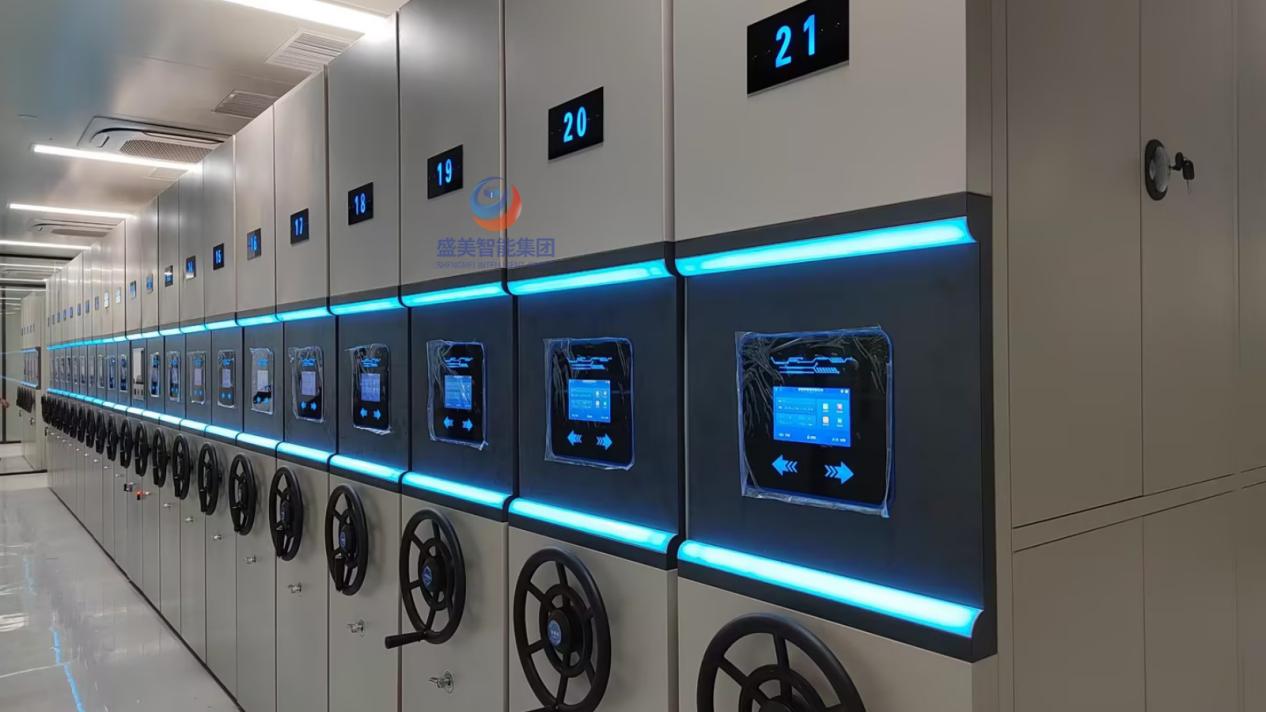
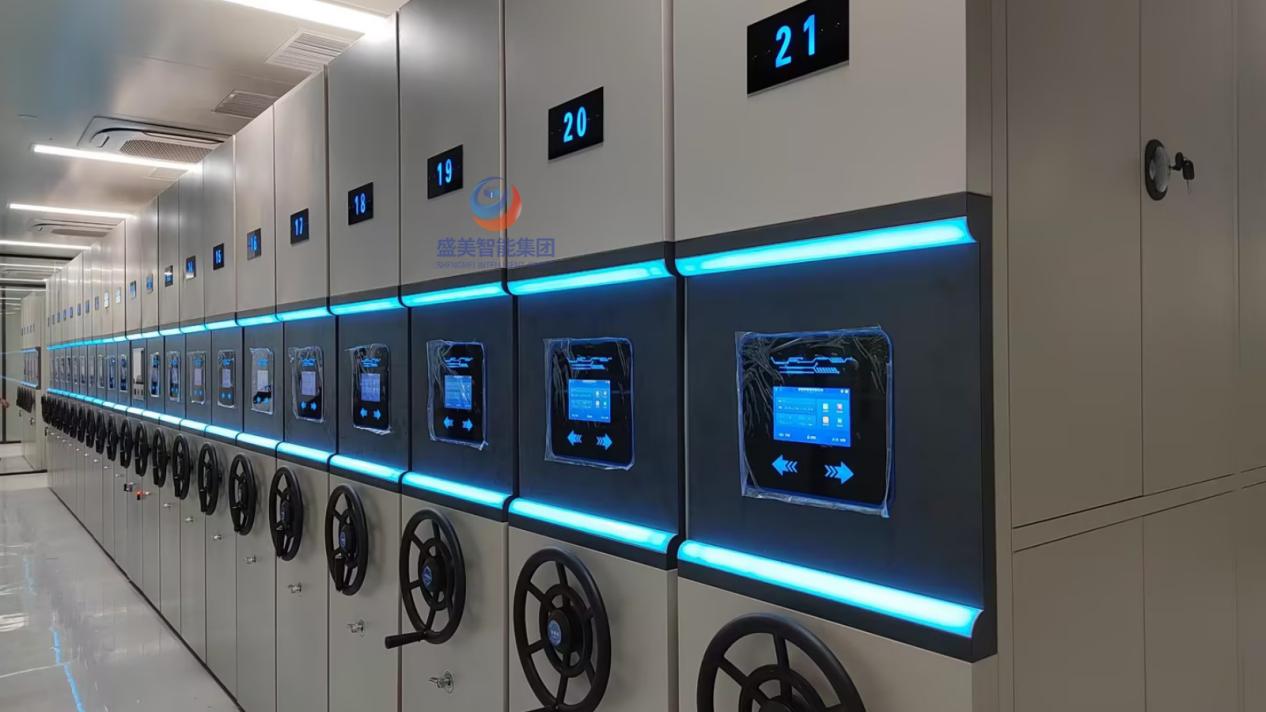
Smart Compactor Shelving in operation — integrated touchscreen panels, LED aisle indicators, and motorized carriage drives that demand the highest floor load and dynamic verification standards in the industry.
Core Attributes & Industry Compliance Pain Points
Floor load-bearing in archive facilities is fundamentally different from that of ordinary office spaces. Standard fixed filing cabinets and light shelving generate only uniform static loads — distributed forces with no dynamic displacement and no concentrated point pressure. A conventional office slab rated at 2.5 kN/㎡ handles this easily.
But Manual Compactor Shelving, Electric / Powered Mobile Shelving, and Smart Compactor Shelving are movable, heavy-duty mechatronic systems. They combine four demanding operating conditions: extreme static loads, dynamic alternating stress, concentrated rail pressure, and long-term constant loading. They impose mandatory requirements on slab strength, concrete grade, floor flatness, substrate thickness, and settlement coefficients — requirements that ordinary office flooring simply cannot meet.
Western archive engineering audits apply a quantified, traceable review mechanism to floor loading. They check not only static load parameters but also require dynamic load verification reports, floor structural strength test reports, and long-term settlement risk assessments. Projects without compliant load survey documentation are ruled non-conforming and barred from operation. This is the core compliance gap between typical domestic retrofits and Western-standard archive projects.
Official Load Parameters for the Three Compactor Types
Based on China's GB 50009 Load Code for the Design of Building Structures, archive facility technical specifications, the US ASCE 7 standard, and EU EN 1991-1-1 — combined with the latest 2026 acceptance requirements for domestic and overseas projects — the three compactor types carry clearly tiered floor load parameters. Thresholds escalate from manual to powered to smart; they are not interchangeable and may never be downgraded. These are mandatory pre-conditions for all tendering, drawing design, and construction acceptance.
An empty archive room without heavy storage equipment needs only a standard distributed live load of ≥ 5.0 kN/㎡ (500 kg/㎡). But any facility installing compactor shelving — new or retrofitted — must meet the dedicated heavy-load standard. Smart compactor shelving, with its electronic controls, automated carriage drive, and intelligent sensing components, produces greater dynamic load fluctuation and higher localized pressure, and carries the strictest requirements of the three types.
Manual Compactor Shelving
Powered Mobile Shelving
Smart Compactor Shelving
| Equipment Type | Distributed Live Load | Rail Concentrated Load | Suitable Facility Types | Western Audit Requirements | Foundation Construction |
|---|---|---|---|---|---|
| Manual Compactor | ≥ 6.0 kN/㎡ | ≥ 8.5 kN/㎡ | Small standard archive rooms, low-frequency retrieval storage, non-classified temporary facilities | Static load verification report; no mandatory dynamic load calculation | Surface leveling, standard steel channel rail base |
| Powered Mobile Shelving | ≥ 7.0 kN/㎡ | ≥ 10.0 kN/㎡ | Mid-size standard archives, routine office archive rooms, regular public-institution facilities | Static + standard dynamic load verification with structural stability report | Thickened leveling layer, reinforced channel fixing, anti-drift foundation |
| Smart Compactor Shelving | ≥ 8.0 kN/㎡ | ≥ 12.0 kN/㎡ | Digital archives, national-level facilities, classified archives, Western-standard overseas projects, finance / legal / medical compliance archives | Triple verification: static + dynamic alternating loads + long-term settlement risk, with traceable test data | High-strength concrete leveling, fully reinforced foundation, dedicated anti-settlement construction |
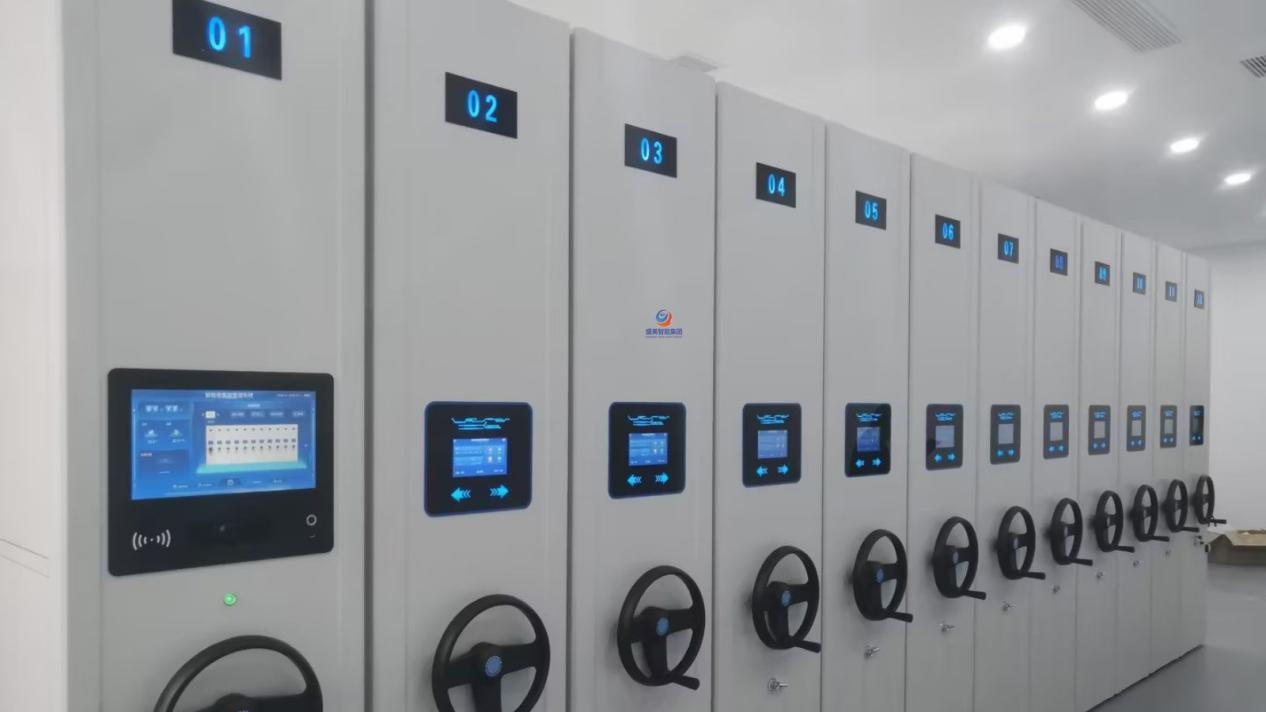
Three types of compactor shelving — static pressure, dynamic load, and rail-concentrated load distribution. Smart units concentrate far higher rail loads, generate impact particles, and require reinforced foundation work.
The table makes one point clear: Smart Compactor Shelving demands far more from floor capacity, foundation construction, and structural verification than manual or powered units. The reason: smart systems run unattended automatic positioning, high-frequency start-stop cycles, intelligent calibration resets, and continuous dynamic operation. Long-term alternating stress acts constantly on rails and slab substrates. If floor capacity or foundation stability is insufficient, the result is positioning drift, false safety-interlock triggers, and constant equipment faults — permanently disqualifying the project from Western compliance access.
Western Compliance Requirements for Archive Floor Loading
Domestic floor load acceptance is centered on meeting static distributed load targets. Western archive projects, by contrast, apply a three-dimensional review: dynamic + static + long-term settlement — and this is precisely where export and overseas projects most often lose compliance. ASCE 7-22 and EN 1991 include specific provisions for mobile intelligent storage equipment and no longer allow ordinary building load standards to be substituted.
1. Mandatory Dynamic Alternating Load Verification
Western audits explicitly classify Smart Compactor Shelving as movable programmable equipment. Start-stop impact loads, reciprocating friction loads, and eccentric displacement loads generated during operation must all be included in structural calculations. Submitting static load reports alone renders the documentation invalid and fails project acceptance.
2. Strict Long-Term Settlement Thresholds
Western-standard archives require annual floor settlement in the compactor zone of ≤ 0.3 mm and overall flatness deviation of ≤ 2 mm / 2 m — eliminating rail offset, shelving tilt, and archive displacement risks over long-term use. These limits are far stricter than conventional domestic construction tolerances.
3. Hard Concrete Substrate Strength Requirements
Western projects mandate concrete strength grade ≥ C30 in the compactor installation zone, with verified substrate density. Hollow, sanding, cracked, or cheaply patched surfaces are prohibited. All substrate strength values must be backed by third-party authoritative test reports on file.
4. Traceable Load Documentation
All load test data, structural calculation formulas, construction records, reinforcement logs, and settlement monitoring data must be fully documented, auditable, and traceable end-to-end. Projects without dual paper + electronic archives are ruled non-compliant outright.
Eight Failure Modes of Inadequate Floor Load Capacity
Insufficient floor capacity never stays a "settlement-only" problem. It cascades into eight connected failure chains spanning equipment safety, archive storage, compliance acceptance, and operational maintenance — and it is the leading cause of Western customer complaints, project rework, and legal disputes.
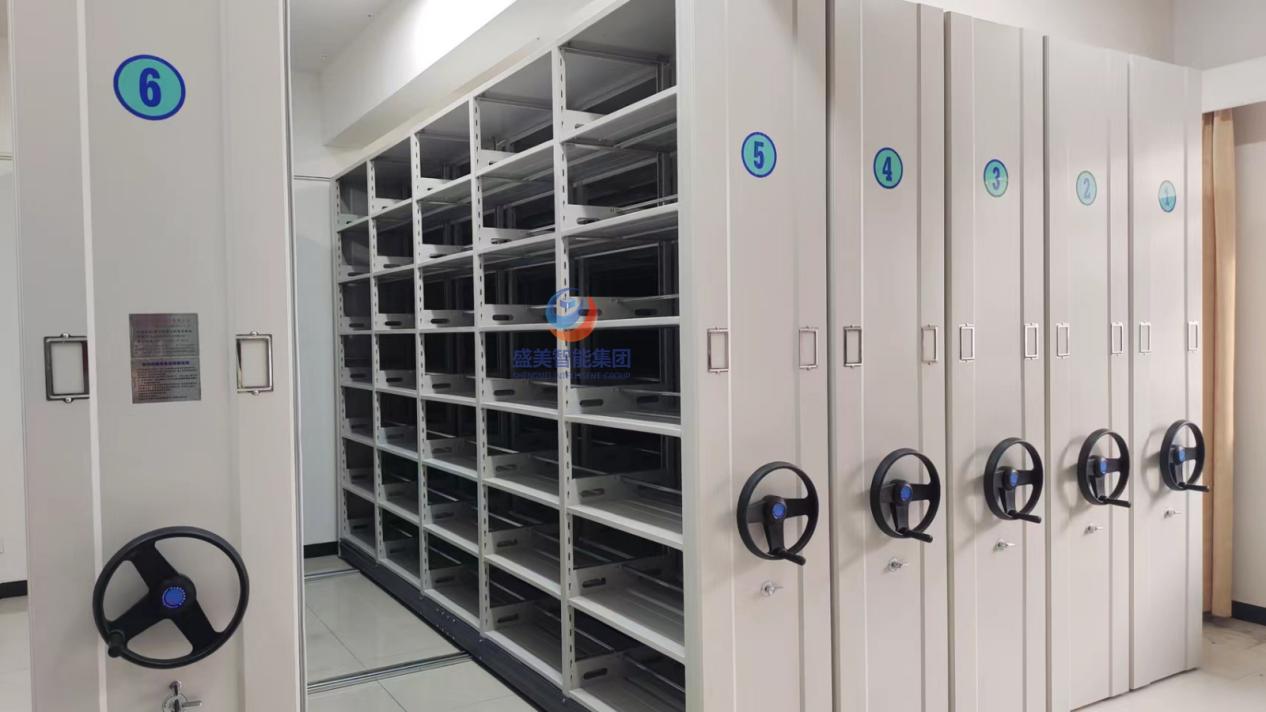
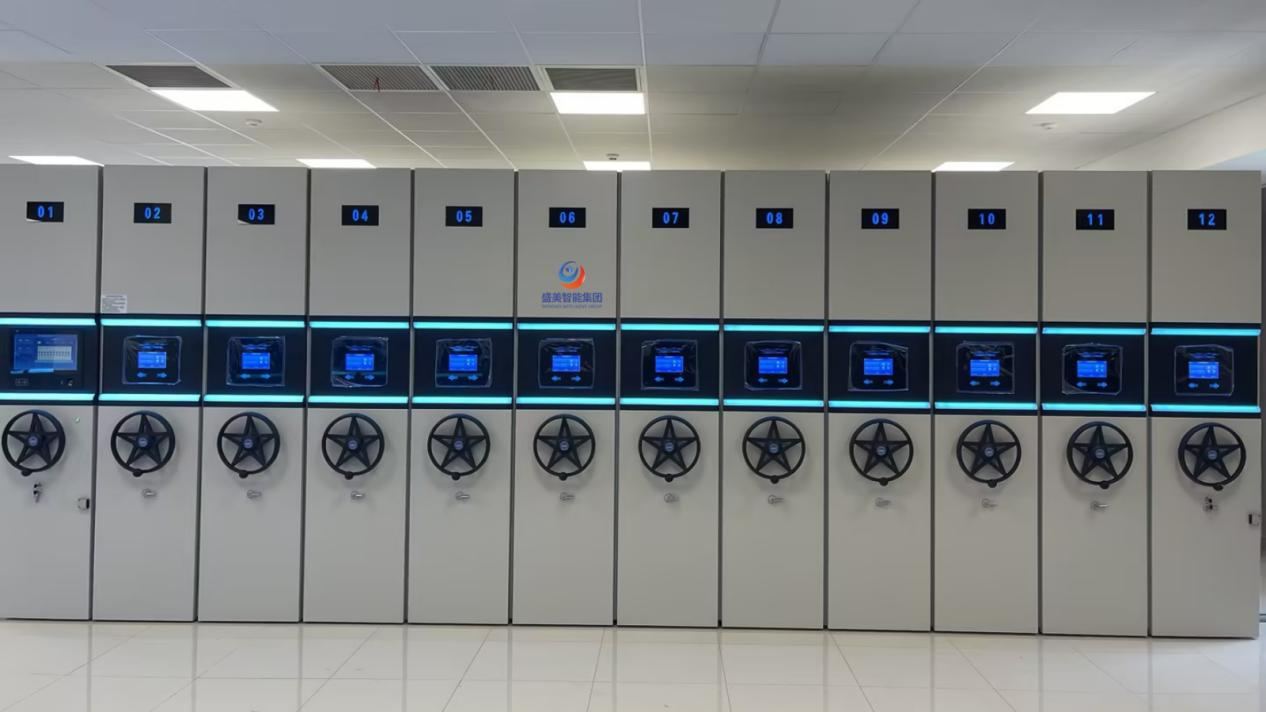
Manual compactor shelving in a long-row archive installation — the entry-level model with the lowest construction threshold, yet still subject to settlement, tilt, and rail-offset risks if the floor is under-spec.
Rail Deformation & Offset
Insufficient capacity causes localized settlement. Rail height difference and parallelism exceed tolerance — carriages jam, make noise, and drift off-track; smart compactors lose positioning and fail calibration.
Shelving Tilt & Imbalance
Uneven one-sided slab settlement pushes verticality deviation past limits. Fully loaded units risk tipping over long term — a direct trigger of OSHA occupational safety red lines.
Safety Function Failure
Anti-pinch sensors, overcurrent protection, and tilt detection all run on a level datum. Floor deformation drifts safety parameters, causing false alarms or dead safety circuits — voiding ISO 13849 PL-d functional safety compliance.
Archive Storage Hazards
Tilted shelving shifts, drops, and crushes stored files. Classified and irreplaceable paper archives suffer irreversible damage and loss.
Electrical System Faults
Tilted carriages strain internal wiring, displace terminals, and accelerate cable aging — causing leakage, shorts, and signal faults inconsistent with NFPA electrical fire compliance.
High-Frequency Maintenance
Constant error alarms, shutdowns, and failed calibration drive maintenance costs sharply upward — especially painful for overseas projects where on-site repair is slow and expensive.
Audit & Acceptance Rejection
Without compliant load test reports, settlement calculations, and foundation construction records, Western engineering audits and domestic fire inspections reject the project outright — no delivery, no handover.
Long-Term Compliance Liability
Structural floor defects are design-level flaws that can never be fully repaired later. The facility fails annual audits indefinitely, creating ongoing compliance liability exposure.
New vs. Existing Facilities: Assessment & Construction Adaptation
For new digital archive facilities, retrofits of older office buildings into archives, and overseas greenfield archive centers, load assessment, foundation construction, and reinforcement plans differ materially. A single one-size-fits-all construction approach does not exist.
🏗️ New Archive Facilities
- Design the slab directly to the smart compactor maximum standard
- Reserve slab load capacity ≥ 8.0 kN/㎡
- Concrete grade C30 or above
- Flatness and density pass in one pass — no later reinforcement needed
- Compatible with all compactor types for long-term compliant use
🧰 Existing Facility Retrofits
- Mandatory third-party slab load testing, structural calculation, and settlement monitoring first
- Match equipment to measured data — never the other way around
- Load-deficient zones require floor reinforcement, thickened leveling, and dedicated rail foundation work
- Installing heavy-duty compactors directly is strictly prohibited
🌍 Western Overseas New Builds
- Strict dual-standard execution under ASCE and EN
- Deliver three reports together: static load, dynamic alternating load, and settlement calculation
- Retain full construction traceability documentation throughout
- Meet the strictest overseas audit requirements from day one
| Floor Condition | Upfront Survey & Reinforcement | Annual Equipment Failure Cost | Annual Audit Remediation | 10-Year Total Cost | Long-Term Compliance |
|---|---|---|---|---|---|
| Non-compliant load, no reinforcement | Low (zero investment) | Extremely high — jams, faults, wiring failures, positioning loss | Extremely high — audit rejection, rework, compliance fines | Very high, including potential legal compensation | Perpetually non-compliant; remediation every year |
| Compliant load, standardized foundation | Mid-to-high (dedicated survey + compliant reinforcement) | Extremely low — stable, fault-free equipment | Zero remediation, zero fines | Low, stable and controllable long term | Permanently compliant; passes domestic and overseas annual audits |
Acceptance Standards & Delivery Checklist
To serve domestic and international tendering, acceptance, and audit filing needs, here is a standardized delivery checklist aligned to 2026 national standards and Western building compliance systems — usable directly in contract clauses, construction briefings, and acceptance reports.
Load Test Reports
Third-party authoritative slab static load and dynamic load verification reports, with parameters matched to the specific compactor model installed.
Floor Structure Documentation
Concrete strength test report, substrate density testing, floor flatness records, and settlement monitoring data.
Foundation Construction Records
Rail foundation construction logs, steel channel fixing records, and concealed-work acceptance records for floor leveling and reinforcement.
Compliance Calculation Files
For Western projects: dedicated dynamic alternating load calculations, long-term settlement risk assessments, and structural stability audit documentation.
On-Site Measured Standards
Overall floor flatness deviation ≤ 2 mm/2m; no hollowing, cracking, sanding, or water seepage; rail height difference ≤ 1 mm — eliminating operational drift.
Overseas Procurement FAQ — Floor Load-Bearing
Can a small overseas archive room lower the load standard for smart compactor shelving?
No. Western compliance systems classify standards by equipment attributes, not facility size. Installing Smart Compactor Shelving requires ≥ 8.0 kN/㎡ distributed load plus dynamic load verification — no exemptions, no exceptions.
Can a floor built for powered mobile shelving also carry smart compactors?
No. Powered shelving operates without high-frequency dynamic alternating cycles, so its load standard is lower than smart compactor requirements. Mixing them causes safety system failure and failed audits.
Is slight settlement or minor unevenness acceptable for installation?
Absolutely not. Overseas projects forbid installing onto compromised floors. Minor settlement expands continuously, destroying the smart system's safety circuits and positioning — a major engineering hazard. Reinforce first, install second.
Do manual compactors have any dynamic floor load requirements?
No dynamic requirements. Manual compactor shelving has no automated dynamic operation cycles — it only needs to meet the static load standard, with no dynamic calculation. It has the lowest construction threshold of the three types.
Get the Overseas Smart Compactor Procurement Checklist
This guide covers the core parameters, compliance standards, and engineering risks of compactor floor loading — but every project has different facility conditions, load baselines, and regulatory scope. Before signing a purchase contract, run a pre-project risk assessment with our dedicated worksheet.
📧 Email subject line: "Request: Overseas Smart Compactor Procurement Checklist — Pre-Project Risk Assessment"
Upon receiving your request, we will provide a customized checklist and supporting technical documentation based on your project location and actual facility conditions.
Disclaimer: All load parameters, construction standards, and compliance requirements in this article align with 2026 Chinese GB codes and the Western ASCE / EN building load systems, and apply to new-build and retrofit archive projects for manual, powered, and smart compactor shelving. Local building codes and archive tendering rules differ by country and may add supplementary requirements. Final construction parameters and reinforcement plans must follow the project tender documents and the latest local official regulations.