The Complete Procurement Guide to Smart Compactor Shelving: Don't Let Fatal Project Flaws Surface Only After Your Containers Leave Port
📘 This article is part of the Shengmei Buyer's Handbook series. Written for overseas procurement managers, EPC contractors, infrastructure supervisors, archive room managers, and tender technical leads, it provides a complete breakdown of Smart Compactor Shelving procurement risks — from initial research, on-site survey, solution evaluation, compliance review, and contract negotiation to arrival acceptance — covering two mainstream scenarios: brand-new archive rooms and retrofits of existing archive rooms.
Most overseas Smart Compactor Shelving projects fail not because of visible hardware issues like steel thickness or welding quality, but because of hidden gaps ignored during the procurement stage: skipping professional on-site surveys, relying on verbal promises for critical parameters, reusing non-matching compliance reports, and vaguely defined SOW scopes. This hands-on handbook is designed to systematically avoid these fully foreseeable project disasters.
2026 Smart Compactor Shelving Procurement: Engineering Risk Management, Not Simple Price Comparison
Before 2018, many overseas government, enterprise and distributor clients treated Smart Compactor Shelving as simply an oversized steel filing cabinet, with an extremely crude procurement process: confirm dimensions, compare prices among suppliers, place an order with a delivery date, and ship by sea directly after production. By 2026, however, the formal government and enterprise tender markets in the EU, Middle East and Southeast Asia have undergone three fundamental changes. Sticking to traditional procurement thinking will inevitably plant irreversible project risks.

Compliance Review Is Now a Hard Entry Requirement
EU public projects mandate EN15095 (mobile storage machinery), ISO 13849-1 PL-d functional safety level, and CE-DoC declaration of conformity. The model number on test reports must match the shipped equipment's nameplate one-to-one — shared or generic template reports directly cause customs seizure and project rejection.
Cross-Border Failure Costs Are Magnified by Sea Freight
Smart compactor shelving is prefabricated heavy-duty electromechanical equipment. Once goods ship, if the archive room's civil works, power supply, or aisle conditions are substandard, return shipping is almost impossible. Reinforcement, secondary logistics, and delays often cost far more than the equipment itself — especially in old archive retrofits.
Evidence Standards for Trade Disputes Have Been Upgraded
In cross-border commercial arbitration, verbal promises and chat records carry no legal weight. Only on-site survey reports, SOW statements of work, parameter confirmation documents, and complete compliance certificates serve as valid evidence for dispute claims.
Chasing the lowest price while ignoring whole-process risk control is not cost-effective procurement — it merely delays the explosion of project risks. Low-price suppliers often deliberately avoid survey, verification, and compliance services, shifting all civil works and compliance risks onto the buyer and the EPC contractor.
Seven Typical Failure Modes in Compactor Shelving Procurement (Ranked by Economic Loss Severity)
Reviewing thousands of delivered projects across more than 40 countries from 2018 to 2025, Shengmei Cabinet has identified 7 categories of high-frequency fatal failures during the procurement stage. Most projects stack multiple risks, triggering chain accidents and enormous economic losses.
Missing Professional Floor Survey & Verification
Only room length and width are measured, without concentrated load verification of track lines, ignoring beams, columns, and pipeline obstacles. Only after goods arrive at port does it become clear the archive room cannot be installed — most common in old archive retrofits, with the highest loss severity.
Mismatched Compliance Reports
Suppliers provide generic test certificates whose model numbers do not match the actual Smart Compactor Shelving or Manual Compactor Shelving delivered, directly causing overseas customs clearance failure and project acceptance rejection.
Blurred Delivery Boundaries
Quotes cover only the cabinets, listing on-site survey, CAD layout design, multi-language technical manuals, overseas installation guidance, and personnel training as hidden-charge items — causing serious budget overruns.
Wrong Product Version Selection
Civilian standard shelving is used for high-end EU government and enterprise projects, lacking PL-d safety hardware and localized compliance documents, failing to meet tender technical requirements.
No Reserved Digital Integration Interfaces
Procurement considers only basic storage, without reserving RFID locating or archive management system integration interfaces. Later digital upgrades become extremely costly — nearly a full equipment replacement.
Confused Trade Terms
Responsibilities under EXW, FOB, CIF and DDP are muddled; sea freight, terminal charges, customs clearance, and inland delivery costs have unclear ownership, generating many unexpected hidden expenses.
No Written After-Sales Commitment
The contract fails to specify warranty years, spare parts lead times, and remote technical response times; after overseas equipment failure, no effective after-sales support can be obtained.
Standard Procurement SOP for Overseas Compactor Shelving Projects — Full Process Breakdown
On-Site Survey (Core Control Point for Project Success)
Professional surveying is far more than measuring room dimensions. A compliant overseas Smart Compactor Shelving survey deliverable includes: archive room length/width/height data, coordinate records of beams, columns and pipeline obstacles, re-verification of door openings and handling aisles, retrieval of as-built drawings, concentrated load verification of floor track lines, track routing planning, fire sprinkler and smoke detector point checks, and on-site power supply testing. For retrofit projects, aging-related load reduction assessment and existing pipeline avoidance planning are additionally required.
Most suppliers' "free measuring" is only basic geometric dimension measurement. Free measuring ≠ professional floor load verification report. Load verification requires precise calculation by professional engineers, producing formal technical documents usable for overseas client audits and project archiving.

Capacity Calculation & Solution Modeling
Suppliers must combine the client's archive box specifications, annual archive growth, room beam/column obstacles, and mandatory fire aisle codes to produce accurate CAD layouts and capacity reports. Many suppliers provide only ideal laboratory capacity data, without deducting space occupied by columns, fire aisles, and door openings, causing actual storage capacity after installation to fall far below tender parameters — triggering client complaints and final-payment disputes, especially severe in retrofit projects.

Hardware Parameter Review & Core Component Selection
In overseas projects, core parameters — steel thickness, motor model, safety sensor configuration, rail material — must all be written into the contract technical annex. Industry-standard steel thickness is 1.0–1.4 mm for Smart Compactor Shelving and 0.8–1.2 mm for Manual Compactor Shelving. Some low-price suppliers verbally promise thicker plates but deliver thinner ones; after sea transport vibration and long-term full-load use, cabinet deformation is highly likely. Motors and electronic control components must also be strictly adapted to the destination country's voltage standards.
Compliance Document Pre-Review
EU markets mandate EN15095, ISO 13849-1 PL-d, and CE-DoC certification; Middle East projects require SASO certification; Southeast Asia requires local customs clearance certificates. Core audit criterion: the equipment model on all test reports and compliance certificates must exactly match the nameplate model of the shipped equipment.
Digital Interface & Expansion Capability Assessment
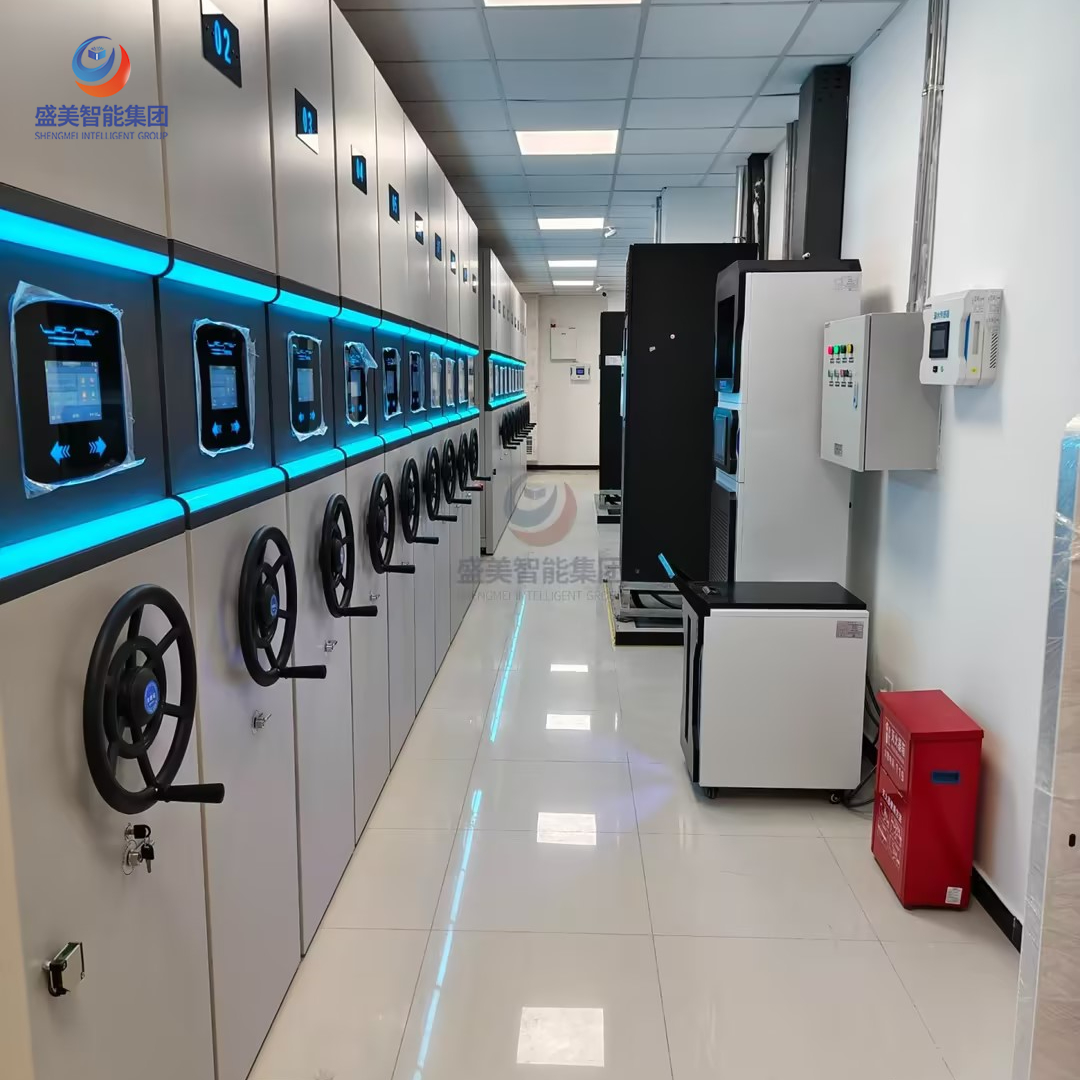
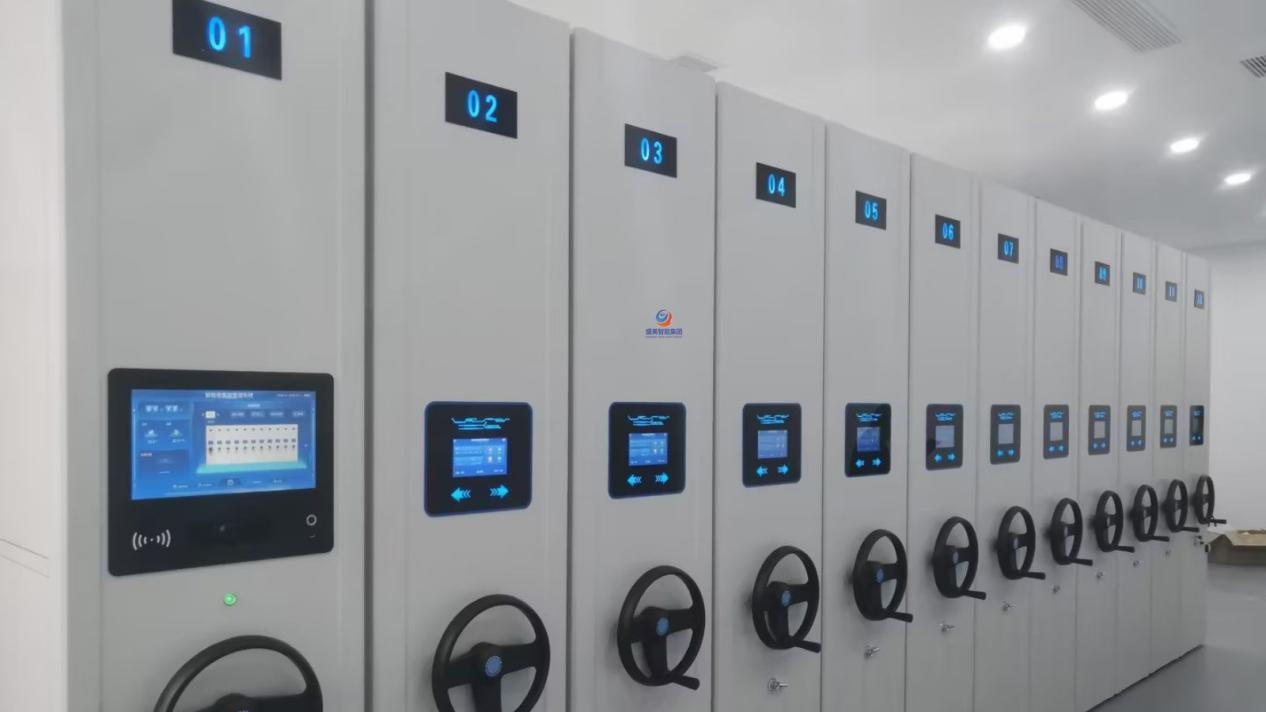
Archive digitization is a core trend for overseas archive institutions. If procurement focuses only on basic storage without reserving RFID locating and third-party archive management system integration interfaces, later digital upgrades face extremely high retrofit difficulty — in most cases requiring complete equipment replacement. Compliant Smart Compactor Shelving reserves standardized communication interfaces supporting secondary development and system integration.
Trade Terms & SOW Delivery Scope Confirmation
The SOW (Statement of Work) is the core performance document for overseas compactor shelving projects. It must clearly specify the supply list, survey service scope, number of CAD drawings, language versions of technical manuals, factory testing, inspection standards, installation guidance, and personnel training — all service content. It must also clearly define buyer/seller responsibilities for sea freight, customs clearance, and inland delivery under trade terms such as EXW, FOB, CIF, and DDP, eliminating hidden charges.
Acceptance Criteria & After-Sales Spare Parts Terms
Cross-border projects cannot rely on fast domestic on-site after-sales service. The contract must therefore specify factory acceptance criteria, on-site acceptance indicators, warranty years, warranty scope, spare parts lead times, and remote technical support response times, preventing after-sales disputes at the source.
Table 1 — Core Parameter Comparison: Manual Compactor Shelving vs. Smart Compactor Shelving
| Comparison Item | Manual Compactor Shelving | Smart Compactor Shelving |
|---|---|---|
| Drive method | Manual crank drive | Motor drive + touchscreen + backend management |
| Common steel thickness | 0.8–1.2 mm | 1.0–1.4 mm |
| Safety & compliance focus | Mechanical anti-pinch design, track structure strength | EN15095, ISO 13849-1 PL-d, multi-layer safety sensor protection |
| Digital interfaces | Basically none reserved | Standard RFID & archive system integration ports |
| Suitable project scenarios | Small-to-medium archive rooms with limited budgets | Government, universities, large archives, overseas tenders |
| Survey requirements | Mandatory track-line load verification | Floor load verification + electrical point survey |
| Supporting SOW content | Mechanical operation manual | Multi-language electrical manual, system training |
Table 2 — 10-Year TCO Cost Estimate for Overseas Compactor Shelving Projects (USD, 60-section scale)
| Cost Item | Low-Cost Bare Procurement (no survey, no SOW) | Full Compliance Procurement (survey + verification + SOW) | Cost Risk Notes |
|---|---|---|---|
| Base equipment value | 100% baseline | 104% baseline | Small premium covers professional survey & technical documentation |
| Survey, verification, CAD, full technical docs | $0 | Included in quote | Early identification of civil & compliance risks avoids huge losses |
| Potential reinforcement / rework / rejection losses | $38,000 – $110,000 | Risk controlled, reinforcement cost pre-assessed | Bare procurement easily triggers irreversible accident losses |
| Port detention / return shipping risk | Extremely high | Near zero | Non-compliant arrivals cannot recover detention/return losses |
| Later digital upgrade costs | Extremely high — near full replacement | Low-cost upgrade via reserved interfaces | Upfront interface reservation cuts long-term O&M upgrade costs |
| 10-year equivalent total cost | 165% – 230% | 110% | Small upfront investment avoids catastrophic project risk |
10-Point Audit Checklist for Overseas Smart Compactor Shelving Procurement (Keep records 7+ years for audits & dispute evidence)
- Collect and archive complete as-built structural drawings
- Complete full-dimension on-site survey; issue survey records covering ceiling height, door openings, beams/columns, pipelines, and power points
- Issue a dedicated track-line concentrated load verification report; refuse to judge installability by uniform floor load alone
- Complete aging load reduction assessment for old buildings
- Deliver at least one formal CAD layout marking obstacles and track routing
- Issue a precise capacity report distinguishing theoretical vs. actual usable capacity
- Lock all core hardware parameters into the contract annex; no verbal promises
- Verify certificate model matches ordered equipment model; archive full compliance docs
- Sign a formal SOW defining scope, trade responsibilities, acceptance criteria, and spare parts terms
- Fully archive survey reports, verification docs, CAD drawings, certificates, and SOW contract

Product Fit Statement
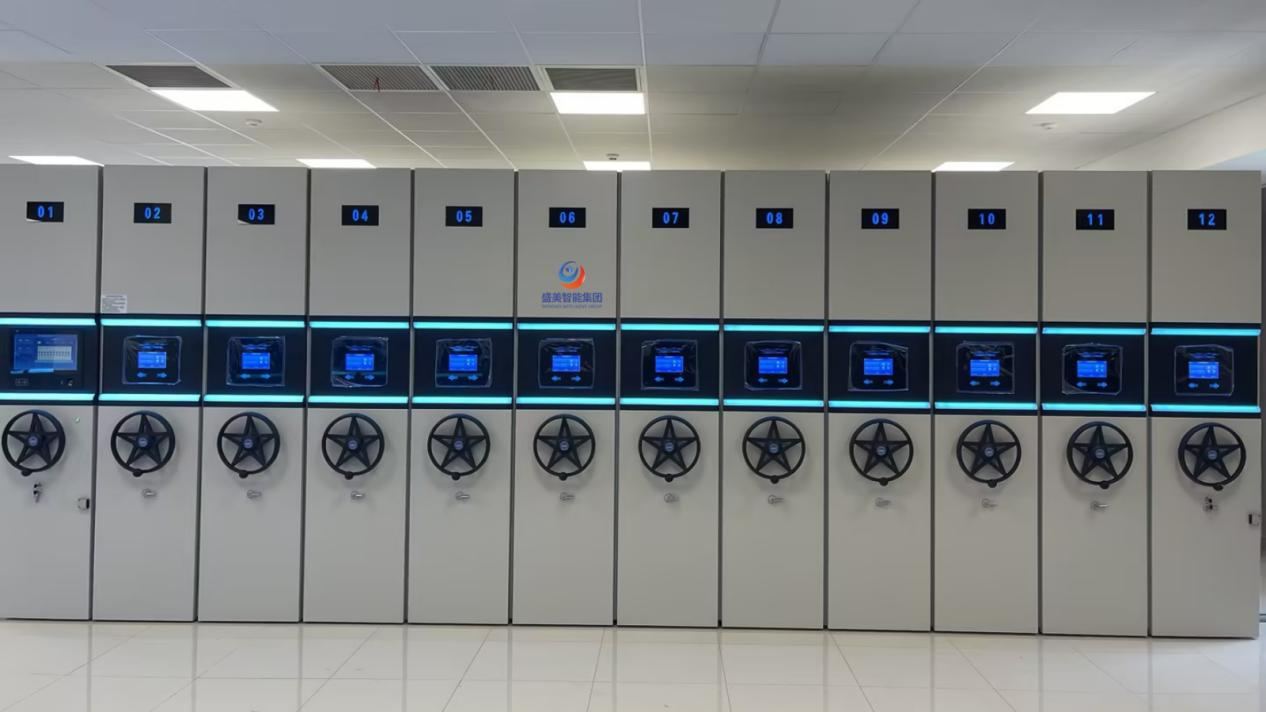
Shengmei Smart Compactor Shelving and Manual Compactor Shelving fully fit two scenarios: brand-new archive rooms and retrofits of ordinary rooms into archive rooms. Built with standardized industrial production, our hardware comes with full supporting engineering services for overseas EPC contractors and procurement teams — professional surveying, load verification, layout optimization, and compliance documentation.
FAQ — Frequently Asked Questions for Overseas Procurement
Q1: Does a brand-new archive room still need track-line load verification? ▾
Q2: Can a generic test report be used for EU customs clearance? ▾
Q3: Can the survey/verification report be done after production is complete? ▾
Q4: What does the SOW do? Are verbal agreements acceptable? ▾
Q5: Without reserved digital interfaces, how can equipment integrate with archive systems later? ▾
Request the Overseas Smart Compactor Shelving Procurement Checklist
Use it for pre-project risk assessment — free of charge.
Get the Checklist →