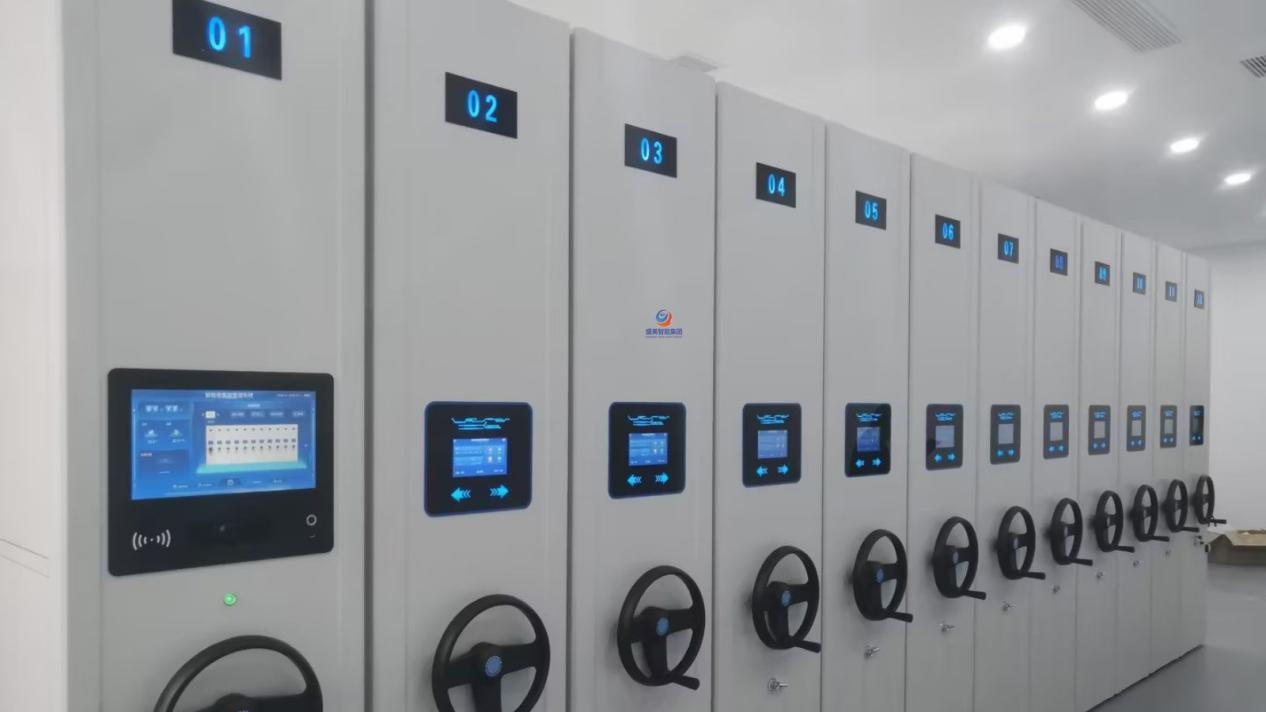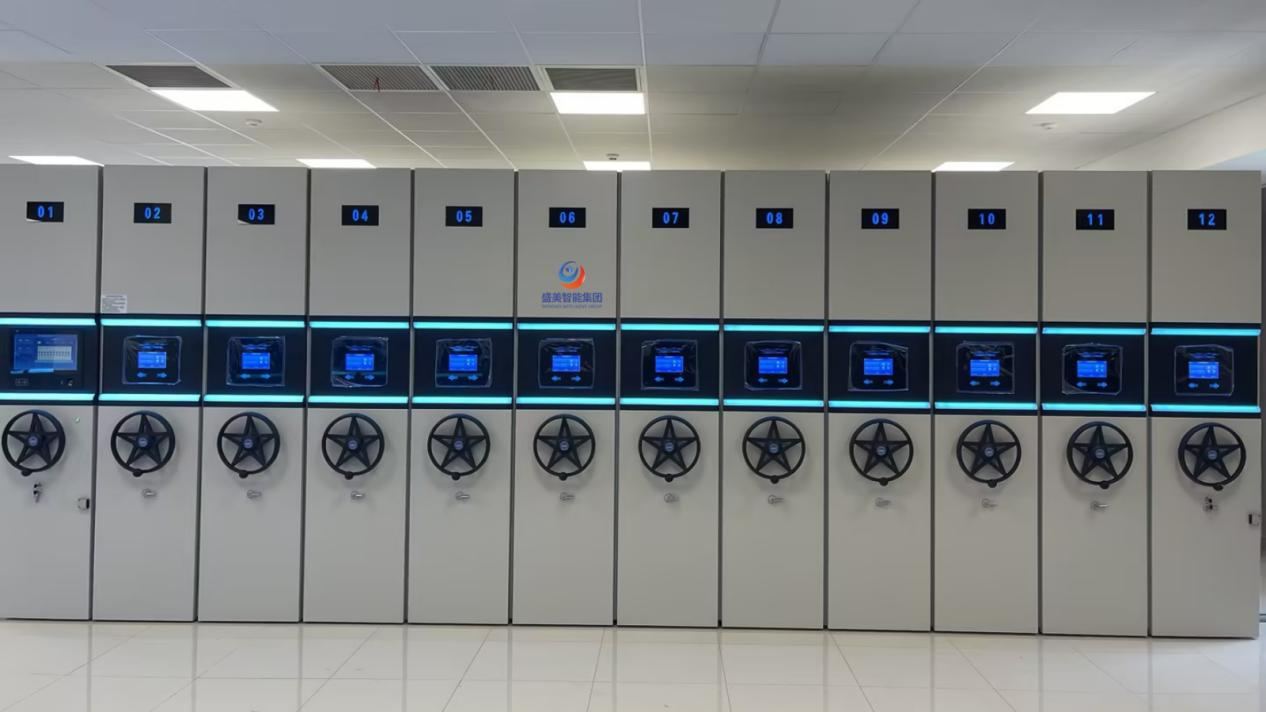
How to Select Mobile Compactor Shelving for Small and Medium Archive Rooms
A practical mobile compactor shelving roadmap for overseas archives of 20–60 m² — match room size, floor load, access frequency and budget to pick the right system, and avoid paying for smart functions you won't use or for low-gauge steel that warps in two years.
Specifying mobile compactor shelving for a small or medium archive room starts with three pain points that most overseas buyers — small law firms, community clinics, school branches, SMEs and government satellite offices — run into at the same time: more files every year, very little floor area, and a tight retrofit budget.
Two failure modes repeat across these buyers: overshooting on smart compactor shelving (paying for motors, touch panels and system integration that sit idle) or chasing the lowest price on thin-steel, non-standard units that warp, rust or jam within a year and leave the archive non-compliant.
Step One — Check the Room Before You Pick the Mobile Compactor Shelving System
Small and medium archive rooms are space-limited with fixed building fabric. Verify the hardware first, then choose the equipment — otherwise you may end up with units that won't fit through the door or won't run.
1. Area & ceiling height
- 20–60 m² is the textbook small / medium archive footprint — the ideal candidate for a compactor conversion.
- Ceiling ≥ 2.5 m: use the standard 2400 mm-high bay — biggest capacity, easiest to source.
- Ceiling 2.2–2.5 m: order a custom low-height bay to clear beams and allow full opening.
- Narrow elongated rooms: single-row layout — keep the aisle clear.
- Square rooms: double-row layout — highest space efficiency.
2. Floor load capacity — the critical check for mobile compactor shelving
A fully loaded compactor is heavy; older small archives are prone to slab deflection, tilting and track distortion if the floor wasn't designed for it.
Need a deeper walkthrough? Read: floor load requirements for compactor shelving.
3. Power and cabling
- No power, no cabling, older rooms: manual compactor shelving is the only viable choice.
- Power + network + budget available: smart compactor shelving becomes an option, depending on access frequency.
Step Two — Match Mobile Compactor Shelving to Access Frequency (covers ~90% of small archives)
Full breakdown: manual vs smart compact shelving comparison.
Best for: archives with low weekly retrieval, files held long-term, limited budget, no appetite for ongoing maintenance.
Advantages: zero electricity cost, no electronic faults, very low failure rate, long life, simple upkeep, best value — fully meets EN 15095 archival storage requirements for the demands of overseas compliance.
- High daily retrieval volume, high-frequency operation (hospitals, large law firms).
- Need to interface with an archive management system and link physical files to digital records.
- Good room conditions, sufficient budget, and willingness to absorb annual maintenance cost.
For all other small and medium scenarios, the smart functions on mobile compactor shelving effectively sit idle — that spend is unnecessary.
Static shelving still makes sense in only a narrow set of cases: very low file volume, frequent single-file access without batching, or rooms that physically cannot accept floor tracks. For everything else, mobile compactor shelving will reclaim 40–60% of your floor area on day one.
Step Three — Lock Down the Core Specs of Your Mobile Compactor Shelving
With limited budgets, small archives can least afford thin, non-standard steel. Under-spec components bend, warp, rust or jam within 1–2 years.
1. Steel gauges — overseas projects must check
- Uprights: ≥ 1.2 mm
- Shelves: ≥ 0.8 mm, single-shelf load 40–60 kg
- Tracks: ≥ 3.0 mm thickened cold-rolled steel — wear-resistant, no deformation
2. Safety features are not optional
Operators in small archives rotate often, so safety is a baseline: anti-trap protection, anti-tilt limiters, brake lock, master key lock, dust-seal gaskets — all protect both people and files from moisture and dust.
3. Surface finish
Fully automated electrostatic powder coating, rust- and corrosion-proof, odour-free — suitable for overseas humid, hot, or salt-spray environments.
Step Four — Best Mobile Compactor Shelving Layout for Small & Medium Archives
Whether a small room can actually fit and run a compactor depends entirely on the layout.
1. Aisle-width rule
Mobile compactor shelving consolidates fixed aisles into a single main aisle of 80–100 cm wide — space utilisation reaches 85%–90%, more than double a standard file cabinet at the same footprint.
2. Vertical storage logic — click each layer
3. Small-budget trick: lay the track first, add the bays later
You don't need to buy every bay of mobile compactor shelving up front. Small archives can lay the full floor track in one pass, then add bay units in stages as the archive grows — the initial outlay drops sharply, and you keep clean expansion headroom.
| Layer | What to file | Why it goes here | Access freq. |
|---|---|---|---|
| Upper | Past-year & historical archive | Out of the way of daily work | Low |
| Middle | Contracts, ledgers, weekly files | Chest-to-eye height — fastest reach | High |
| Lower | Heavy binders, drawings, spares | Lowers the centre of gravity | Medium |
Step Five — Four Mobile Compactor Shelving Pitfalls to Avoid
Pitfall 1 Blindly upgrading to smart mobile compactor shelving
Low-utilisation small archives leave the motor, touch panel and system integration sitting idle — wasted budget and an extra failure surface.
See the full list: 7 common pitfalls in compact shelving procurement.Pitfall 2 Chasing the lowest price
Thin steel, thin gauges, no protective finish — cheap today, but warps and rusts within a couple of years, damages files, and the after-sales bill dwarfs the savings.
Pitfall 3 Skipping the floor & ceiling survey
Ordering without a site survey leaves you with units that won't fit through the door, can't be installed, or jam on day one.
Pitfall 4 Buying out everything at once
Small-archive volume grows slowly. Buying every bay on day one ties up capital in idle units — staged procurement is the cheaper path.
Step Six — Mobile Compactor Shelving Procurement FAQ
Is a 30 m² or 40 m² archive room too small for mobile compactor shelving?
No — small rooms need the space the most. Mobile compactor shelving typically doubles the usable storage capacity of the same footprint, so a 30 m² room can hold the equivalent of a 60 m² static-shelving room and finally escape file pile-up.
Can an older archive room with no electrical wiring install mobile compactor shelving?
Yes. Manual mobile compactor shelving needs no power and no cabling, which makes it the best fit for older small-archive retrofits.
How durable is manual compactor shelving? Does it need regular maintenance?
A standard-spec manual compactor shelving system has a service life of 15–20 years. Routine care is limited to cleaning and track lubrication — maintenance cost is close to zero.
Do small and medium archive rooms need a software-integrated compactor system?
Usually no. Digitised scans paired with manually stored physical files cover most mixed-archive workflows; system integration is only justified by high-frequency, high-volume operations.
How can small archives control upfront cost without overbuying?
Lay the full floor track in one pass, then add bay units in stages as the archive grows. This keeps the initial spend low while leaving expansion headroom.
Which Mobile Compactor Shelving System Fits Your Small Archive?
Answer three quick questions and the recommendation updates instantly.
Based on low retrieval frequency and no software-link requirement, a standard manual compactor shelving system is the best fit — zero electricity cost, very low maintenance, EN 15095 compliant, and the lowest total cost of ownership.
The Bottom Line
Choosing mobile compactor shelving for a small or medium archive comes down to one rule — don't overshoot on high-end, don't skimp on the steel, and match the system to the actual scenario.
For ~90% of overseas small and medium archive rooms, a standard manual compactor shelving system, a thoughtful layout, and staged procurement is the cheapest, most stable, most compliant, and best-value archival solution. Cross-check the room area, floor load, access frequency and budget together, and you'll cover long-term storage needs while avoiding both overspend and quality risk.