Step-by-Step Procurement Plan for Manual Compactor Shelving
A Budget-Conscious Guide for Overseas Small and Mid-Sized Archival Institutions
This white paper is part of the Shengmei overseas procurement series of standardized technical guides, written for overseas small and mid-sized archives, community archive centers, non-profit organizations, small hospitals, and local society archive departments. When budgets are tight, many procurement teams confuse Manual Compactor Shelving with sliding storage racks or mobile racking — three product categories with very different structures, load ratings, archival suitability, and cost implications. This guide delivers a complete, step-by-step procurement methodology that helps you finish your archive room in the right order, with the right specifications, and on a controlled budget.
I.Distinguishing the Three Product Categories
Many overseas buyers treat three categories of mobile storage products as interchangeable, yet their structures, load ratings, archival suitability, and cost differ sharply. These distinctions are the foundation of any phased procurement plan:
Manual Compactor Shelving
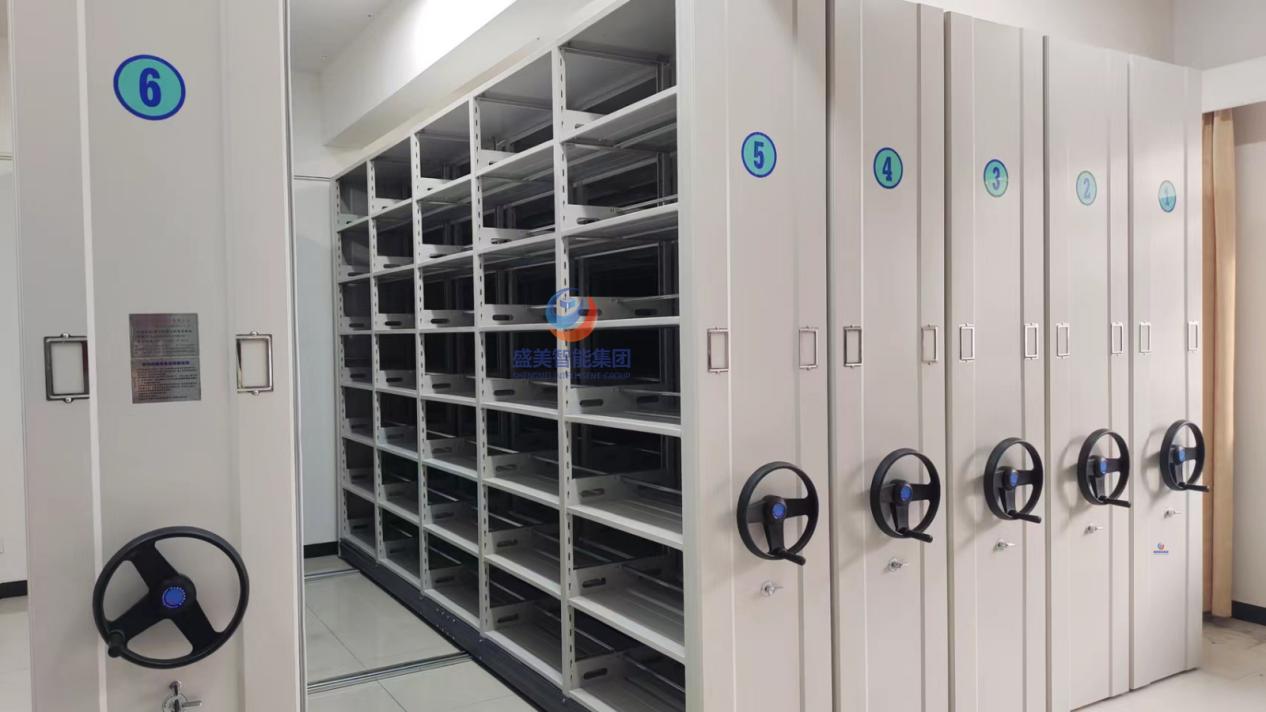
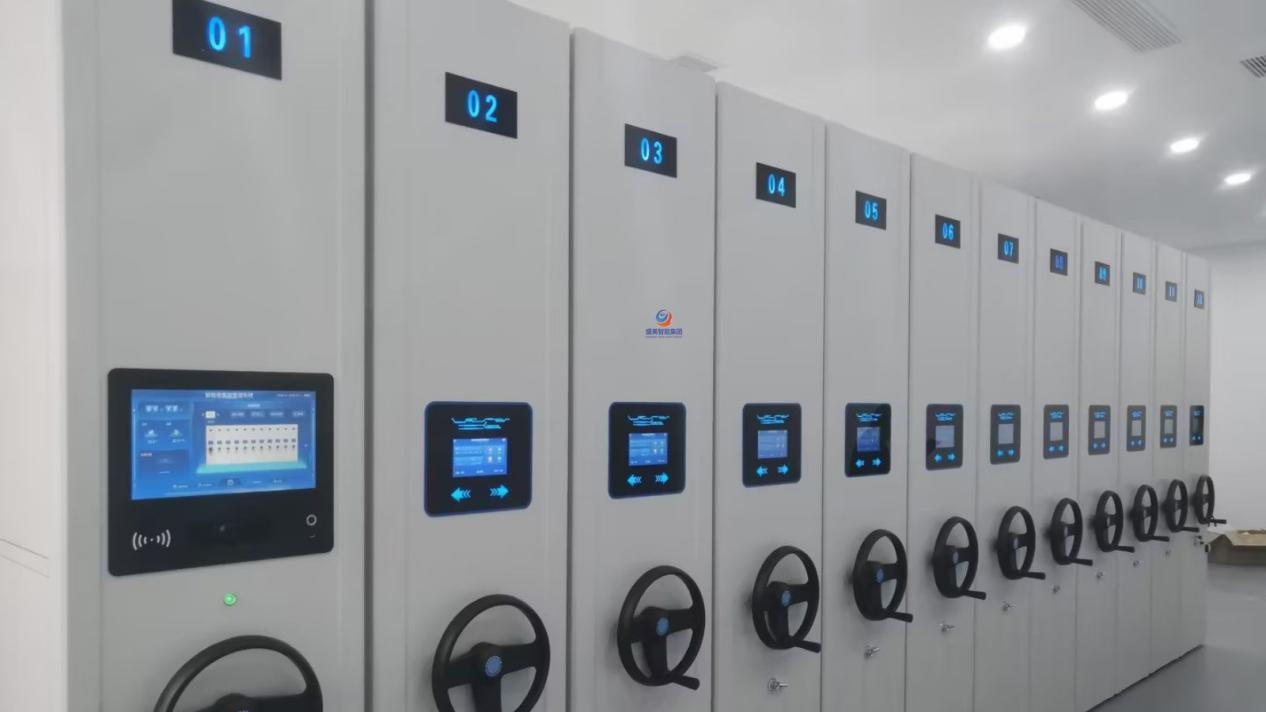
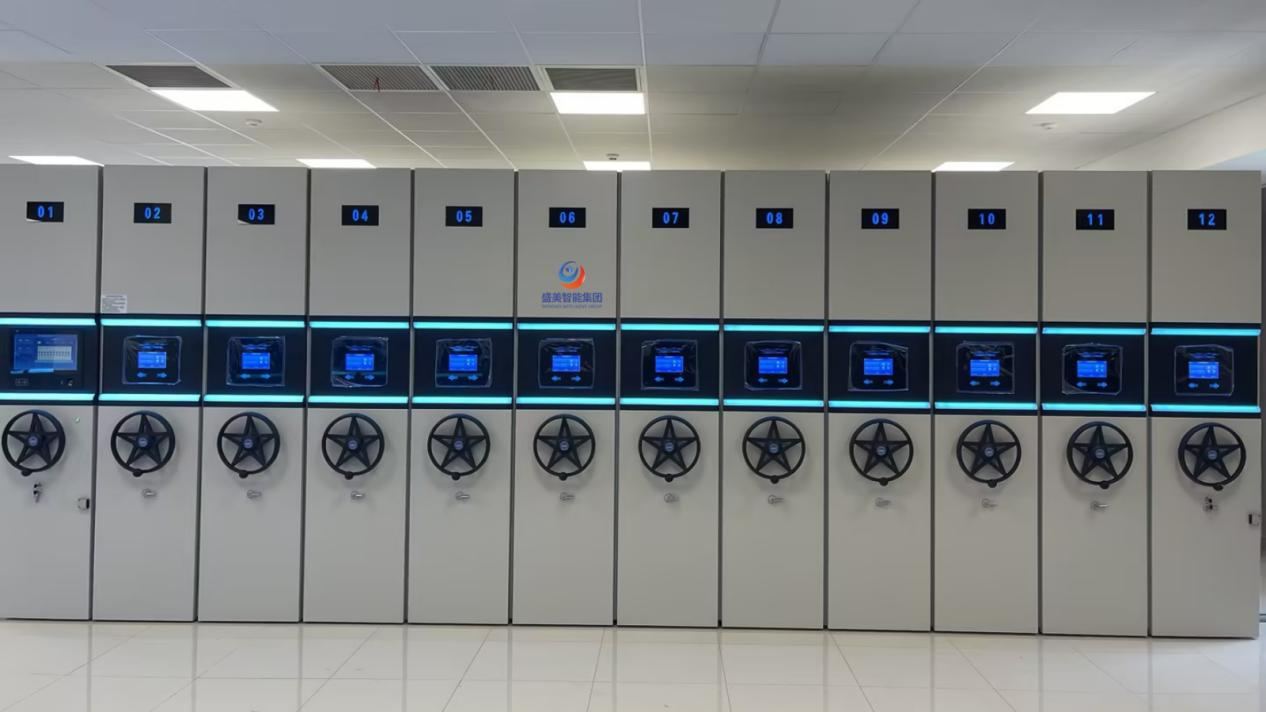
Purpose-built for long-term preservation of paper archives, folders, and archive boxes. A complete set includes dedicated rails, a chassis, a hand-crank transmission mechanism, and fully enclosed dust-proof cabinets. Shelf load ratings are calibrated for stacked archive boxes, and the enclosed structure protects paper records from humidity, salt spray, and dust — the standard solution for long-term archival storage.
Sliding Storage Racks
A lighter-duty sliding format. Many variants do not have a fully enclosed cabinet, and they are intended for general material storage. They suit a small number of archive boxes or office supplies but are not designed for large-volume, long-term archival use. Suitable only as a temporary bridge during phased procurement.
Mobile Racking / Mobile Shelving
Mostly used in industrial warehouse scenarios — track-based mobile shelving aimed at industrial material storage. Open structure, lacking archival-grade dust protection, sealing, and anti-tilt safety. Strongly not recommended as the main system for permanent paper archives in humid or salt-spray environments.

Core Selection Principle
For permanent paper archives, prioritize Manual Compactor Shelving as the primary system. Sliding storage racks and mobile racking may only serve as transitional bridges — never use warehouse-grade mobile shelving as a substitute for archive-grade Manual Compactor Shelving. Doing so leads to rust, dust ingress, and damaged records, which then forces a costly second round of procurement.
II.Real Pain Points of Overseas SMB Archive Institutions on a Tight Budget
- Annual fiscal or institutional budgets are limited, making it impossible to procure a complete set of racking in one go.
- Archives grow steadily, but the existing archive room is not yet full. Buying everything at once would leave equipment idle and tie up a large amount of capital.
- Projects must meet compliance requirements such as EN 15095 and OSHA safety standards, and require matching English operation manuals and basic maintenance spare parts.
- Overseas shipping MOQ thresholds and high international logistics costs make small, scattered orders drive up the unit landed cost.
- Institutions have no in-house equipment maintenance staff, so the priority is simple structure, low failure rate, and avoiding the high maintenance cost of motorized units.
Given these realities, phased procurement does not mean lowering equipment standards. It means delivering the project in stages — solving today's core pain point first, matching the real growth rhythm of the archive, and avoiding a single large capital outlay.
III.Overall Phased Procurement Strategy for Manual Compactor Shelving
Core Planning Logic
Complete the full archive-room layout design in one pass, then procure cabinets in batches. Lay the entire rail system at once; add cabinet units in stages.
Common Mistake
Do not place ad-hoc, piecemeal orders driven by opportunistic buying. Without an upfront master plan, later additions will very likely mismatch rail dimensions, fall short of required aisle widths, or break the overall layout — leading to rework, downtime, and wasted budget.

Stage 0 — Site Survey and Master Plan Finalization (no equipment yet, the most important pre-step)
This stage does not procure any cabinets. It completes all on-site surveys and produces the master plan that underpins every later batch.
- Measure the archive room length, width, and clear height; locate beams, columns, door openings, and fire-protection points; verify the actual floor load capacity.
- Inventory the existing archive boxes and forecast the next 5–10 years of archive growth.
- Segment the archive: permanent records (use Manual Compactor Shelving) versus temporary reference materials (may use Sliding Storage Racks or Mobile Racking as a bridge).
- Require the factory to issue a complete archive-room layout drawing: total rail length, total number of bays, reserved positions for later additions, safety aisle clearances; clearly state the first-batch quantity and the follow-on batch quantities.
- Confirm overseas project compliance standards: salt-spray corrosion grade, hand-crank anti-tilt configuration, English technical manual, and a list of wearing parts.
Key Recommendation
Lay the entire rail system in a single procurement and construction pass. The rail is the foundation of the whole system. If rails are laid in batches, joint misalignment and level deviation will appear, and later cabinet additions will jam during operation. Rails are a one-time infrastructure investment and do not take a large share of total budget; once rails are complete, you only need to procure cabinet units in batches and snap them together as needed.
Phase 1 Procurement — Address Today's Essential Need (1–2 Years of Use)
Procurement goal: cover all current permanent archives, keep a small redundancy, and avoid buying large quantities of cabinets that will sit idle.
- Per the layout drawing, procure the first batch of Manual Compactor Shelving bays to cover existing archive storage.
- Bundle with the order: a wearing-parts kit (chains, locks, rollers) and an English operation & maintenance manual.
- A small amount of unprocessed temporary material in the archive room may be stored short-term on Sliding Storage Racks if budget is constrained. Permanent archives must never be placed on open Mobile Racking.
- Complete installation and commissioning of the first batch and run training sessions for the archive management staff.
- Set up an archive ledger; each year, count new archives and record the remaining storage capacity of the room.
Risk Warning
Do not, in order to save money in Phase 1, deploy large quantities of Mobile Racking to store permanent archives. The short-term saving is real, but 1–2 years later humidity and dust will damage the records, forcing a complete re-procurement — and the total cost will be higher.

Phase 2 Top-Up Procurement (Years 3–5, Triggered by Archive Growth)
When remaining capacity on the Manual Compactor Shelving drops to 70–75%, launch the second procurement batch.
- Building on the full rail system already installed, add the corresponding number of Manual Compactor Shelving units — snap-on extension, no new rail work, short installation cycle.
- Update the archive-room layout ledger.
- If temporary Sliding Storage Racks are still in use, gradually retire them as archives are migrated to Manual Compactor Shelving. Remove the transitional equipment.
Phase 3 Final Expansion (Years 6–10)
Complete the remaining Manual Compactor Shelving units per the original drawing and finish the archive-room build-out. If actual archive growth is slower than forecast, you may continue to defer procurement — there is no need to complete everything at once. If later budgets allow, the existing rails can also be retrofitted with motorized or smart modules.
IV.Five Common Pitfalls in Overseas Phased Procurement Projects
V.Phased Procurement Budget Allocation (Overseas SMB Archive Institutions)
The table below summarizes budget share, procurement content, implementation points, and risk notes for each stage — useful for project setup and budget submission.
| Procurement Stage | Budget Share | Core Procurement Content | Key Implementation Points | Risk Notes |
|---|---|---|---|---|
| Stage 0 — Site survey & plan finalization | 3–5% | Room survey, full layout drawing output, parameter confirmation | Lock rail specs and cabinet module dimensions; define batch quantities | No order without a drawing — prevents later incompatibility |
| Rail system (one-time installation) | 15–20% | Complete rails, chassis accessories, rail installation work | Lay the entire rail system in one pass with proper leveling | Do not lay rails in batches — prevents joint misalignment and operation jamming |
| Phase 1 procurement (1–2 yr essentials) | 40–50% of cabinet budget | First batch of Manual Compactor Shelving, wearing-parts kit, English manual, installation & commissioning | Cover existing permanent archives; small temporary stock may pair with Sliding Storage Racks | Permanent archives must never be stored on open Mobile Racking |
| Phase 2 top-up (3–5 yr expansion) | 30–40% of cabinet budget | Additional Manual Compactor Shelving units; updated room ledger | Trigger procurement when storage use reaches 70–75%; snap-on extension on existing rails | Lock later top-up specs and quote validity with the supplier in advance |
| Phase 3 final completion (6–10 yr) | Remaining cabinet budget | Fill in remaining Manual Compactor Shelving units; optional upgrade to motorized modules | If archive growth is slow, procurement may be deferred — no need to force completion | Verify spare-part compatibility between old and new units |
| Supporting services | Delivered with each batch | Spare parts, English O&M documentation, remote technical support | Each shipment must ship with matching documentation and parts; never delayed | Do not wait for equipment failure to request spare parts and documents |
VI.Frequently Asked Questions
Our budget is very tight. Can we replace Manual Compactor Shelving entirely with Sliding Storage Racks?
The rails have already been laid in one pass. Does later cabinet addition still require major construction work?
Can Manual Compactor Shelving and Mobile Racking be used together in the same archive room?
If we procure in multiple batches, can later top-up cabinets match the first batch exactly?
Does overseas phased procurement by a small institution generate extra design fees?
Closing Note
For overseas small and mid-sized archival institutions on a tight budget, phased procurement of Manual Compactor Shelving is a highly pragmatic delivery approach. The core is not lowering equipment quality — it is to first complete the overall archive-room plan, lay the rails in one pass, and then procure cabinets in batches as needed. Phased procurement turns a large one-time capital outlay into a predictable, multi-year budget line, while still delivering a complete, compliant, archive-grade facility. The key is to commit to the master plan and rail system early, then buy cabinets in pace with actual archive growth.
Request a Tailored Phased Procurement Plan
Tell us your archive room dimensions, current archive volume, and 5-year growth forecast. Our engineers will return a master layout drawing and a phased quotation within 3 working days — no obligation.
Email the Editorial Team