Shengmei Cabinet · Overseas Procurement Standards Series
Mobile Compactor Shelving Load Capacity: 5 Calculation Methods
- 01 Why you must assess the archive floor load
- 02 Total load composition and calculation method
- 03 Archive floor load standards (overseas)
- 04 Reference table by scenario
- 05 4 renovation options for insufficient load
- 06 On-site survey and acceptance procedure
- 07 4 common procurement mistakes
- 08 FAQ — high-frequency questions
In overseas archive-room procurement, mobile compactor shelving load capacity is the single most-missed pre-installation step. Most buyers skip the floor load assessment, only to find — months after the container has left port — that the slab cannot take the fully-loaded system. The result: sunken floors, cracked slabs, project handover failures and large demurrage losses. This guide walks procurement teams, dealers and engineering contractors through the complete mobile compactor shelving load capacity checklist — total load composition, uniform distributed load vs. rail line load, overseas kN/m² thresholds, the 4 renovation options for insufficient slabs, the on-site survey procedure, and the 4 most common procurement mistakes. For the broader system context, start with our overview of floor load-bearing requirements for compactor shelving.
01Why you must assess the archive floor load before installing mobile compactor shelving
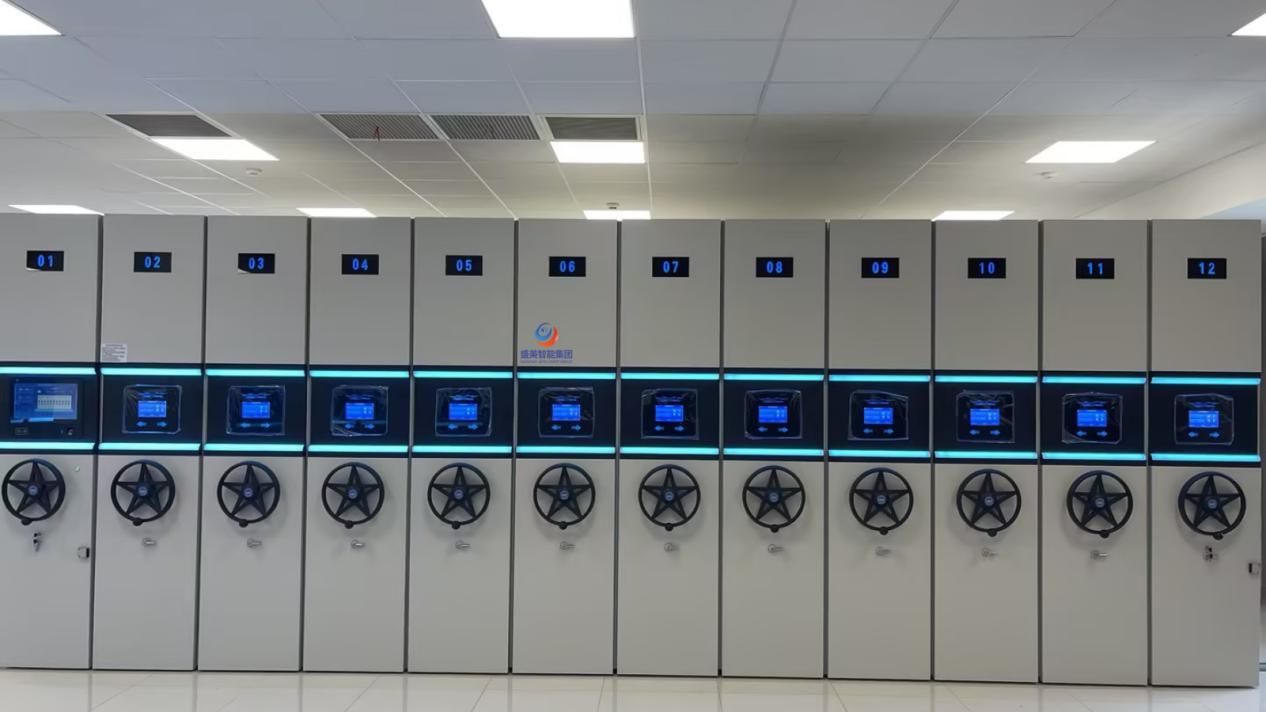
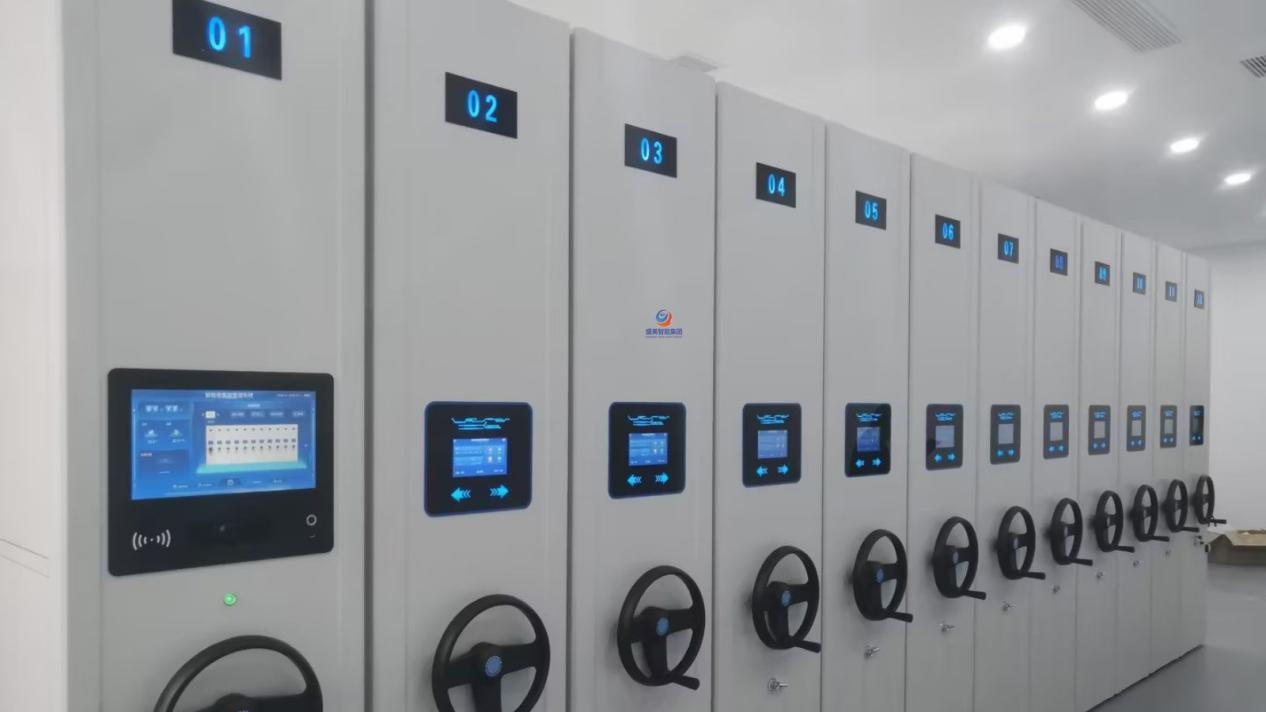
Mobile compactor shelving is a concentrated heavy-load storage system. Unlike standard shelving — where weight spreads across the whole floor — the entire loaded mass channels down to the narrow rail base, producing local pressure far higher than ordinary storage. A formal mobile compactor shelving load capacity assessment is therefore not optional, and the verification must precede rail installation.
Meet overseas building-compliance requirements
Building codes across Europe, the Middle East and South-East Asia explicitly require a structural load verification before any heavy-storage equipment is installed. Handover is blocked without a formal load report — and a failed acceptance means project delays, penalties and re-work.
Avoid structural-safety risk
Body self-weight plus fully loaded paper archives is a long-term, continuous load. If the slab cannot take it, you get cracking, deflection beyond tolerance, and in extreme cases a threat to the building frame itself — while the paper records inside are also at risk of damage.
Control overall project cost
Running a load survey in the very first project phase lets you plan reinforcement in advance. Discovering the slab is under-spec only after the compactor shelving is produced and shipped generates demurrage, return shipping, storage and re-engineering costs that dwarf the survey fee.
Extend the service life of the compactor shelving
Uneven floor settlement twists the rails, causing the carriages to bind, accelerating gear and chassis wear, and dramatically shortening service life. For a deeper look at which parts drive long service life, see our breakdown on the core components that determine mobile compactor shelving service life.

02Total load composition and the basic calculation method
The total mobile compactor shelving load capacity is the sum of body self-weight plus the weight of the stored archives. The calculation must cover both the uniform distributed load and the local line load transmitted through the rail — building structural engineers require both numbers when reviewing slab capacity.
1. Body self-weight
A standard steel mobile compactor shelving system weighs 80–120 kg per linear metre without archives. Higher steel-plate thickness increases body weight; a thickened-chassis custom version adds further.
2. Archive storage weight
A4 paper archives, tightly bound, weigh roughly 480–600 kg per cubic metre. Loose unbound files run lighter per cubic metre.
Total uniform distributed load = (body self-weight + full-load archive weight) ÷ footprint area03Archive floor load standards (overseas building codes) and what they mean for mobile compactor shelving load capacity
Load codes differ by country and region. Always follow the local current code for the project site. The following are common overseas reference values:
- Standard office slab — 2.0 kN/m². Cannot host mobile compactor shelving directly.
- Small-business archive room — ≥ 5.0 kN/m². Light-duty mobile compactor shelving, with archive fill-rate controlled.
- Professional archive room — ≥ 7.5 kN/m². Industry mainstream standard; fits the majority of mobile compactor shelving projects.
- High-load archive room (long-term paper case files) — ≥ 10 kN/m².
04Reference table — mobile compactor shelving load capacity values by archive-room scenario
 Reference table: recommended minimum slab uniform load for mobile compactor shelving across five common scenarios.
| Application scenario | Min. slab uniform load | Suitable compactor shelving type | Notes |
|---|---|---|---|
| Small-business archive room | 5.0 kN/m² | Light-duty mobile compactor shelving — control archive fill-rate | For small archive volumes; cap weight per carriage. |
| University / law-firm standard archive room | 7.5 kN/m² | Standard mobile compactor shelving, fully loaded | Most common overseas archive configuration. |
| Hospital medical records / long-term archive | 7.5–10 kN/m² | Thickened-chassis mobile compactor shelving, high-volume case files | Heavy paper, long-term full load. |
| Second floor and above | ≥ 7.5 kN/m² + structural verification | Standard mobile compactor shelving; load survey mandatory | Upper-floor slabs often under-spec — verify first. |
| Basement archive room | ≥ 7.5 kN/m² | Heavy-duty mobile compactor shelving | Slab capacity is usually higher; check damp-proofing in parallel. |
Looking across the scenarios in the table below, the practical lower bound for any mobile compactor shelving load capacity is 5.0 kN/m² for a small archive, with 7.5 kN/m² being the mainstream professional standard, and 10 kN/m² for high-volume long-term paper storage. Always verify against local building code before procurement.
054 renovation options for insufficient floor load
When the archive-room floor load falls short, do not abandon the mobile compactor shelving plan. The mobile compactor shelving load capacity can still be reached by combining the structural condition with the project budget and picking one of the four options below.
1. Local floor reinforcement — first choice for overseas retrofits
Reinforce only the rail strip: thicken the slab locally and add steel-beam support beneath the rail. Compared to whole-room reinforcement, this is much cheaper and faster, which makes it ideal for archive-room expansion or renovation projects.
2. Reduce storage density — choose a lighter-weight system
Specify a thinner-steel, code-compliant lightweight mobile compactor shelving and cap the total archive weight per carriage. This is the right option for small and mid-sized archives with limited budgets and no appetite for large structural work. The thinner-steel, lower-mass spec keeps the overall mobile compactor shelving load capacity within the slab envelope while preserving usable storage volume.
3. Widen the rail base — spread local pressure
Widen the rail base and add load-spreader plates so the concentrated rail load is distributed across a larger floor area, lowering local pressure. Works well where the load gap is small; limited effect when the gap is large.
4. Optimise archive-room layout
Reduce the number of compactor shelving blocks, widen the carriage safety aisles, shrink the heavy-load footprint, and relocate heavy case files to higher-capacity zones within the building.
06On-site load survey procedure and acceptance checkpoints
 On-site mobile compactor shelving load capacity survey and acceptance workflow — six steps from drawing review to final re-test.
Full on-site survey procedure
- Pull the as-built structural drawings — slab thickness, rebar layout, original design load.
- Walk the site, check for existing cracks and signs of historical settlement, measure internal length and width.
- Run the theoretical load calculation — uniform distributed load and rail local line load at full archive load.
- Have a licensed structural engineer verify on site and issue a formal load assessment report.
- If the slab fails, design and execute the reinforcement plan, then re-test slab capacity after completion.
- Only after the re-test passes can the rails be laid and the mobile compactor shelving installed.
Acceptance checkpoints
- After reinforcement, a re-test is mandatory. Do not enter the installation phase until a passing load report is on file.
- The rail base must be level; uneven rails concentrate load and create local over-pressure.
- When loading archives after project handover, do not fill every shelf at once. Stage the load and observe for settlement over time.
074 common procurement mistakes around mobile compactor shelving load
❌ Mistake 1 — looking at uniform load only, ignoring rail local load. Many buyers assume the drawing uniform load is enough. But the entire compactor shelving mass channels into a narrow rail strip; even with passing uniform-load numbers, the rail position can still exceed local pressure limits — a real building-safety risk.
❌ Mistake 2 — assuming the ground floor does not need a load survey. Ground floors on made-up / backfilled soil carry uneven settlement risk; the subgrade bearing capacity still needs surveying. Do not assume a ground floor is automatically safe for heavy mobile compactor shelving.
❌ Mistake 3 — assuming reinforcement has no upper limit. Any reinforcement plan has a fixed design-load ceiling. Total archive weight on the shelves must stay below the ceiling stated in the reinforcement report. Exceeding it brings the slab back into over-load.
❌ Mistake 4 — running the mobile compactor shelving load capacity survey only after the compactor shelving has shipped. If the slab turns out to be under-spec only after production and sea freight, the demurrage, warehousing and return-shipping losses are severe. The survey must be the very first step in the inquiry.
08FAQ — high-frequency questions
09Closing
Mobile compactor shelving load capacity and archive-room floor load assessment are the non-skippable pre-installation core of any archive-storage project. The mobile compactor shelving load capacity survey is not just about meeting overseas building-compliance rules — its real job is to protect the building structure, safeguard valuable paper records, and avoid costly project re-work and capital loss. Overseas dealers and archive institutions should fold the mobile compactor shelving load capacity survey into the project plan at the inquiry stage, complete the bearing-capacity assessment early, and deliver the project on time and on budget.
Need a complete mobile compactor shelving load survey, archive-room assessment plan, or overseas project engineering support? Shengmei Cabinet provides one-stop equipment and technical assistance for archive rooms worldwide.
Email subject format: Mobile Compactor Shelving Load Assessment Inquiry + Archive Room Location + Project Scale