美
Intelligent Compactor Shelving Floor Load Test Indicators
Floor load assessment is a necessary pre-installation check for Intelligent Compactor Shelving in archive storage rooms. Archive projects need to confirm floor bearing capacity before placement. Without proper testing, heavy shelving may bring hidden safety risks to the whole archive room. Get it right and the project clears tender review, structural audit and on-site acceptance. Skip it and you risk slab cracking, settlement, full re-installation — and a project that simply cannot pass building code review.
Why an Intelligent Compactor Shelving Floor Load Test Comes First
A fully loaded intelligent compactor shelving system is a heavy-duty intelligent storage asset. The full bay set, electrical controls, smart mainboards and the paper archive files themselves all push continuous downward force on the building slab. Many archive room projects skip this test at the procurement stage, only to discover — after the system has been produced, shipped and installed — that the floor simply cannot carry it. The result is a failed building inspection at best, and slab cracking, settlement or even collapse at worst.
This test is the essential pre-condition for any archive room retrofit or new-build project, and is a mandatory review item in overseas government, university and law-firm archive tenders. This guide breaks down the technical load indicators, the load calculation logic, on-site methods and retrofit options, so that procurement teams and overseas dealers can complete the structural evaluation before ordering intelligent compactor shelving — and avoid the huge cost of rework, demolition and re-installation later.

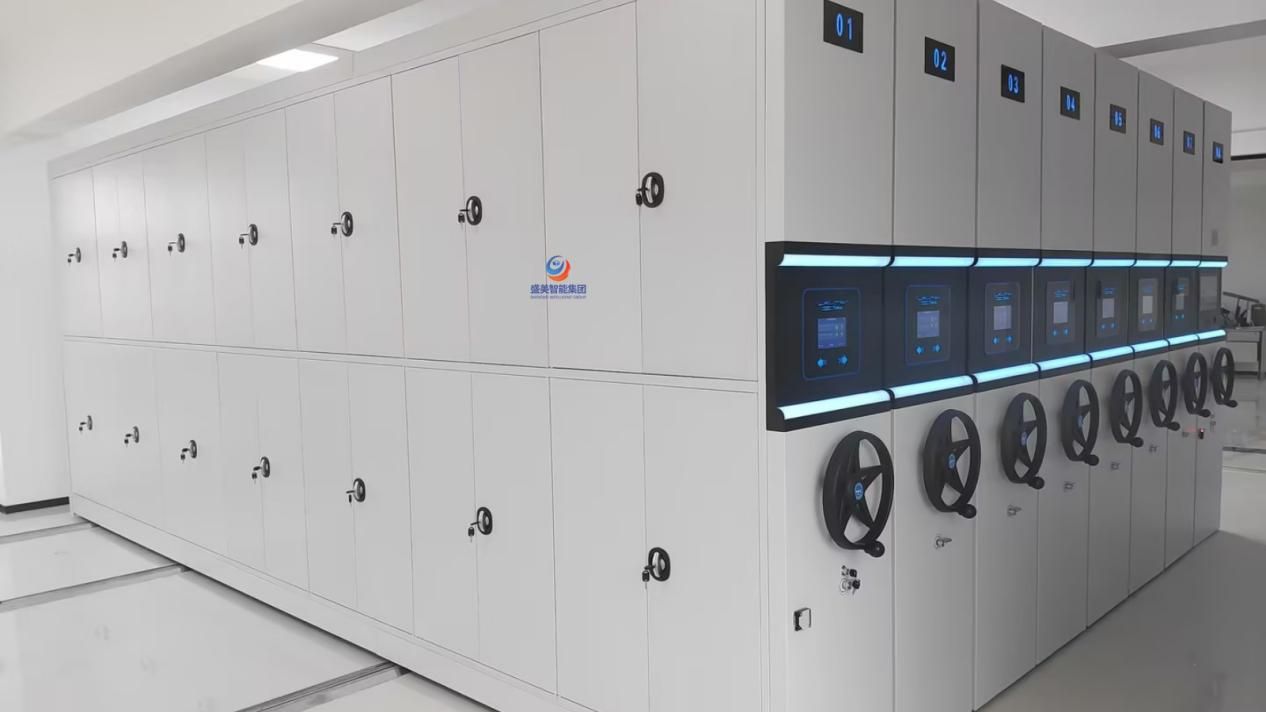
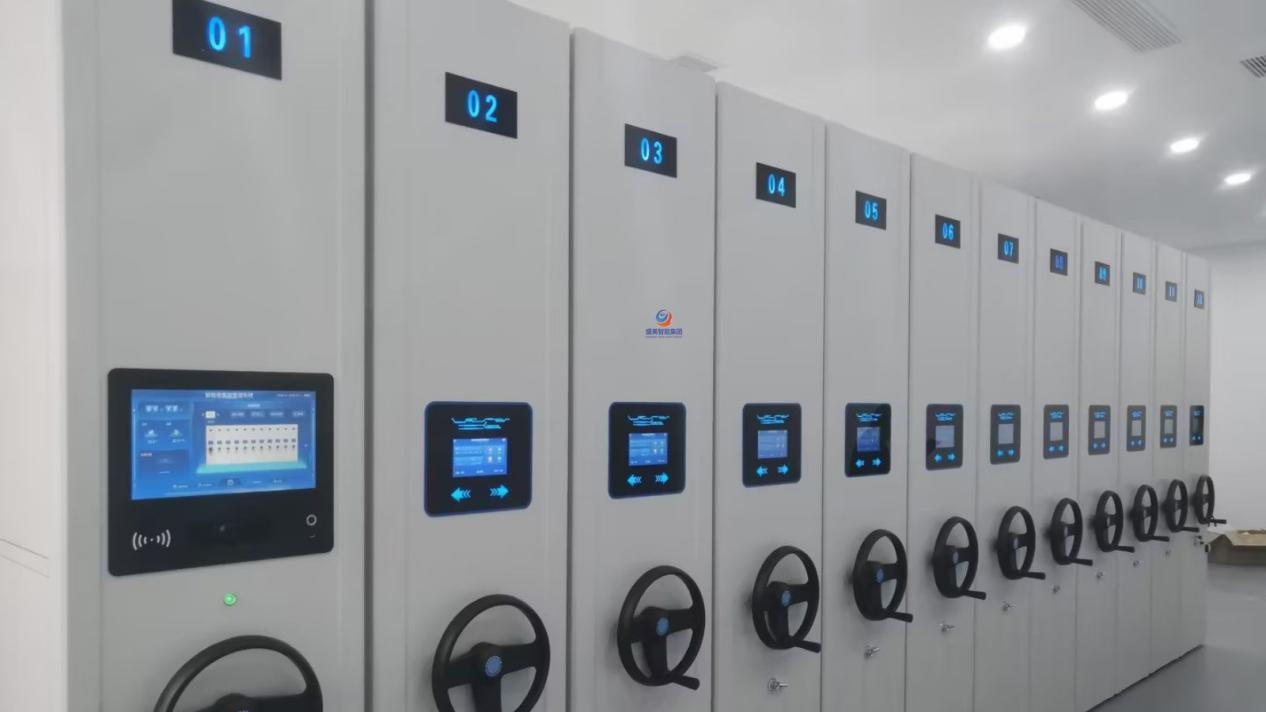
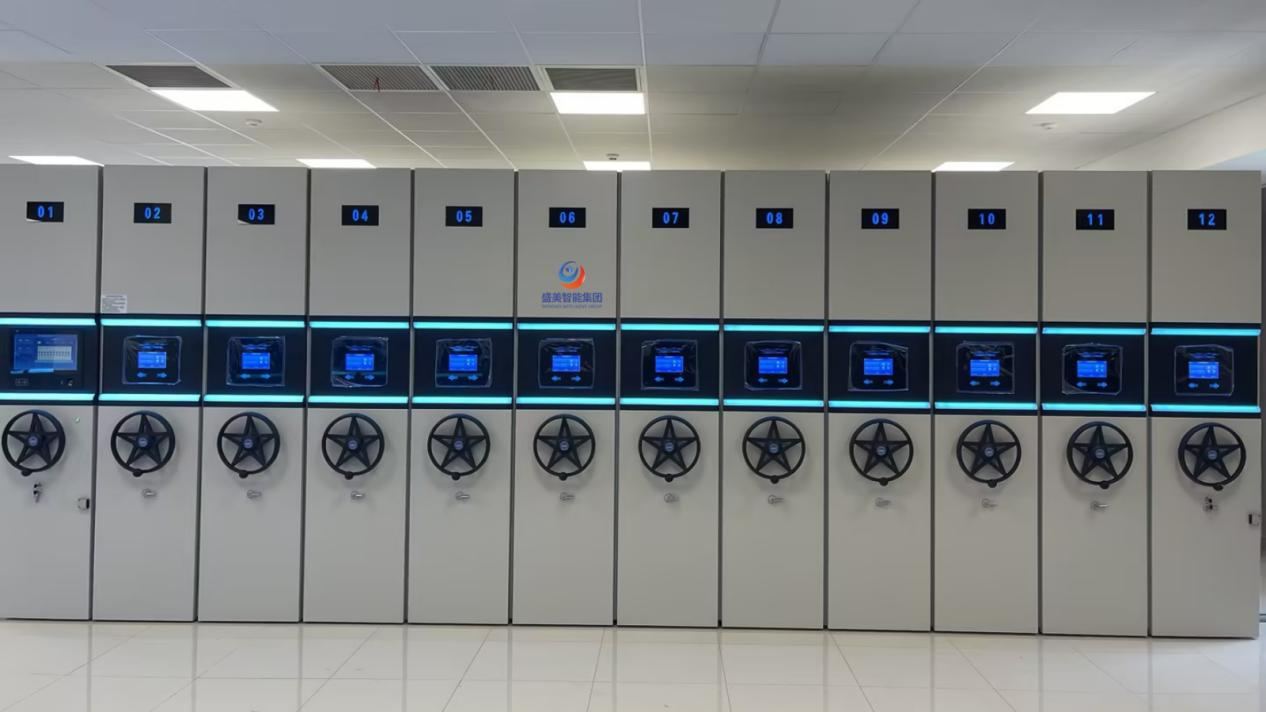
Heavy-duty intelligent compactor shelving bays — the floor load test must precede production and shipping.
The 3 Core Load Indicators in the Intelligent Compactor Shelving Floor Load Test
In this test, the procurement team must understand three core indicators. These are the parameters that show up in the structural engineer's report and in the intelligent compactor shelving tender specification.
Moreover, four on-site facts must be confirmed before any indicator is accepted:
- Confirm the static load capacity per square meter of the archive room floor
- Check floor cracks, settlement and structural damage
- Verify if the foundation can support the full-load weight of Intelligent Compactor Shelving
- Collect test reports for project bidding and customer review
Measured in kN/m², the UDL is the long-term weight each square metre of slab can carry. The industry minimum for an archive room hosting intelligent compactor shelving is ≥6 kN/m²; high-density, full-load smart archive rooms should target ≥8 kN/m².
Track bottoms, carriage support points and motor bases create concentrated point pressure on the slab, not even coverage. The test must verify each support point's local bearing capacity, or the slab can crack, settle locally, and the carriage may drift or tilt.
Short-term live load and long-term allowable load are different. Only the long-term allowable load from the building inspection report is a valid design basis for installation and archive room retrofit.
| Archive Room Type | Recommended Minimum UDL | Matching Intelligent Compactor Shelving Setup |
|---|---|---|
| Small business archive room | ≥6 kN/m² | Entry electric intelligent compactor shelving, moderate archive loading |
| University / government standard archive room | ≥8 kN/m² | Full networked intelligent compactor shelving, high-density full load |
| Ultra-high-density smart archive room | ≥10–12 kN/m² | Extra-long multi-bay intelligent compactor shelving, 100% full load, 24/7 operation |
Total Load vs. UDL vs. Point Load: The Intelligent Compactor Shelving Floor Load Test Calculation
Many procurement teams make a single mistake: they only count the system self-weight and ignore the paper archive mass. This systematically underestimates slab pressure and creates long-term hidden risk.
Total Load = Intelligent compactor shelving self-weight + electrical control components + paper archive full-load mass.
- Self-weight: Steel structure, motors, controls and rails run roughly 100–140 kg/m², higher than manual compactor shelving.
- Archive full-load mass: A4 paper archives can reach 400–600 kg/m² — the single largest contributor to slab load.
- Track support point load: The full intelligent compactor shelving system weight funnels through the bottom rails to discrete support feet, and these feet are the critical load-bearing zone for the slab.
- Confirm the archive room plan and lay out the intelligent compactor shelving arrangement.
- Count bay layers and groups, then estimate the full-load archive mass.
- Calculate the point load at each rail support and the global UDL precisely.
- Hand off to a licensed structural engineer to verify against the original design parameters and confirm the intelligent compactor shelving floor load test outcome.
2 On-Site Methods to Run the Intelligent Compactor Shelving Floor Load Test
Method 1: Drawing Review (Recommended — Lower Cost)
Pull the original archive room as-built drawings and have a licensed structural engineer check the slab thickness, rebar specification and concrete grade against the original design parameters. A theoretical calculation produces the test report.
Pros: Short lead time, no on-site loading, lower test cost — well suited to standard archive room retrofits. Limit: When drawings are missing or differ from actual construction, this method cannot stand alone for final acceptance and must be paired with on-site testing.
Method 2: On-Site Static Load Trial (Used on Overseas High-Spec Projects)
Place weighted sandbags or iron blocks in the planned intelligent compactor shelving zone and load in stages. Monitor slab deflection, deformation and cracking continuously to verify the slab's real bearing capacity. This is the core field method used on overseas government projects and confidential archive rooms.
Pros: Real, precise data with no theoretical error — directly usable for engineering acceptance and compliance audit. Limit: Longer cycle, requires the room to be cleared, higher test cost.

On-site static load trial in a planned archive room — the most direct intelligent compactor shelving floor load test method for high-stakes projects.
Floor Reinforcement Options When the Intelligent Compactor Shelving Floor Load Test Fails
When the intelligent compactor shelving floor load test result is below the installation threshold, you do not have to relocate the archive room. Pick the right retrofit method based on ceiling height, budget and load gap.
Bond load-bearing steel plates to the underside of the slab. Effectively raises flexural and compressive capacity, suited to small load gaps and standard intelligent compactor shelving installations. Minimal headroom loss, no impact on archive room ceiling height.
Bond high-strength carbon fiber fabric to the underside of the slab. Very light, near-zero deadweight increase, no extra slab burden — ideal for archive rooms with limited headroom where heavy reinforcement is impossible.
Add structural steel support beams below the slab to share the core load. Largest capacity increase — fits very large load gaps and 100% full-load intelligent compactor shelving scenarios. The only trade-off is a small loss of headroom.
Pour a concrete overlay locally along the intelligent compactor shelving track area to raise the point-load capacity of rail supports. Targets the exact point-load problem on the slab.
After any reinforcement, the test must be re-run. Only with a fresh passing report can intelligent compactor shelving production and on-site installation begin.

Floor reinforcement options for intelligent compactor shelving — bonded steel plate and carbon fiber retrofit keep headroom while raising capacity.
4 Buyer Pitfalls in the Intelligent Compactor Shelving Floor Load Test
Independent filing cabinets spread their weight and are light. Intelligent compactor shelving is a continuous heavy-duty intelligent system with electrical controls and full-load archives — concentrated point pressure is far higher. The two standards are not interchangeable.
The live load on building drawings is temporary activity load. The intelligent compactor shelving system and archives are static, decade-long, constant load. Slab fatigue and capacity demand are much stricter. In particular, old buildings often cannot meet the load requirements of heavy compact storage — there the structure, not the shelving, becomes the binding constraint.
Intelligent compactor shelving is built to order. If the floor fails after shipping and installation, returns, retrofit and re-installation losses are huge. The intelligent compactor shelving floor load test must run at the inquiry and design stage.
The vendor can only provide equipment load parameters. They have no structural engineering qualification. They cannot replace a licensed engineer's report, and their assessment is not a valid acceptance document.
Acceptance Checklist & File Retention After the Intelligent Compactor Shelving Floor Load Test
Intelligent compactor shelving archive room projects must keep a complete load-related file package for acceptance, compliance audit and later maintenance. Use this as your final checklist:
- Original archive room as-built drawings and structural calculation book.
- Licensed structural engineer's intelligent compactor shelving slab load evaluation report or on-site load trial report.
- If reinforcement was done: retrofit drawings, retrofit material test reports, and the second-pass pass certificate.
- Intelligent compactor shelving layout drawings, self-weight, electrical component, and full-load parameter sheet.
- Signed confirmation documents from all load-check parties. Overseas projects must keep an English copy of the report on file.
4 High-Frequency Buyer FAQs on the Intelligent Compactor Shelving Floor Load Test
Do second-floor and above archive rooms always need an intelligent compactor shelving floor load test?
Yes. Any floor above ground level has no direct ground bearing. Both domestic government projects and overseas smart archive projects must complete this test, and the higher the floor, the stricter the structural safety review.
Can a 6 kN/m² floor support a fully loaded intelligent compactor shelving system?
6 kN/m² is the minimum entry threshold for this test and only fits moderate loading. Long-term 100% full load is not recommended. For always-on full archive storage, raise the slab capacity to 8 kN/m² or above.
How long does the intelligent compactor shelving floor load test take?
Drawing-review method: about 3–7 working days. On-site static load trial: about 7–14 days including data observation and report compilation. Plan the test window into the archive room retrofit schedule from day one.
Is there a low-cost option when the existing floor cannot pass the intelligent compactor shelving floor load test?
Short-term: switch to a lighter intelligent compactor shelving model, reduce bay layers, or lower loading density. For long-term compliance, pick a professional floor retrofit and re-test to pass.
Conclusion
The floor load test is the core pre-condition for every smart archive room build. It directly determines project safety baseline and acceptance pass rate. Most archive room retrofit failures, failed inspections and hidden safety hazards come back to one root cause: skipping the slab capacity evaluation at the procurement stage.
Therefore, procurement teams and overseas dealers must complete this test before inquiry, model selection and layout design. Use the professional test report to set equipment layout, model and loading plan, eliminate structural risk at the source, and keep your smart archive room running safely, compliantly and stably for the long term — passing both domestic and overseas engineering acceptance and audit review without surprises. For the broader engineering context on the system itself, see our manual vs smart compact shelving comparison and the cross-reference compactor shelving floor load bearing requirements guide.
Before any project sign-off, run a final review with your structural consultant against the compactor shelving safety architecture 2026 framework and validate the supplier through the compactor shelving factory audit checklist for overseas buyers.
Complete floor load inspection helps your archive project run smoothly. If you want to know more about Intelligent Compactor Shelving pricing for overseas projects, check our related guide.
Need an Intelligent Compactor Shelving Floor Load Test Plan?
Need a custom intelligent compactor shelving floor load test scope, precise technical parameters, overseas project compliance alignment or tender spec support? Shengmei Cabinet supports archive rooms worldwide with one-stop service and free technical consultation and budgeting.
Email: info@shengmeicabinet.com | WhatsApp: Kerwin +86 189 3280 1260
Email subject format: Intelligent Compactor Shelving Floor Load Test + Room Area + Project Type + Country/Region