Mobile Compactor Shelving for Medical Records: Balancing Privacy and Retrieval Speed
How smart mobile compactor shelving lets hospital records rooms serve many departments quickly — without giving up patient-privacy control.
A hospital records room abroad is a high-frequency, multi-department workspace: outpatient clinics, inpatient wards, insurance auditors, legal teams and researchers all request paper files. Clinical staff want them fast; privacy law demands that every access is authorised and traceable.
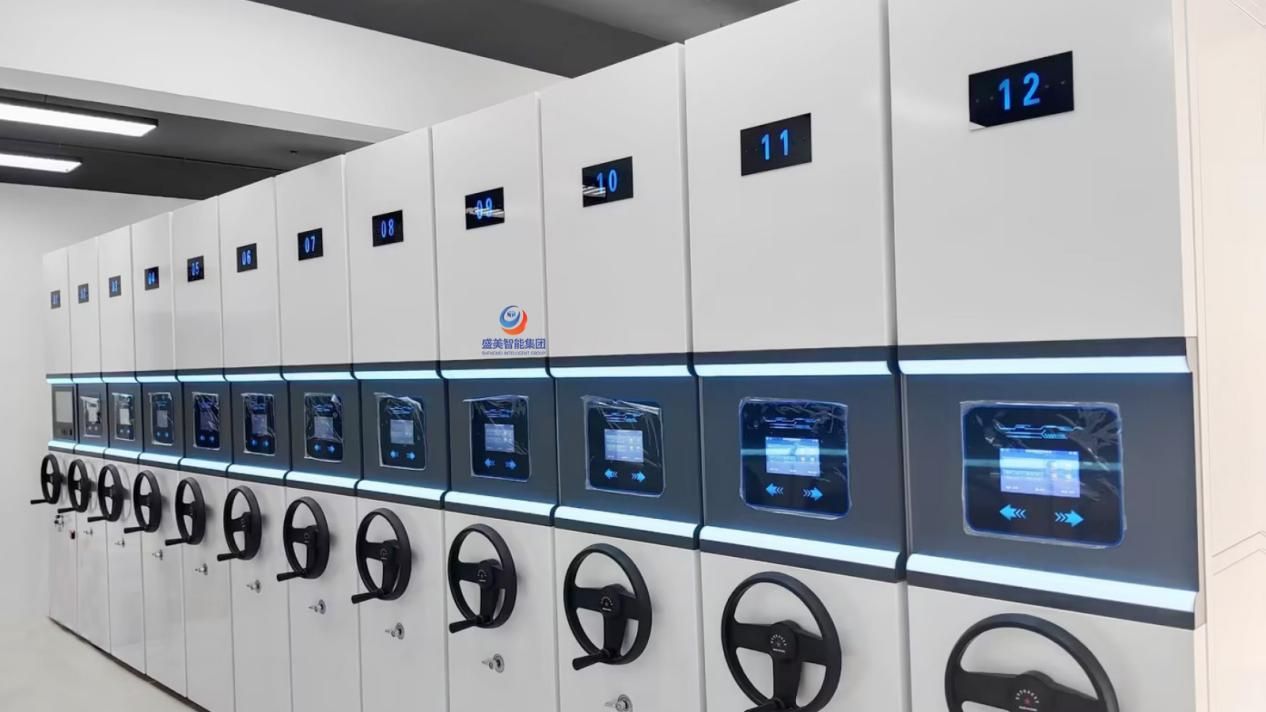
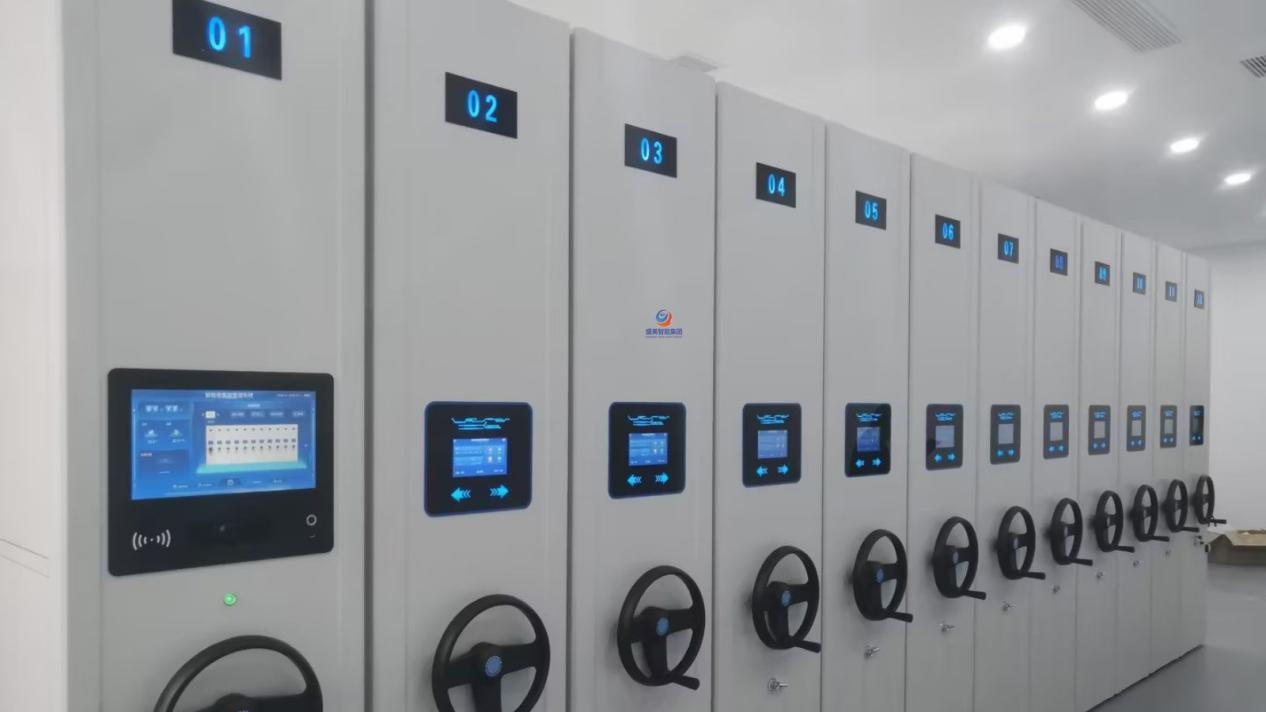
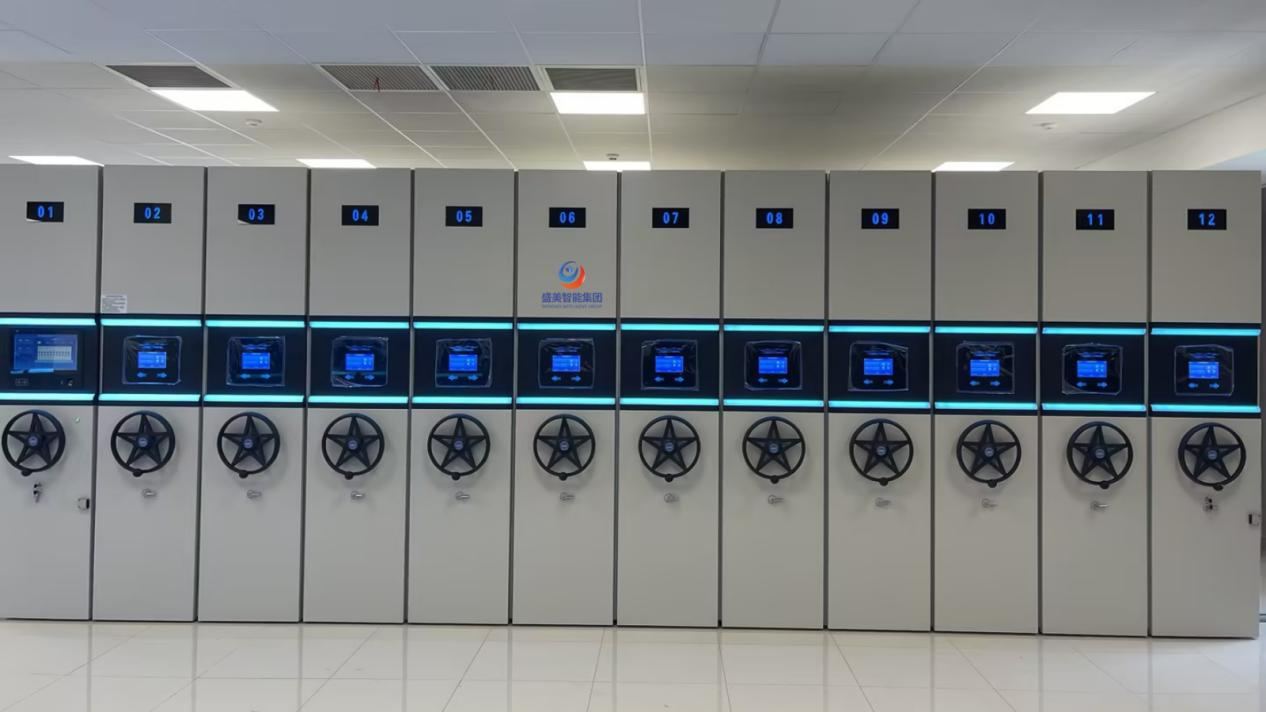
Smart mobile compactor shelving resolves this tension: electric drive, HIS integration, tiered accounts and audit logs serve retrieval speed and privacy compliance at once. This guide covers pain points, storage rules, surveys, zoning, hardware and the permission settings hospitals must enable.

1. Mobile Compactor Shelving in Hospital Records Rooms: Two Opposing Pressures
Overseas hospital records rooms keep meeting the same contradictions, and projects that solve only one side leave business or compliance risk behind:
- Heavy parallel retrieval: ward physicians, follow-up clinics, insurance auditors and legal staff request files at the same time. If opening a bay is slow, clinical work queues.
- Strict privacy regulation: unauthorised staff must never touch a patient file, and every access should leave an auditable trail for regulators.
- Exploding archives: discharged-patient files accumulate every year, so storage density must rise before the room fills.
Common selection mistakes
- Choosing manual systems: capacity is fine, but with no accounts and no logs they fail privacy audits — fit only for sealed, rarely opened backup rooms.
- Buying smart systems but using them only as electric bays, leaving permissions and audit modules switched off: high spend, zero compliance gain.
- Maximising density by squeezing aisles until two people can no longer retrieve at once.
2. What Medical-Records Storage Must Deliver
Access patterns split sharply: active files (in-hospital and recently discharged) are retrieved constantly, while archived files may sit for years yet must be preserved long-term or permanently. Roles are complex — records managers, clinicians, auditors, researchers, lawyers — and each needs a different access scope. Files are mostly standard boxes, with occasional thick attachment folders, so shelves must be height-adjustable.
Four hard requirements for mobile compactor shelving in this setting
- Parallel retrieval: several staff open bays at once with short wait times.
- Tiered privacy control: sensitive records isolated by role-based access ranges.
- Auditable access: operation logs saved and exportable for regulatory checks.
- High-density archiving: active convenience and massive sealed capacity coexist.
3. Survey the Records Room Before You Buy Mobile Compactor Shelving
Many hospital records rooms are converted back offices or old store-rooms. Complete four checks before selection:
- Room survey: record length, width and clear height under beams; mark doors, sprinklers, columns and fire exits. With ≥2400 mm clear height, standard 2400 mm bays use the vertical space fully; lower ceilings need low-profile units — never let bays jam against beams. Fire-escape routes must stay clear; this is a top hospital audit item.
- Floor load: loaded record boxes are heavy — floors rated ≥600 kg/m² take standard mobile compactor shelving bays directly; older slabs need structural strengthening first. See floor load-bearing requirements for compactor shelving.
- Power and LAN: smart systems need stable power and a local network for integration, permissions and log storage; verify cabling routes and grounding against damp conditions.
- Inventory count: split active files, archived totals and annual box intake — the data that drives zoning, bay counts and future expansion.
4. Zone the Room: Mobile Compactor Shelving Layout for Speed and Capacity
Never chase maximum density everywhere. The core move in mobile compactor shelving zoning is physical separation: active zone near the entrance, files at the 80–160 cm golden height, aisles 90–100 cm wide so multiple records staff retrieve in parallel; archive zone deep in the room, capacity first, aisles at the 80 cm fire minimum, upper and lower shelves used for low-frequency boxes.
Aisle and shelf details that matter
- Main aisles in high-frequency ranges: 90–100 cm — two people retrieve at once.
- Sealed-archive aisles: meet the 80 cm fire minimum; never shrink escape routes to fit more boxes.
- Active zones: wider shelf spacing so files pull out without scraping; archive zones: tight spacing for maximum boxes. All shelves height-adjustable.
- HIS integration: type a patient file number and the system locates and electrically opens the right bay — the single biggest efficiency lever for multi-department retrieval.

5. Mobile Compactor Shelving Hardware Specs for Medical-Record Duty
Core hardware requirements
| Component | Requirement | Why it matters here |
|---|---|---|
| Upright / shelf steel | Uprights ≥1.2 mm; shelves ≥0.8 mm, 40–60 kg per level | Carries stacked record boxes for years without sagging |
| Track | ≥3.0 mm cold-rolled steel | No deformation under full-load daily movement |
| Drive | Stable, low-noise motor and reducer | Suits an in-hospital office environment |
| Safety kit | Infrared anti-pinch, anti-tip hooks, limit brakes | Meets EN 15095 safety expectations |
| Seals | EPDM gasket strips | Keeps dust and moisture off paper originals |
| Power failure | Mandatory hand-crank mechanism | Emergency and medico-legal files stay reachable in outages |
6. Mobile Compactor Shelving Privacy Compliance: Permissions and Audit Logs
Hardware is only the base. The account-permission system and access logs inside mobile compactor shelving are the heart of medical-records privacy compliance — switch them on at handover, never leave them idle.
Tiered accounts
- Super administrator (records-room manager): full control.
- Records operators: access to most bays for filing and returns.
- Clinical / audit / research roles: restricted to their assigned ranges only.
- Card and password sign-in, each account bound to one person.
Audit logging — a medical must-have
The system records who signed in, when, which bay opened and what operation occurred. Logs export for internal risk reviews and regulator audits, and cannot be casually deleted — exactly what medical-records traceability requires.
Electronic locking
Lock single bays or the whole range electronically: close everything after hours, or isolate a few columns of highly sensitive files during the day.
Layered protection — never one system alone
- Layer 1: mobile compactor shelving accounts and logs.
- Layer 2: door-access control on the records room itself.
- Layer 3: sealed-box isolation for the most sensitive files.
7. Daily Operation and Emergency Plans
- Keep zoning alive: migrated discharged files move to the archive zone on schedule, so the active zone stays fast.
- Back up operation logs regularly and retain them for the required period — never only on the local controller.
- Never overload shelves; keep files inside shelf edges so nothing falls when pulled.
- Control temperature and humidity; keep paper records away from damp walls and direct sun. See temperature and humidity monitoring for valuable archives.
- Drill the hand-crank procedure so outages never block emergency retrieval.
- SERVICE motors, drives and tracks on schedule for stable long-term running — and when faults appear, follow daily maintenance and common fault solutions.

Conclusion
Overseas hospital records rooms cannot trade speed against privacy. With a proper survey, active/archive zoning, the right safety hardware, tiered accounts and audit logs, mobile compactor shelving delivers fast multi-department retrieval and patient-privacy compliance in one system — with the hand-crank fallback covering power failures. Put permissions and logging in the tender as hard requirements, not optional extras.
FAQ
Why choose smart mobile compactor shelving over manual for a hospital medical-records room?
Which safety features are non-negotiable for medical-record storage?
How should the layout speed up multi-department retrieval?
If the power fails, can emergency records still be reached?
Disclaimer: this guide is general procurement information for overseas hospital records rooms. Medical-privacy compliance must follow local health-privacy law, hospital construction codes and EN 15095. Contact: info@shengmeicabinet.com · WhatsApp +86 189 3280 1260.