Medical Records Compact Shelving Storage Solution for Overseas Hospitals
📘 This article addresses the pain points unique to overseas medical scenarios and delivers a standardized, deployable, compliant, tender-ready storage solution for medical records compact shelving. It covers the full lifecycle — archive layout, customized equipment, environmental adaptation, privacy protection, intelligent management, compliance acceptance and long-term operation — providing a professional technical reference for overseas medical projects.

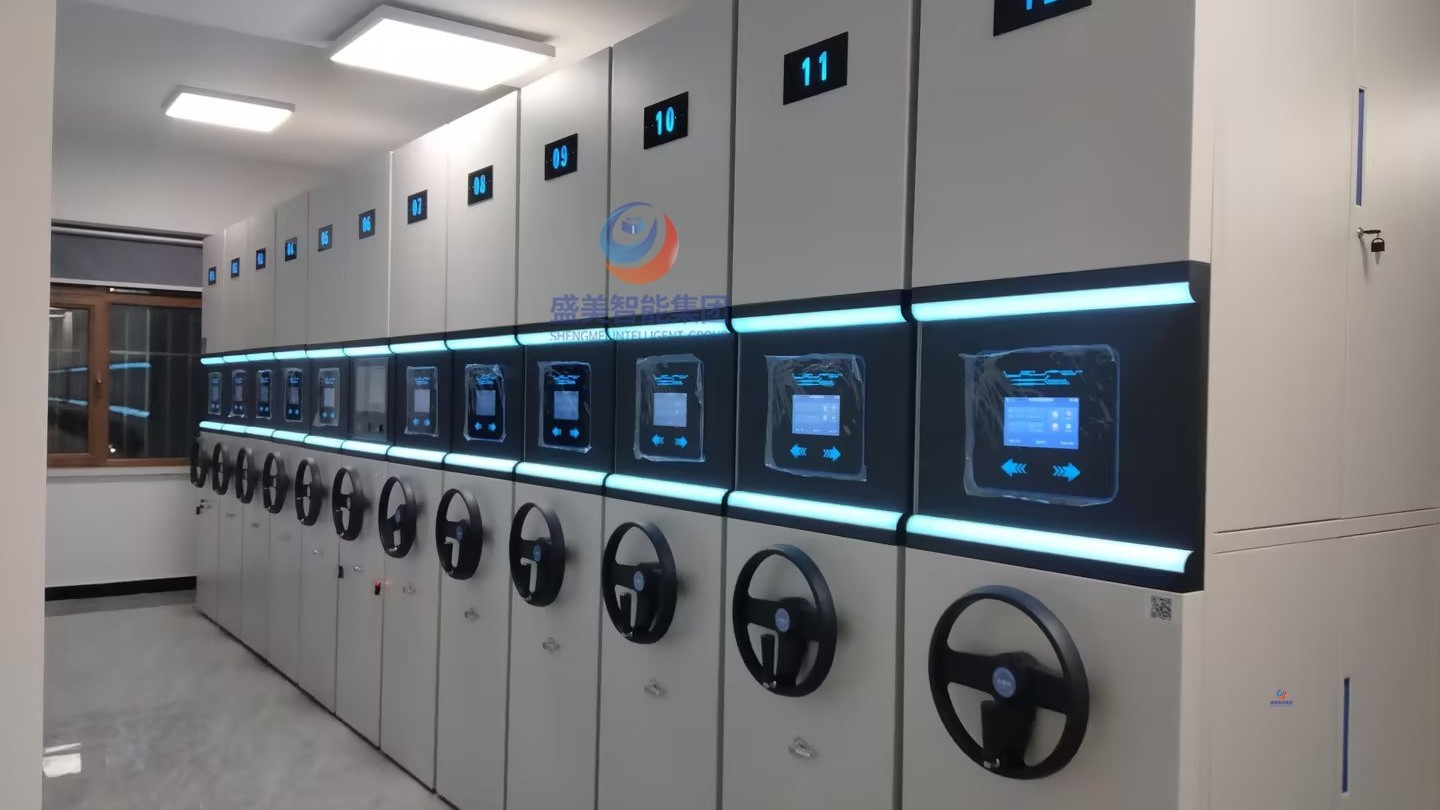
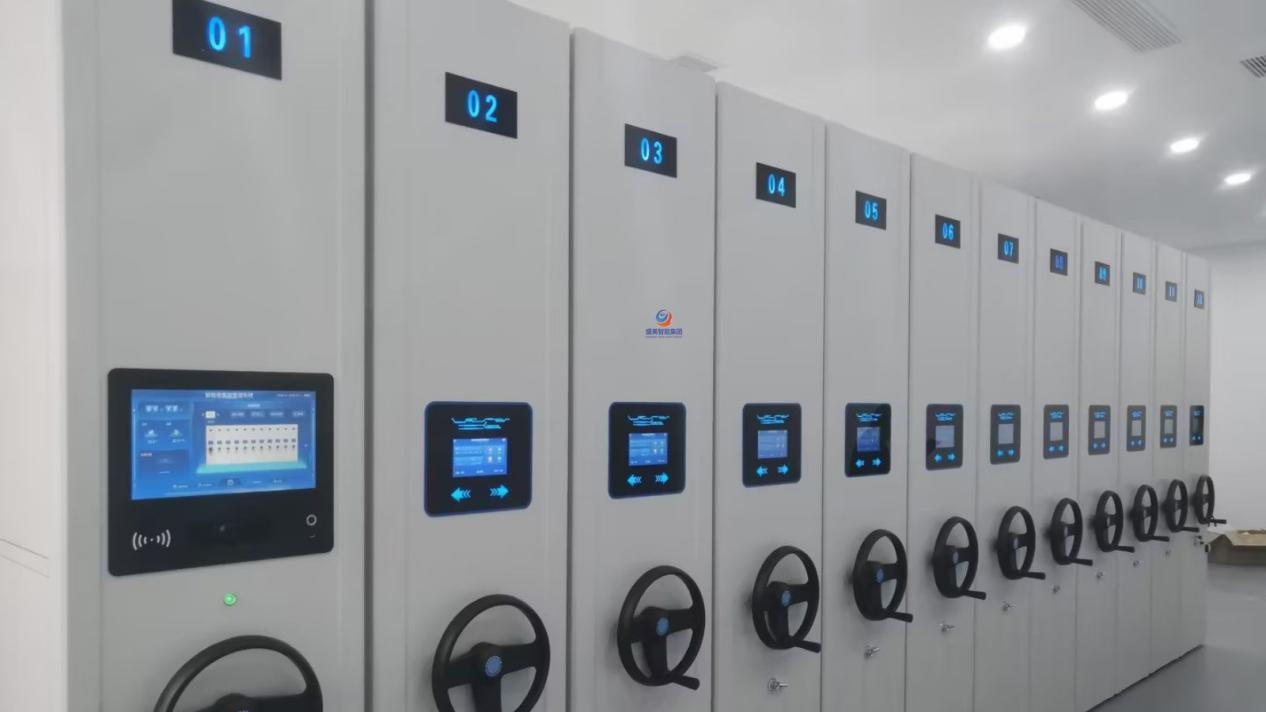
Medical-grade compact shelving with smart control panels, sequential numbering and anti-bacterial finish, designed for high-density hospital medical records storage.
01Industry Characteristics & Core Pain Points of Overseas Hospital Records Storage
Why medical record archives are fundamentally different from ordinary office or government archives
Compared with general government or administrative archives, overseas hospital medical records carry strong medical-scene specificity. They are not simple document storage — they touch five core dimensions: medical compliance, patient privacy, hospital-acquired infection (HAI) control, medical dispute traceability, and hospital accreditation audits. Many overseas archive renovation and new-build projects have replicated generic archive storage solutions, only to face — over time — saturated capacity, failed acceptance, privacy non-compliance, HAI over-limit and high long-term operation costs.
1. Continuously growing records, scarce and expensive overseas archive space
Hospitals in urban areas of Europe, America and Southeast Asia face severe building-space constraints and extremely high warehouse rent, with no room to expand record archives. Outpatient, inpatient, surgical and follow-up records grow year by year and must be kept permanently or for ultra-long cycles. Traditional fixed filing cabinets use less than 35% of the floor area, wasting most aisle space; capacity saturates in 3–5 years, forcing stacked storage or off-site rental, raising costs and creating mixing, loss and retrieval difficulties that affect daily care and audits.
2. Extremely high medical privacy grade, strict compliance control
Overseas medical industries are strictly governed by HIPAA, the EU Medical Data Protection Regulation and local medical privacy laws. Medical records are highly confidential. Open shelves and ordinary cabinets have no dedicated confidentiality mechanism — anyone can browse or pull files, leading to leakage, tampering or loss. Standard cabinets have no operation logs, role-based access or traceability, completely failing overseas medical privacy audits and creating a major compliance risk.
3. Strict HAI control; ordinary cabinets fail medical cleanliness
Hospitals demand high cleanliness and biosecurity. Archives must prevent dust accumulation, bacterial growth, moisture, mold, and rodent/insect contamination. In tropical, coastal, high-humidity and salt-spray regions, paper records easily dampen, mold and fade. In dusty regions, archives accumulate heavy dust. Ordinary steel cabinets collect dust, resist disinfection poorly, cannot inhibit bacteria, and peel or corrode after frequent cleaning — failing overseas HAI inspections and hygiene ratings.
4. Frequent record retrieval; manual management cannot keep up
Daily follow-ups, insurance audits, dispute handling, research/teaching and accreditation require high-frequency retrieval of historical records. Manual filing, searching and inventory is slow, error-prone and labor-intensive; locating a single record among massive archives consumes a great deal of medical staff time, dragging down hospital administration and clinical support, and cannot match modern smart-hospital operations.
5. Ultra-long storage cycles require long-term stability
Most overseas countries require inpatient records to be kept for 30+ years; some require permanent retention. This places far higher demands on structural stability, load-bearing, corrosion resistance and environmental adaptation than ordinary archives. Ordinary shelves deform, weld points rust, structures loosen; under long-term heavy loads, cabinets tilt and shelves collapse, crushing or destroying records and failing ultra-long-cycle safe storage.
6. Complex archive environments; generic equipment adapts poorly
Overseas hospital record rooms commonly have limited ceiling height, many beams and columns, irregular space, aging circuits, and uneven floor load-bearing. Generic standard compact shelving cannot fit precisely — equipment may not install, aisles may fail code, fire clearances may be insufficient, and circuits may be mismatched, causing rework, budget overruns and failed acceptance.
02Core Advantages of Custom-Built Medical Records Compact Shelving
Engineered specifically for overseas medical compliance, HAI, retrieval and ultra-long storage
Medical record storage cannot rely on generic compact shelving — it requires a medical-scene-specific custom version. Shengmei's overseas hospital medical-records compact shelving is upgraded specifically for the five core needs of overseas medical compliance, HAI standards, privacy protection, ultra-long storage and high-frequency retrieval, fully matching hospital archive construction standards worldwide and solving the pain points of traditional storage.
1. Medical-grade anti-bacterial, anti-corrosion finish — overseas HAI ready
Medical electrostatic powder coating + anti-bacterial layer. Smooth, dense surface with no dead corners, no dust accumulation, easy to clean. Withstands routine alcohol wiping and disinfection, inhibiting bacteria and mold — antibacterial rate above 99%. Unlike ordinary powder coating, the medical-grade layer resists salt spray, humidity and repeated cleaning, perfectly fitting the harsh conditions of Southeast Asia — high humidity, coastal salt spray, hot and humid — eliminating rust, peeling and mold, keeping the archive clean long-term and meeting overseas HAI inspection ratings.
2. High-density space utilization — solves overseas space scarcity
Dynamic mobile-rail structure eliminates traditional redundant fixed aisles, opening only the corresponding single column when accessing files. Utilization rises to over 80%, doubling storage capacity on the same floor area. Custom medical-standard shelf heights and narrow spacing are tailored to overseas record boxes and folders, eliminating wasted vertical space and maximizing vertical capacity. A single plan covers 10–15 years of record growth, removing the need for expansion or off-site rental and dramatically lowering overseas operating costs.
3. Multi-level privacy & confidentiality — overseas medical compliance
A confidentiality system engineered for overseas medical compliance: mechanical lock + electronic authorization + operation log + RFID record binding + full traceability. Supports hierarchical admin authorization, dedicated clinician permissions, automatic operation recording, and full retrieval trajectory — eliminating unauthorized access, browsing or leakage. Logs are exportable, fully fitting HIPAA, overseas medical data privacy review and annual audits.
4. Heavy-duty stable structure — ultra-long-cycle record storage
Thickened cold-rolled steel plate formed in one piece; columns, shelves and rails use medical-engineering thickened specifications. Even load per shelf reaches 80 kg+; long-term full load without deformation, sagging or tilting. The structure is mechanically verified to withstand decades of static heavy loading — resisting settlement, aging and thermal deformation — keeping massive records tidy, uncompressed and undamaged, satisfying overseas ultra-long retention requirements.
5. Intelligent precise retrieval — fits high-frequency clinical access
The smart version ships with a dedicated medical archive management system: multi-dimensional search by record number, patient name, visit time and department — one-tap positioning, automatic opening, fast access. The system handles filing, inventory and ledger updates automatically, replacing tedious manual work, lifting inventory efficiency by 90%+ and significantly saving hospital administrative labor, aligning with smart-hospital digital construction.
6. Full overseas-condition adaptation — multi-country safety & building codes
Equipment structure, safety protection and electrical configuration strictly follow EN 15095 and OSHA international storage safety standards. Supports non-standard customization for irregular rooms: avoiding beams, non-standard heights, and renovation of aging archive electrical systems. Complete CE, RoHS, third-party test reports, English engineering drawings and compliance documents are provided — ready for overseas customs clearance, project acceptance and hospital tender audits.
03Old vs New: Full-Dimensional Data Comparison
Based on a standard 80 m² overseas hospital record archive — directly usable for tender plans and budget submissions
| Comparison Dimension | Traditional Fixed Cabinet | Medical-Grade Compact Shelving | Upgrade Benefit |
|---|---|---|---|
| Archive space utilization | ≤ 35% | ≥ 82% | Utilization up 130%+ |
| Record capacity | Limited; saturates in 3–5 years | Doubled capacity; fits 15 years of growth | Eliminates space-expansion pain |
| Privacy & confidentiality | No access control, no traceability | Multi-level access + full logs | Fully meets overseas medical privacy compliance |
| HAI cleanliness | Dust/mold-prone, hard to disinfect | Anti-bacterial finish, easy to clean | Meets overseas hospital hygiene rating |
| Retrieval & inventory efficiency | Manual, slow, error-prone | Smart search, one-tap locate, auto inventory | Work efficiency up 90%+ |
| Equipment service life | 8–10 years, rust & deform | 15–20 years stable operation | Reduces long-term renovation investment |
| Compliance & acceptance | Fails medical audit standards | Full overseas compliance documents | Zero-risk overseas annual audit |
04Specialized Functional Configuration (Medical-Specific Upgrades)
Built for overseas clinical workflow, HAI standards, privacy regulations and archive operations
This solution carries multiple medical-specific custom functions, distinct from generic government/enterprise compact shelving and fully adapted to overseas medical institution usage.
1. Medical anti-bacterial, dust-proof sealed system
Fully enclosed cabinet structure with sealed dust-proof gaskets, isolating dust, moisture, insects and pollutants — preventing record dampening. Medical-grade anti-bacterial electrostatic powder coating leaves no pores, never traps dirt, and supports routine wipe-down and UV disinfection, meeting high-frequency hospital cleanliness needs and ensuring records remain clean, sterile and intact at the physical level.
2. Dedicated records zoned and tiered design
Standardized shelf heights and depths tailored to overseas record boxes and folders — fitting outpatient, inpatient, surgical, research and expired records. Customizable zoning by department, year, disease type or confidentiality grade enables fine-grained filing, prevents mixing and confusion, and dramatically improves retrieval and management efficiency.
3. Overseas medical multi-level safety protection
Hardware includes infrared anti-pinch, light-curtain sensing, emergency braking, overload protection, anti-tip devices and leakage protection — fitting the high-traffic public-medical setting and preventing accidents. Software provides hierarchical access, operation passwords, face recognition and log retention — clearly separating clinician, admin and visitor rights, preventing record leakage and unauthorized operation.
4. Temperature & humidity environment linkage
Connects to overseas hospital archive temperature/humidity monitoring, dehumidification and ventilation systems, adapting in real time to the optimal storage environment, preventing yellowing, mold and fading of paper records over decades. The system automatically logs environment data and synchronizes it to the hospital archive operation ledger, meeting medical audit traceability requirements.
5. Smart records traceability & data linkage
The smart version supports RFID record chip binding and full traceability of each record — inbound, retrieval, return, movement — preventing loss, misplacement or omission. It interfaces with overseas hospital HIS systems and smart-hospital management platforms, enabling two-way synchronization between electronic record data and physical archives, bridging digital clinical care and archive management.
6. Full overseas compliance documentation
The project ships with English construction drawings, English operation manuals, English maintenance logs, CE, RoHS, EN 15095 compliance certificates, and third-party medical-grade test reports — all directly usable for overseas customs clearance, project acceptance, hospital accreditation and privacy compliance audits, solving the problem of incomplete overseas project documentation and acceptance blockage.

Field installation of medical-grade compact shelving for an overseas hospital records archive — precision adjustment of internal structure and rail alignment.
05Standardized Implementation Process for Overseas Hospital Record Archives
Built for overseas medical projects — high compliance, strict construction, detailed acceptance
A standardized delivery process ensures first-pass compliance, no rework, no budget overrun — fitting overseas new-build, renovation and refurbishment scenarios.
Step 1 — On-site survey & medical-need investigation
A professional overseas engineering team surveys archive area, ceiling height, floor load, beam/column positions, fire points, electrical configuration and ventilation — while investigating the hospital's annual record growth, filing standards, privacy control requirements and local medical regulations — precisely matching equipment configuration and layout to prevent late-stage deviation.
Step 2 — Medical-specific custom plan & drawing output
Based on overseas medical standards and the actual archive site, we customize record zoning, shelf specifications, anti-bacterial configuration and the smart confidentiality system, and deliver a full set of English CAD construction drawings, layout plans, capacity calculation reports and compliance checklists — for hospital review, tender filing and engineering interface.
Step 3 — Civil foundation & low-voltage adaptation
Standardized construction for floor leveling, load-bearing reinforcement, rail embedding, low-voltage cabling and circuit expansion in old archives — strictly following overseas building and medical engineering codes — ensuring stable operation, fire compliance and electrical safety, eliminating settlement, fault and acceptance risks.
Step 4 — Modular equipment delivery, installation & commissioning
Modular dust-controlled construction reduces noise and dust, avoiding impact on normal hospital operations. Cabinet installation, rail calibration, smart-system commissioning, safety functional testing and environment linkage are completed — ensuring smooth operation, full functionality and compliant delivery.
Step 5 — Bilingual training, acceptance & handover
English operation, record-filing and equipment-maintenance training for overseas clinical and operations staff. Full compliance documentation, operation ledger and after-sales system are delivered. Project acceptance, data archiving and operation management are completed, achieving full closed-loop delivery.
06Common Pitfalls & Avoidance Guide for Overseas Hospital Storage Renovation
A field-tested summary of high-frequency mistakes — for precise de-risking
Many overseas medical projects fail medical audits, breach HAI standards, breach privacy regulations or fall short on capacity due to selection errors and solution mismatches. This section consolidates high-frequency industry pitfalls.
Pitfall 1 — Using generic compact shelving instead of medical-specific
Generic compact shelving has no anti-bacterial finish, no confidentiality system and no medical-grade tiering — failing overseas HAI control and medical privacy regulations. Expect mold, dust accumulation, record contamination, privacy leakage and audit deductions — a classic medical-engineering mismatch.
Pitfall 2 — Focusing only on capacity, ignoring privacy & compliance
Some projects pursue storage expansion only, with no access control, log traceability or encryption management — failing overseas HIPAA and similar medical privacy reviews, causing failed acceptance and costly secondary upgrades.
Pitfall 3 — Ignoring climate impact on record storage
In tropical, coastal, high-humidity and salt-spray regions, omitting anti-corrosion and moisture treatment leads to rapid cabinet corrosion and damp, mold-damaged records — severely affecting long-term preservation and contradicting long-term hospital archive management.
Pitfall 4 — Reusing generic maintenance, no medical-specific service
Medical archives require regular disinfection, clean maintenance and privacy log archiving. Ordinary maintenance does not fit medical scenarios, leading to HAI over-limit, ledger gaps and compliance breaks.

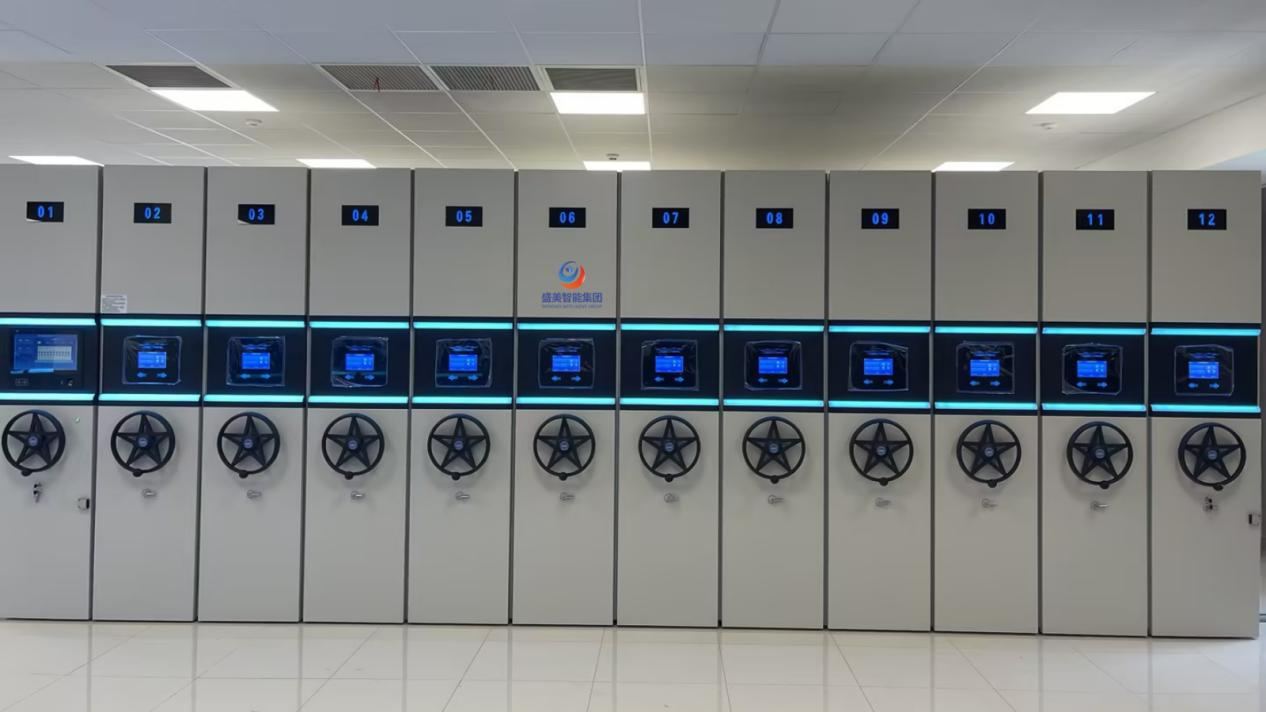
Mobile compact shelving installation for an overseas hospital medical records archive — anti-bacterial finish, modular rails and reinforced structure engineered to meet hospital hygiene standards and decades-long storage cycles.
07FAQ — High-Frequency Questions on Overseas Hospital Record Storage
On the same floor area, compared with traditional fixed cabinets, medical-grade compact shelving more than doubles storage space and lifts utilization by 130%+ — supporting 10–15 years of record growth in one go, fully solving overseas hospitals' costly and difficult expansion challenge.
Yes. The equipment ships with multi-level access, full operation logs and a record-traceability system, plus a full set of overseas medical compliance certificates and English ledgers — passing HIPAA, EN and OSHA related medical safety and privacy audits.
Yes. The dedicated medical-grade anti-bacterial powder coating resists alcohol and common disinfectants, is waterproof and dust-proof, resists corrosion and discoloration, fits high-frequency hospital disinfection, and maintains a clean, sterile archive that meets overseas HAI ratings long-term.
Yes. Full-dimensional non-standard customization is supported — irregular space, beam occlusion, non-standard heights and aging circuits can all be precisely adapted with custom layouts and equipment specs, without altering the main building, completing the upgrade at low cost.
Small community hospitals with lower filing frequency and moderate budget can choose the manual anti-bacterial version. Large general hospitals with high-frequency retrieval, digital management needs, smart-hospital accreditation participation and strict compliance audits should prioritize the smart traceability version — fitting long-term smart-hospital development.
08Solution Summary — Medical-Specific Compact Shelving is the Optimal Choice
Overseas hospital medical record management — distinct from general government archives — is a six-in-one systematic engineering challenge: space expansion, HAI compliance, privacy protection, digital traceability, ultra-long preservation and efficient operation. Traditional fixed cabinets and generic compact shelving cannot meet overseas medical strict compliance, HAI and privacy standards, persistently suffering capacity shortage, record damage, privacy leakage, low management efficiency and audit deductions.
Overseas hospital-specific medical record compact shelving, relying on medical-grade anti-bacterial & anti-corrosion finish, multi-level privacy & confidentiality system, high-density storage structure, intelligent digital traceability and full overseas-compliance adaptation, fundamentally solves all core pain points. It achieves in-place capacity expansion, saves expensive overseas site cost, ensures records remain clean, intact, private and fully traceable, and fits smart-hospital construction and overseas annual audits — making it the standardized optimal solution for new-build, renovation and upgrade of overseas medical record archives today.
Overseas Medical Project — Dedicated Solution Consultation & Tender Interface
For overseas hospital record archive renovation and new smart-medical-archive projects, contact us for medical-specific layout, capacity calculation, English tender technical documents, full compliance qualifications and a customized budget — our dedicated overseas medical engineering team provides full technical enablement, ensuring compliant delivery and first-pass acceptance.
Suggested email subject format: Overseas Hospital Records Storage Solution Consultation + Hospital Type + Country