Mobile Compactor Shelving: 5 Renovation Steps to Double Archive Capacity
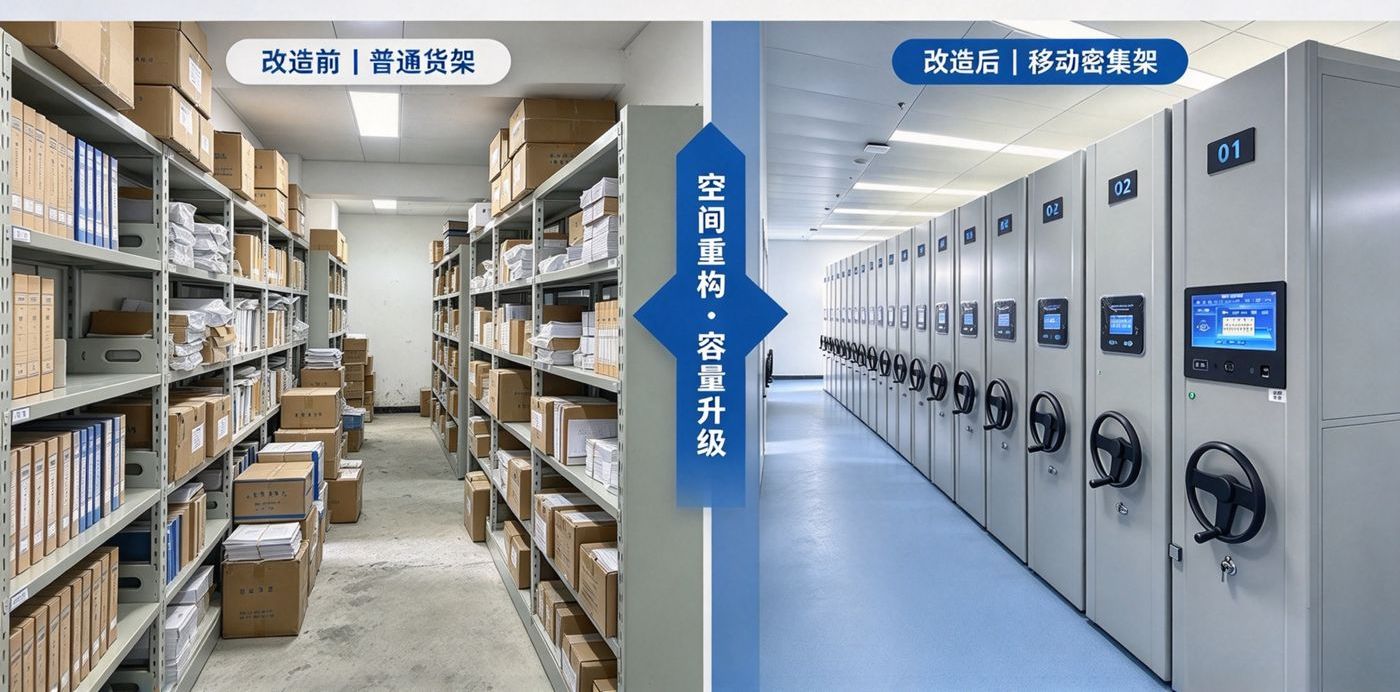
Mobile compactor shelving is the proven way to renovate an aging archive room without expanding a single wall: floor area stays fixed, yet space utilization climbs from roughly 40% to 75% or more and storage capacity effectively doubles. Most enterprise, law-firm, hospital and government archive rooms hit the same ceiling — walls that cannot move and yearly records that keep growing, until shelves overflow, boxes pile on the floor and aisles clog.
The waste is structural, not spatial. Fixed shelving reserves a walkway for every pair of rows, so over half the room sits empty whether or not anyone is retrieving files. Replacing that layout with a sliding compactor system reclaims the aisles, the gaps and the vertical headroom — no demolition, no added square meters, no large-scale decoration.
This guide covers the five bottlenecks of aging archive rooms, why capacity doubles without expansion, a five-step renovation workflow, scenario-based system selection and the pitfalls that keep the upgrade compliant for the next decade.
1. Five Bottlenecks in Aging Archive Rooms
A full archive room is rarely short of true floor area — it is short of usable structure. Five problems repeat in almost every aging records room:
Every two rows of fixed cabinets need an 80–100 cm walkway that sits empty whether or not anyone is retrieving. Aisles consume over 50% of floor area; less than 40% of the room actually stores records.
Fixed shelves and fixed layouts force overflow: boxes stack on cabinet tops, files deform, dust and dampness build up, and standardized classification falls apart.
Building structure, load-bearing walls, site planning and approval cycles mean most archive rooms cannot grow outward. The capacity ceiling is built into the building itself.
Renting external warehouses for overflow brings yearly fees, long retrieval trips, humid environments, weak custody control and confidentiality exposure for sensitive files.
Cluttered stacks and crowded aisles are easy findings in audits, compliance checks and industry inspections — dragging down ratings and standardization scores.

2. Why Mobile Compactor Shelving Doubles Capacity Without Expansion
Mobile compactor shelving achieves lossless expansion by rebuilding how the room uses space — not how big the room is. Four mechanisms do the work:
All bays slide on floor rails, so the whole room needs only one open aisle at a time. Open the bay you need; everything else stays sealed and stored. Wasted aisle area becomes storage area.
Shelf heights flex to match archive boxes, vouchers and file thickness — no half-empty levels, no wasted headroom. Vertical capacity rises without touching the ceiling.
Independent cabinets leave side clearances, rear voids and column gaps everywhere. Connected compactor runs eliminate those fragments and turn them into usable shelf positions.
Everything moves into closed bays. Floor piles, cabinet-top stacks and loose cartons disappear, releasing occupied space back into service — a second life for the same room.
3. Fixed Shelving vs Mobile Compactor Shelving: Utilization Compared
Same room, same walls, same record volume — the difference between storage modes is easy to quantify:
| Storage Mode | Space Utilization | Aisle Share | Effective Capacity | Tidiness & Compliance | Expansion Fit |
|---|---|---|---|---|---|
| Fixed filing cabinets | 35%–40% | 50% or more | Low, saturates fast | Average, clutter-prone | Cannot expand |
| Fixed multi-tier shelving | About 45% | About 45% | Medium, fills yearly | Fair, limited sorting | Very little headroom |
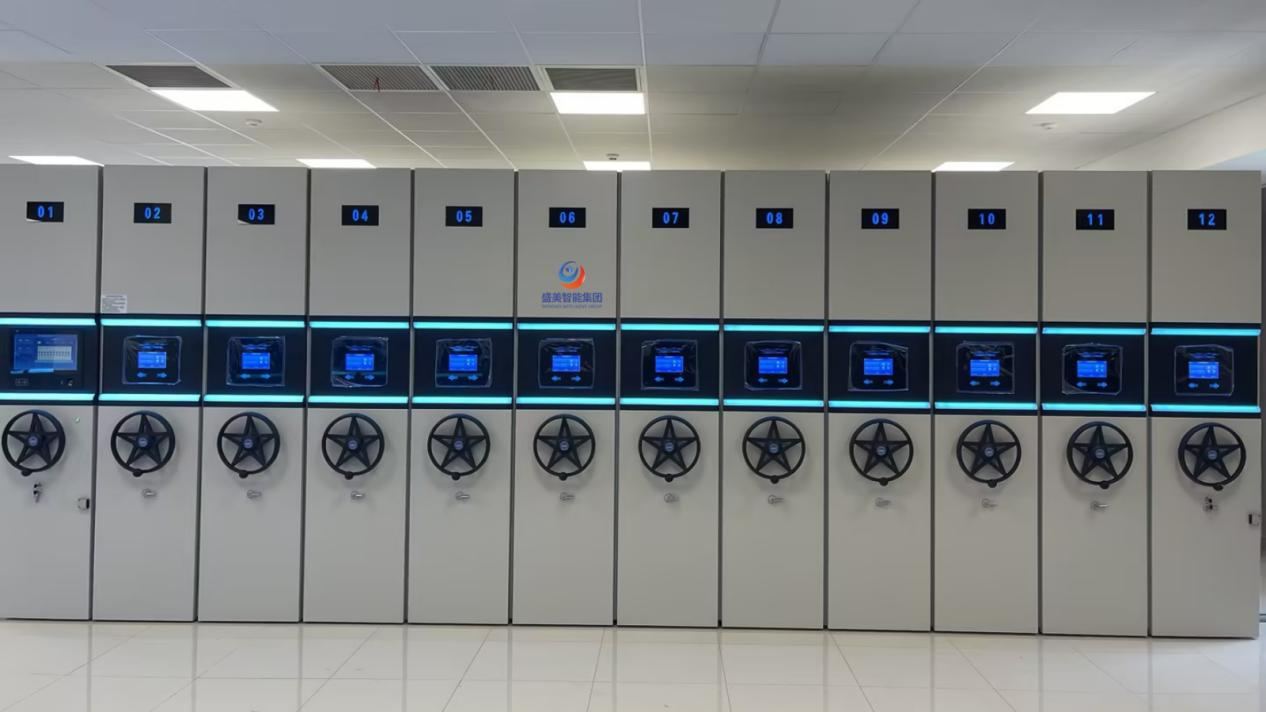
| Manual mobile compactor shelving | 70%–75% | One dynamic aisle | Roughly doubled | High, sealed and tidy | Ideal for retrofit |
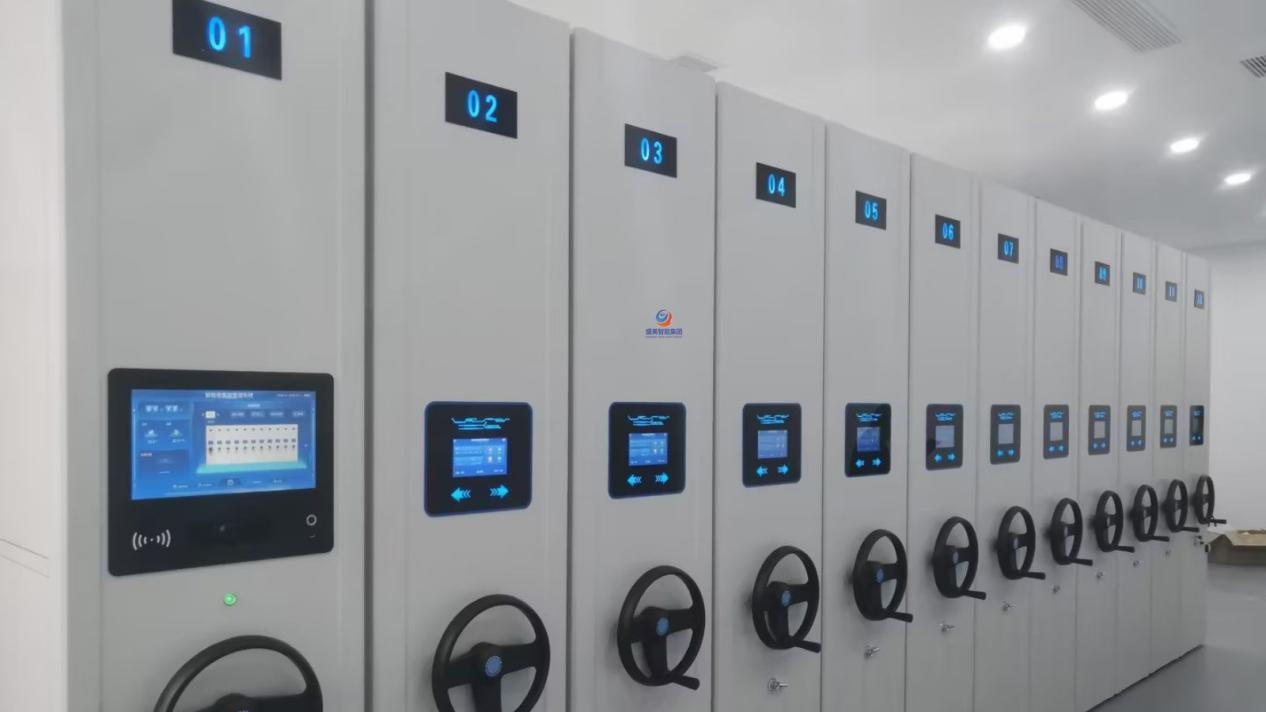
| Smart mobile compactor shelving | 75%–80% | Smart on-demand aisle | Maximum capacity | Very high, standardized | Suits long-term growth |
The data is unambiguous: without adding floor area or touching a wall, switching to a mobile compactor shelving system alone lifts utilization from about 40% to 75%+ and absorbs five to ten years of record growth.
4. The Five-Step Retrofit Logic for Mobile Compactor Shelving
Renovation is not "build a bigger room" — it is "rebuild how space is used." The logic is simple, stable and low-cost for any aging archive room:
Remove old fixed runs and scattered shelving, cancel the idle walkways, and consolidate the whole room into one storage zone. The reclaimed aisle area becomes capacity.
Install silent floor rails and connected compactor bays, converting a multi-aisle layout into a single dynamic aisle so most of the floor stores records instead of people.
Match shelf pitch to box heights, voucher thickness and file dimensions. No empty levels, no stranded headroom — vertical utilization is pushed to the maximum.
Divide the room by year, record type, confidentiality level and retrieval frequency. Every record gets a fixed home, ending mixed old-and-new filing for good.
Closed bays add dust, moisture, light and pollution protection — fixing the damp-and-dust problems of aging rooms while capacity grows, and extending record service life.
5. Standard Mobile Compactor Shelving Renovation Workflow
The full workflow needs no wall demolition, no decoration project and no long shutdown — daily archiving is barely interrupted:
Measure room length, width, ceiling height, floor flatness and load capacity, plus door, window and column positions. Combine with total record volume and yearly growth to design the layout.
Output the bay layout, zoning plan and rail construction drawings; confirm bay counts, levels, shelf pitch and zone functions against your filing habits.
Temporarily relocate records, remove legacy shelving and clear the room — no wall work, no floor redo, original structure fully retained.
Lay rails, assemble bays, and test sliding smoothness, balance and locking. Smart models also commission access control, operation logs and touch panels.
Return records under the new zoning, post classification labels and build the index ledger. The room goes back into service at double capacity.

6. Matching the Mobile Compactor Shelving System to Your Scenario
Different aging archive rooms need different systems — balance budget against retrieval intensity:
Steady growth, routine documents and compliance ledgers: choose manual mobile compactor shelving. Simple to run, easy to maintain, lowest budget per reclaimed square meter.
Sensitive files and daily retrieval: choose smart mobile compactor shelving with zone permissions, operation logs and borrow control — capacity and confidentiality in one upgrade.
High base volume and heavy yearly growth: specify tall, wide custom bay systems to maximize both floor plate and ceiling height for years of incoming records.

7. Five Mobile Compactor Shelving Renovation Pitfalls to Avoid
Retrofitting an occupied archive room differs from building a new one. Watch these five points:
Old runs are the very waste you are renovating to reclaim. Replace wholesale with one unified mobile compactor shelving system instead of mixing old and new.
Fully loaded bays are heavy. Floors in older buildings must be checked against compactor shelving floor load requirements before installation.
Uniform pitch wastes vertical space. Tune shelf levels per record type — boxes, vouchers and bound volumes rarely share a height.
Renovating only for today's volume guarantees the next saturation. Design reserve positions into the layout from day one.
Aging rooms have weak environments. Combine sealed bays with ventilation and dehumidification so records stay intact for their full retention period.
8. FAQ
Q1: Can an archive room double capacity without expanding walls?
Q2: Why does mobile compactor shelving store more without expansion?
Q3: Does the renovation require construction, wall removal or floor redo?
Q4: How many years of growth can the renovation absorb?
Q5: Is a low-ceiling archive room suitable for compactor shelving?
9. Conclusion: Renovate the System, Not the Building
Archive rooms run out of space because traditional storage wastes it — not because buildings are too small. When walls cannot move and budgets are finite, renovating with mobile compactor shelving is the most efficient, lowest-cost and most reliable expansion path: no demolition, no new rooms, capacity nearly doubled purely by rebuilding the layout.
A retrofit is also an upgrade in archive governance — standardized zoning, sealed protection and fast retrieval. Tell us your room dimensions and record volume, and we will return a free layout plan with bay counts, rail drawings and a 5–10 year growth reserve.
Disclaimer: this guide is for archive room renovation, capacity upgrade and compactor shelving selection reference. Actual construction must follow on-site floor load, site conditions and local records-management regulations.