Law Firm Archive Solutions · Overseas Procurement Guide

Mobile Compactor Shelving for Law Firm Archives: Speed and Confidentiality in One System

How mobile compactor shelving lets a busy law firm retrieve case files in seconds — while keeping every confidential file under tiered control.

By the Shengmei editorial desk · 11 min read · Updated 2026-09 · Law firm archives / case file retrieval / overseas legal institutions

Case files are a law firm's most valuable asset — and its archive room lives under two opposing pressures: lawyers expect a file on demand, while client privacy and sensitive evidence demand strictly controlled access.

Fixed cabinets fill up fast, manual shelving is slow at high frequency, and a smart system without permission control still fails confidentiality rules. Mobile compactor shelving resolves both demands at once. This guide covers survey, layout, confidentiality configuration and daily operation — aligned with EN 15095.

mobile compactor shelving
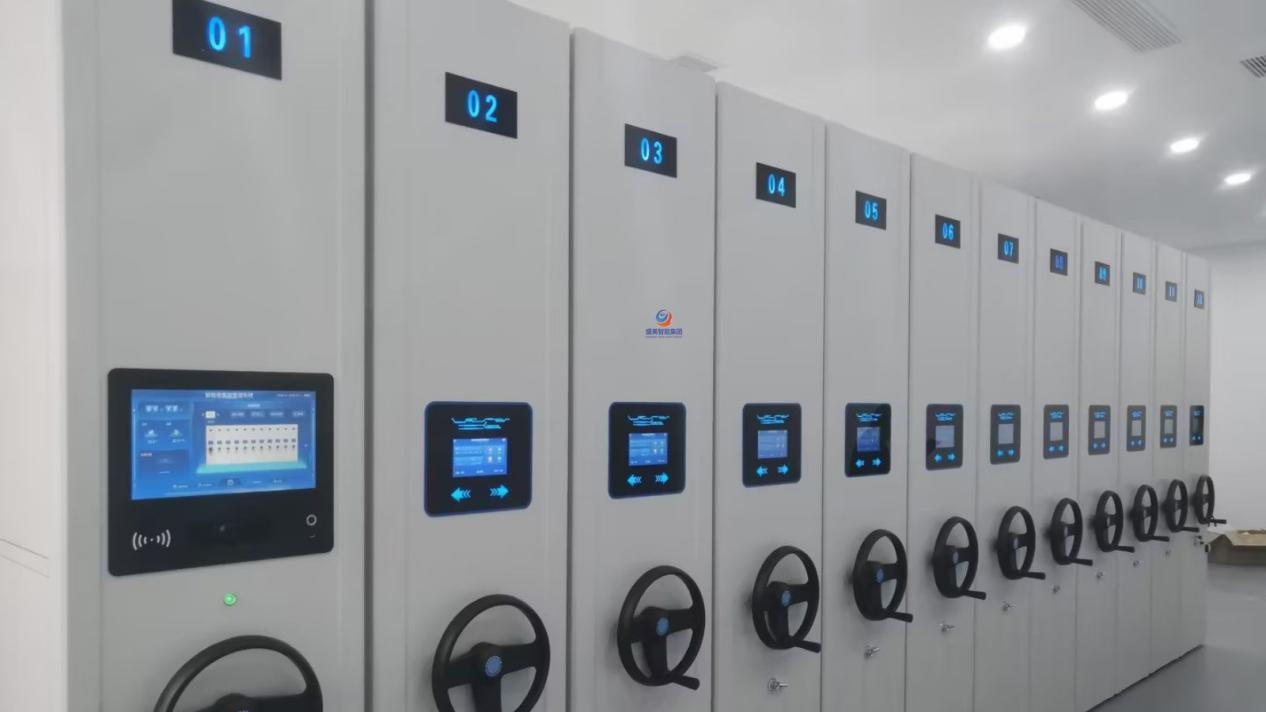
Smart mobile compactor shelving bays with touchscreens and numbered columns in a finished archive room.

Section 01

Two Core Tensions in Overseas Law Firm Case File Management

Most archive rooms feel this conflict every day, and most purchases solve only half of it:

Speed without controlOpen shelving and simple cabinets retrieve fast — but anyone can touch sensitive files, breaching confidentiality duties and failing audits.
Security without speedEverything locked away means every retrieval waits for the administrator's key — painful when lawyers pull files all day.
Manual bays, manual effortDense storage, but repeated hand-cranking wears staff out and jams up when several people retrieve at once.
Smart hardware, disabled softwareBuying smart bays but only using the motor, with permissions and access logs switched off — a big budget that still fails compliance.
The goal of a law firm archive room: maximise retrieval efficiency on top of confidentiality compliance, with long-term storage capacity alongside. Mobile compactor shelving balances the two through combined hardware and software modules — neither demand has to be sacrificed.

Section 02

What Makes Law Firm Case Files Different to Store

Legal archives behave unlike ordinary office records, and four traits shape the whole design:

Split retrieval frequencyActive case files are pulled daily; closed files are sealed for years — rarely touched, but kept long-term.
Tiered sensitivityRoutine documents, client-privacy files and classified commercial or criminal files need different access levels.
Uniform carriers, uneven thicknessStandard archive boxes and folders of varying depth need freely adjustable shelf heights.
Strong regulatory pullBar associations and privacy legislation set clear rules on custody and access records — some firms must keep retrieval logs.

Translated into storage requirements, mobile compactor shelving for a law firm must deliver: fast retrieval for active files, tiered confidentiality control, enough capacity for years of closed files, and traceable, auditable access for key records.

Section 03

Survey First: Pre-Installation Checks for a Mobile Compactor Shelving Archive Room

Many law firm archive rooms are converted offices or small meeting rooms — retrofit spaces. Complete four surveys before selecting any system:

1. Room surveyRecord length, width and clear height under beams; mark doors, windows, sprinklers and columns. At 2.5 m+ use standard 2400 mm bays; lower rooms take custom short bays. Fire exits must never be blocked.
2. Floor load verificationFully loaded case files are heavy. Floors rated 600 kg/m² or above take standard mobile compactor shelving bays directly; converted office slabs may need reinforcement first — see the floor load-bearing requirements for compactor shelving.
3. Power and networkPlanning a smart system? Reserve power and LAN cabling. Manual bays need neither — ideal where rewiring is impossible.
4. Case file censusCount active vs closed files separately; they should be physically zoned, never mixed in one range.
0
kg/m²
floor load for standard bays
0
mm
standard bay height (≥2.5 m rooms)
0
cm
recommended main aisle (90–100)
0
layers
of case file confidentiality
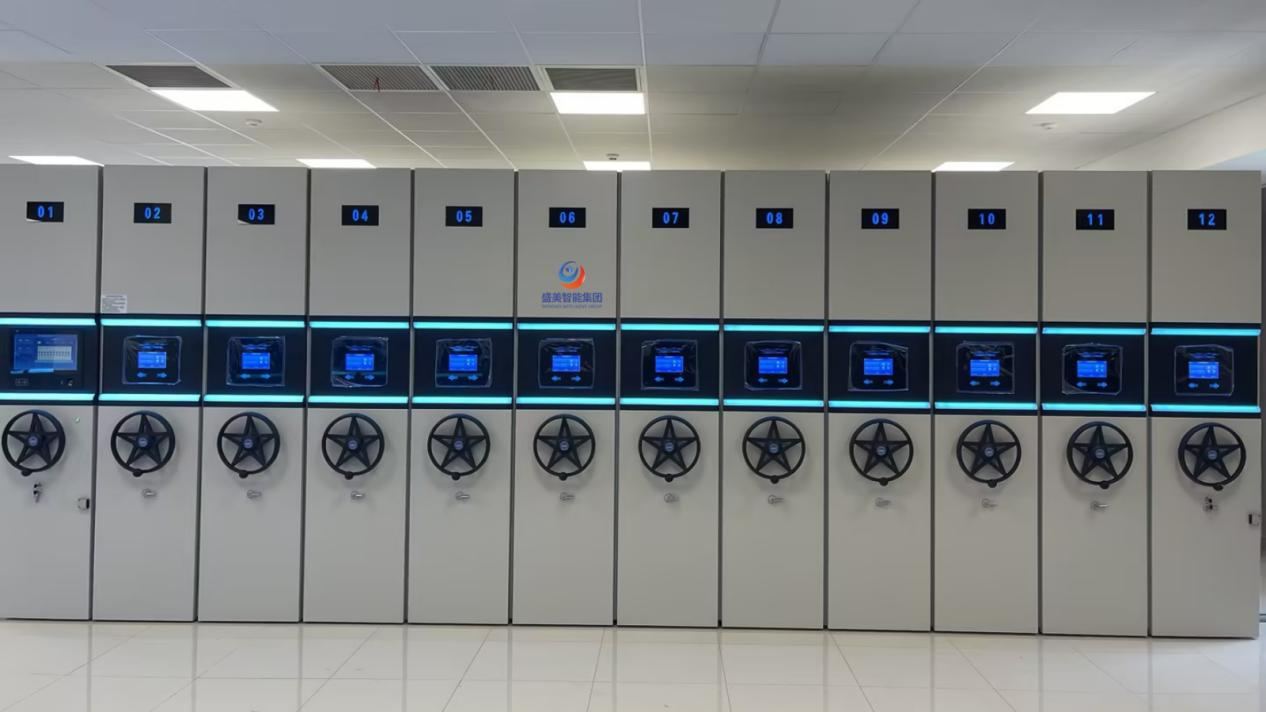
Adjustable steel shelving bays of a smart mobile compactor shelving system prepared for law firm archive boxes
Adjustable-height bays mid-installation — shelf pitch is set to match the firm's archive box depths after the survey.

Section 04

Layout Design: Fast Retrieval and Storage Density Together

Layout decides retrieval speed. A law firm archive should not chase maximum density everywhere — the mobile compactor shelving layout must protect the convenience of high-frequency files.

1. Mobile compactor shelving zoning: active vs closed files

Put the active case file range near the entrance, with files held at the golden mid-shelf height (80–160 cm) so staff never climb or crouch, and give that range generous aisles for simultaneous retrieval. The closed-file range sits deep in the room, run at high density with aisles at the compliant minimum — closed files are retrieved rarely, so capacity leads there.

Business payoff: active files sit steps from the door instead of the deep end of the room — round trips shrink sharply, while closed archives exploit the full density advantage of mobile compactor shelving.

2. Aisle standards

Main aisles in high-frequency mobile compactor shelving ranges: 90–100 cm, so two people can retrieve at once. Closed-file zones may go down to the 80 cm fire-code minimum. Never squeeze escape routes to fit more files.

3. Shelf configuration

Active zones: wider shelf pitch, looser packing, less scraping when files are pulled. Closed zones: tight pitch to maximise archive boxes per bay. Every shelf adjusts in height, so the system adapts as file thicknesses change.

Section 05

Mobile Compactor Shelving Selection: Smart vs Manual for Law Firms

The choice follows retrieval frequency, confidentiality requirements, cabling conditions and budget — for a deeper comparison see manual vs smart compact shelving.

Option A · Smart mobile compactor shelving — for high-frequency firms

Suits firms retrieving files constantly that need tiered permissions and integration with archive management software. The business case:

One-touch electric openingNo cranking. Even better: linked to the archive system, entering a case number opens the right bay directly.
Tiered accessAccounts, cards or PINs decide who may open which range — unauthorised staff simply cannot reach restricted files.
Automatic access logsWho opened which bay, and when — exportable for internal risk control and regulatory audit.
Emergency hand-wheel keptPower failure never means files locked in; the manual crank always opens a path.
Note: smart systems need power and network cabling, and both purchase and maintenance costs run higher than manual.

Option B · Manual mobile compactor shelving — moderate retrieval, tighter budgets

Suits small and mid-sized firms with moderate retrieval frequency, no cabling options and limited budgets. Confidentiality comes from independent column locks plus a master lock over the whole range, backed by access control on the archive-room door. The trade-offs: no fine-grained permissions, no automatic logs, and heavy cranking under high-frequency use.

Side by side

DimensionSmart mobile compactor shelvingManual mobile compactor shelving
Opening the baysOne-touch electric; a case number opens the right bay via archive softwareHand-wheel crank; effort rises with retrieval frequency
Access controlTiered accounts, cards or PINs per zoneIndependent column locks + range master lock
Audit trailAutomatic logs: who opened which bay, whenNone; archive-room door control only
Power and networkRequires power and LAN cablingNone required — suits converted offices
Budget and upkeepHigher purchase and maintenance costLower cost, minimal upkeep
Best forHigh-frequency retrieval, tiered confidentialityModerate retrieval, limited budgets

Hardware baseline for either option

Steel specificationUprights ≥1.2 mm, shelves ≥0.8 mm with 40–60 kg per shelf; track ≥3.0 mm thickened cold-rolled steel.
Safety kit to EN 15095Infrared anti-pinch sensing, anti-tilt limits and brake locks as standard.
SealingEPDM gaskets against dust and moisture to protect paper files in long-term storage.
Further reading: daily maintenance and common fault solutions for overseas archive compact shelving — the habits that keep any mobile compactor shelving system running to full design age.

Section 06

Six Confidentiality Layers for Law Firm Mobile Compactor Shelving

Case file confidentiality is never a single lock — it is a stack of protection layers, configured differently for smart and manual systems:

Smart system: software + hardware combined

Layer 1 · Tiered permissionsAdministrators, archive assistants and individual lawyers hold separate accounts; only authorised accounts can open restricted ranges.
Layer 2 · Access logsEvery opening records account, time and bay number — exportable for audits and regulatory checks.
Layer 3 · Electronic master + column locksLock the whole system after hours, or pin down individual sensitive columns.
Layer 4 · Infrared safety sensingAnyone entering an aisle stops bay movement instantly — protecting people and files alike.

Manual system: pure physical protection

Layer 5 · Independent mechanical column locksEach bay locks individually, so sensitive ranges stay sealed even in an open room.
Layer 6 · Master lock + room door accessA whole-range master lock closes everything at day's end, while door access control keeps unauthorised staff out of the room entirely — covering what bays alone cannot.

Certification matters here too: ask suppliers for EN 15095 and EU/US safety compliance documentation so the safety and electrical claims in the tender are verifiable.

Important: bay locks are one layer, not the whole defence. Pair them with sealed archive boxes and a controlled archive-room door — multiple layers, never a lock alone.
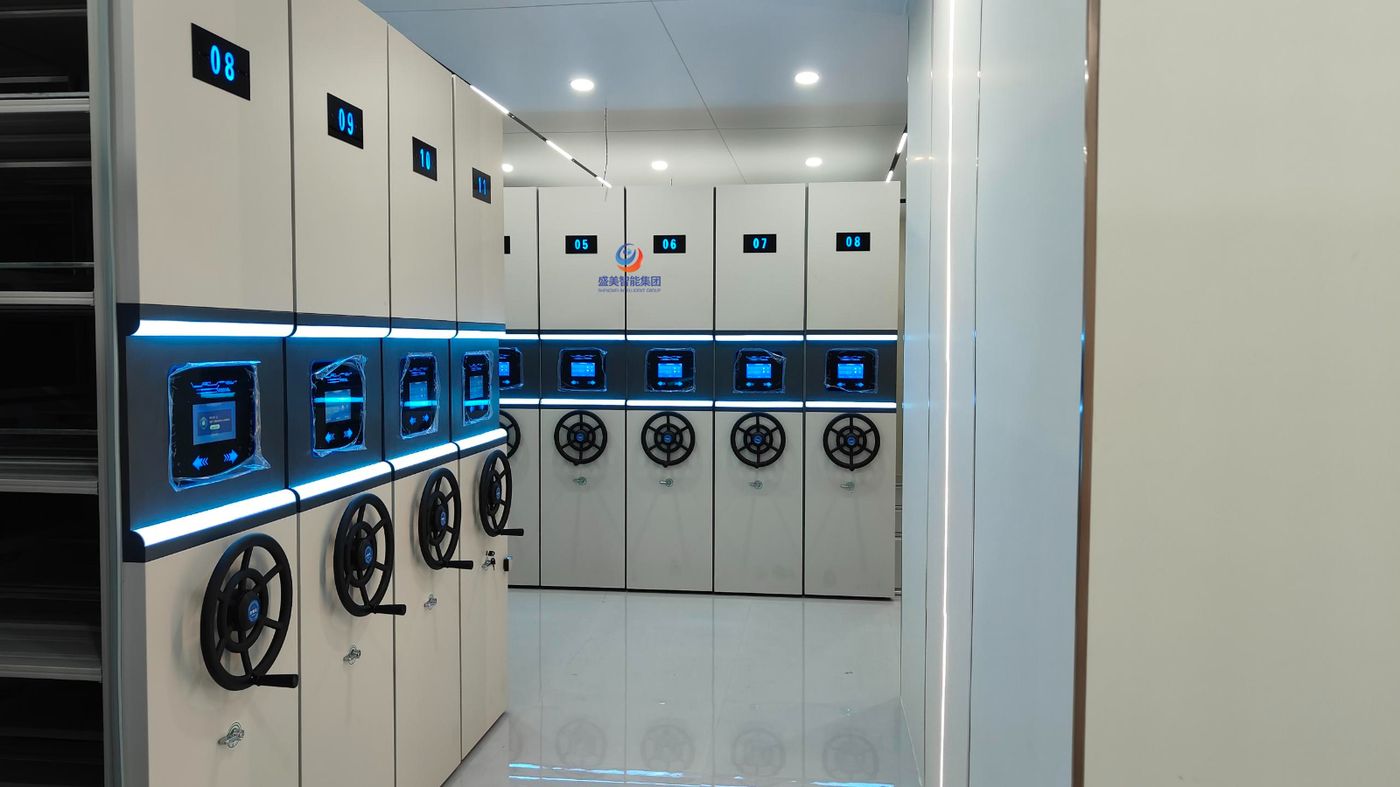
Manual mobile compactor shelving bays with numbered columns and individual mechanical locks
Manual mobile compactor shelving with numbered columns and per-column locks — physical confidentiality without any wiring.

Section 07

Day-to-Day Case File Management Habits

Keep the zoning aliveNew files land in the active range; closed cases migrate in batches to the sealed zone — retrieval speed stays intact year after year.
Export logs regularlySmart mobile compactor shelving systems: pull access logs on a schedule for internal risk reviews.
Respect load limitsOverloaded shelves deform; files overhanging shelf edges fall and damage when neighbours are pulled.
Control climateStable temperature and humidity, no direct sun — evidence files must survive decades.
Drill the outage planMake sure staff can use the emergency hand-wheel blind — urgent files must come out during a blackout.

Section 08

Mobile Compactor Shelving FAQ for Law Firm Archives

Should a law firm choose smart or manual mobile compactor shelving?

If case files are retrieved several times a day and confidentiality needs tiered access control, choose smart mobile compactor shelving with permission management. If retrieval is moderate and the budget is tight, manual bays with independent mechanical column locks provide solid basic confidentiality.

Which configurations actually deliver case file confidentiality?

Six layers working together: tiered access permissions, independent column locks, an electronic master lock, access logging, and infrared safety sensing — backed by zoning that keeps sensitive files in restricted bays and a controlled archive-room door.

How should the layout be planned for high-frequency retrieval?

Put active case files near the entrance at the golden mid-shelf height, leave 90–100 cm aisles in high-frequency ranges so two people can work at once, zone files by practice area, and integrate the archive software so a case number opens the right bay directly.

If the power fails, will confidential case files be locked in?

No. Compliant systems keep the emergency hand-wheel mechanism, so staff can crank the bays open manually during an outage and retrieve urgent files at any time.

The Bottom Line

One System, Both Demands

An overseas law firm should never choose between fast retrieval and client confidentiality. Mobile compactor shelving delivers both at once: a proper survey, active/closed zoning, the right smart or manual model, and layered security from bay locks through account permissions to room-door control. Active files sit at the entrance at the golden mid-shelf height; closed archives seal into high-density ranges; confidentiality stacks six layers deep to satisfy legal-industry privacy and audit obligations.

Do not chase pure speed or pure lock hardware in isolation. Match the modules to the firm's real workflow, inside the EN 15095 safety framework, and the archive room becomes an operational advantage rather than a compliance risk.

Archive Project Consultation

Need a law firm archive room layout plan or a tender specification template for an overseas legal project? Shengmei provides free project assessments.

📩 Business inquiries: info@shengmeicabinet.com

💬 Overseas projects WhatsApp: Kerwin +86 189 3280 1260

Email subject format: Law firm archive consultation + room area + country/region
Share the Post:
HAVE QUESTIONS?

Expert Storage Advice

Give A Brief About Shengmei Cabinet? ▲

Shengmei Cabinet is a professional manufacturer specializing in steel storage solutions. We focus on producing high-quality steel furniture including mobile shelving, steel cabinets, wardrobes, and intelligent archive systems. With years of experience, we serve offices, archives, schools, hospitals, and warehouses worldwide. Our commitment to precision fabrication and durable powder coating ensures our products stand the test of time.

Do You Offer OEM & ODM Customization? ▼

Yes, we provide comprehensive OEM and ODM services. We understand that every workspace has unique requirements. Our engineering team works closely with clients to customize dimensions, colors, and internal structures to fit specific storage needs and branding guidelines.

What About The Quality Of Your Steel Cabinets? ▼

We use high-grade cold-rolled steel for all our products. The surface is treated with environmentally friendly electrostatic powder coating, which makes our cabinets rust-resistant, scratch-resistant, and durable. Every product undergoes strict quality inspection before leaving the factory.

What Is The Lead Time For Production? ▼

For standard products, the lead time is usually within 15-20 days after receiving the deposit. For customized projects, the time depends on the quantity and complexity of the design. We always strive to deliver efficiently to meet your project schedule.

Do You Provide Installation Guides? ▼

Absolutely. Our products feature a knock-down structure for easy shipping. We provide detailed installation manuals and video guides with every order. For large projects, we can also provide online video support or send engineers to your site if necessary.

Project support

Need a storage layout for your archive room?

Send your room size, storage target and delivery country. Shengmei will help configure a suitable cabinet or compactor shelving proposal.

Your inquiry is saved for our project team. Include dimensions and country for a more useful reply.