Enterprise Compliance Archiving · SHENGMEI
Mobile Compactor Shelving for Enterprise Compliance Records: Speed Up High-Frequency Audit Retrieval
Mobile compactor shelving has become the mainstream storage answer for enterprise compliance records — the financial vouchers, legal contracts, project files, audit reports and compliance ledgers that companies must produce every year for internal audits, government checks and qualification reviews. These records are retrieved frequently, tied to deadlines, and cannot be lost.
Most companies still archive with ordinary cabinets and stacked cartons. It looks like basic archiving, but it fails the audit scenario: retrieval drags on, files blend together, and audit materials go missing — leading to delayed audits and compliance deductions.
Designed for high-frequency retrieval plus long-term compliant retention, mobile compactor shelving solves these pain points through fine-grained zoning, standardized label indexing, high-density structure and a sealed protection system — supporting both fast daily pulls and bulk annual audit retrieval.
1. Five Audit Failures Mobile Compactor Shelving Solves
Unlike low-frequency sealed engineering or drawing archives, compliance records are dynamic, high-use files — and audit scenarios expose the same five failures again and again:

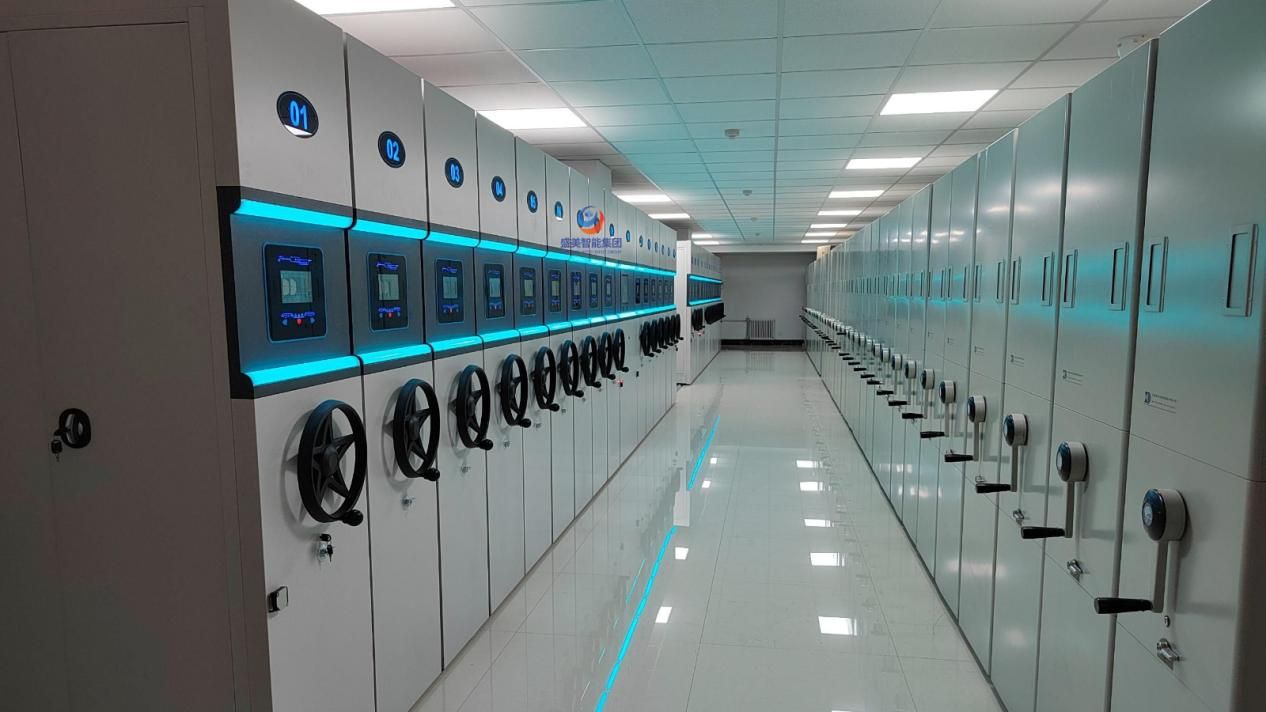
A full smart mobile compactor shelving installation in an enterprise archive room — zoned, numbered and audit-ready
2. Classifying Compliance Records on Mobile Compactor Shelving by Audit Frequency
Record types differ sharply in audit frequency, use scenario and statutory retention. Classify and zone them so high-frequency retrieval never waits on a search:
| Record type | Core contents | Audit frequency | Retention | Storage priority |
|---|---|---|---|---|
| Finance compliance | Vouchers, statements, tax ledgers, reconciliations | Very high — monthly/quarterly internal, annual external | 7–10 yrs | Fast pull, filed by month |
| Legal contracts | Contracts, agreements, supplements, disputes | Mid-high — special checks, performance audits | 5 yrs–permanent | Clear classes, traceable versions |
| Annual audit | Audit reports, filings, self-check forms | High — fixed yearly checks | 10 yrs + | Year-isolated zones, bulk retrieval |
| Qualifications | Licenses, certificates, permits | Mid — renewal reviews, bid checks | Long-term | Moisture/dust proof, intact |
| Sealed history | Expired ledgers, closed projects | Low — special traces only | Per regulation | High-density sealing, safe |
Retention periods shown are common overseas practice; always follow local commercial and archive regulations.
Over 60% of enterprise compliance records fall into the mid-to-high frequency band — rough traditional storage simply cannot match audit efficiency. A structured, zoned storage system is the only way through, and floor capacity matters too: see floor load-bearing requirements for compactor shelving before layout planning.
3. Cabinets vs Mobile Compactor Shelving: Audit Retrieval Efficiency

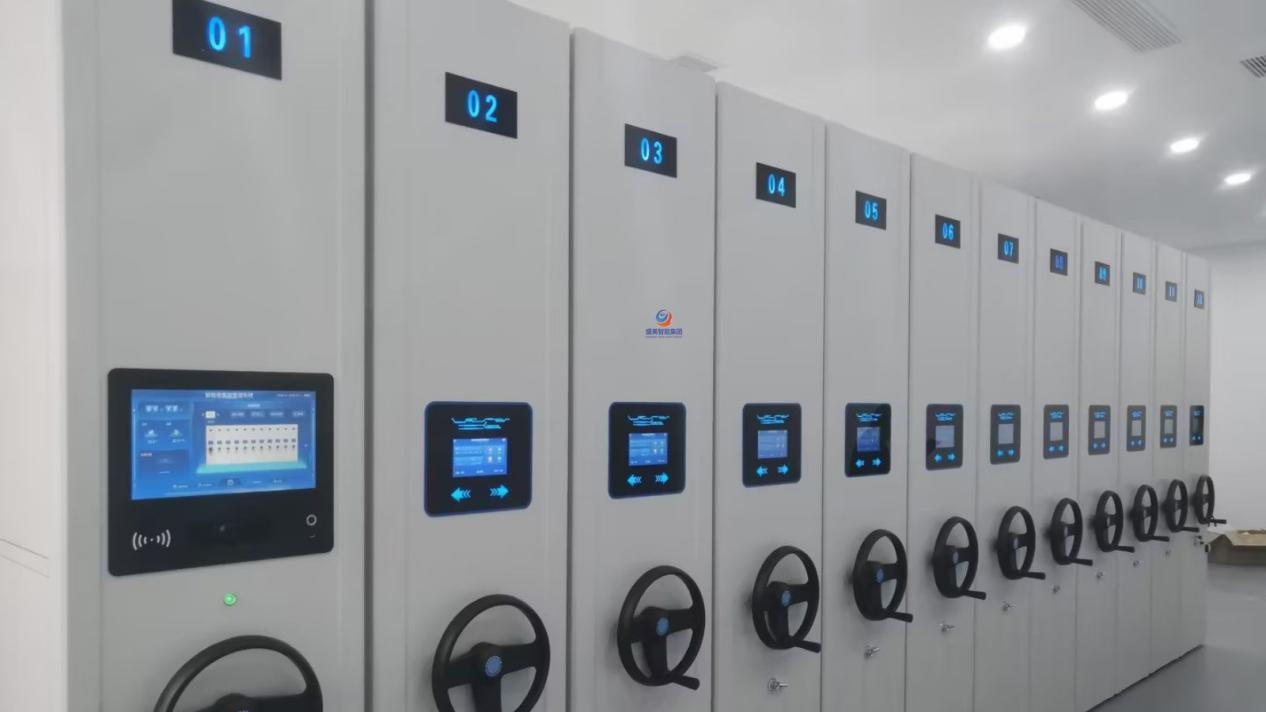
Per-bay touchscreens on a smart mobile compactor shelving range — numbered records located in seconds
For high-frequency audit scenarios, the gap between storage options is decisive for audit progress and compliance ratings:
| Storage option | Time per file | Misfile rate | Space use | Audit fit | Retention ability |
|---|---|---|---|---|---|
| Ordinary filing cabinets | 3–8 min | High | ~40% | Poor — no bulk pulls | Fair — damp/damage prone |
| Desktop stacking | 10 min + | Very high | Disorderly | Very poor | Poor — loss and damage |
| Manual mobile compactor shelving | Under 30 s | Very low | ~75% | Good — routine audits | Excellent — sealed, dry |
| Smart mobile compactor shelving | Under 10 s, precise | Near zero | 80% + | Excellent — bulk audits | Best — permissions and logs |
Figures reflect typical overseas enterprise archive-room results after zoning and indexing.
4. Four-Zone Archiving Plan on Mobile Compactor Shelving
Combine frequency zoning at the room level with type subdivision inside each range — a two-layer logic that fits daily internal audits, annual external audits and special inspections, and lets auditors locate target files fast.
1. High-frequency audit zone
At the entrance and mid-level golden handling height: current monthly/quarterly finance vouchers, active compliance ledgers, live contracts and this year's audit files. This is the core retrieval zone — pull-and-go, no digging, supporting fast daily internal audits.
2. Mid-frequency annual zone
Last year's completed audit reports, annual finance summaries and yearly compliance files, classified strictly by year. Annual external audits then pull a whole year in bulk without mixing old and new — external audit efficiency rises sharply.
3. Qualifications and contracts zone
A separate range for licenses, certificates and long-term contracts, with its own index and labels — matched to bid reviews, qualification checks and legal audits.
4. Low-frequency sealed zone
Inner room, upper levels: records past active use but still required by regulation, closed projects, expired ledgers. High-density sealing that never occupies high-frequency operating space — retention and space efficiency together.

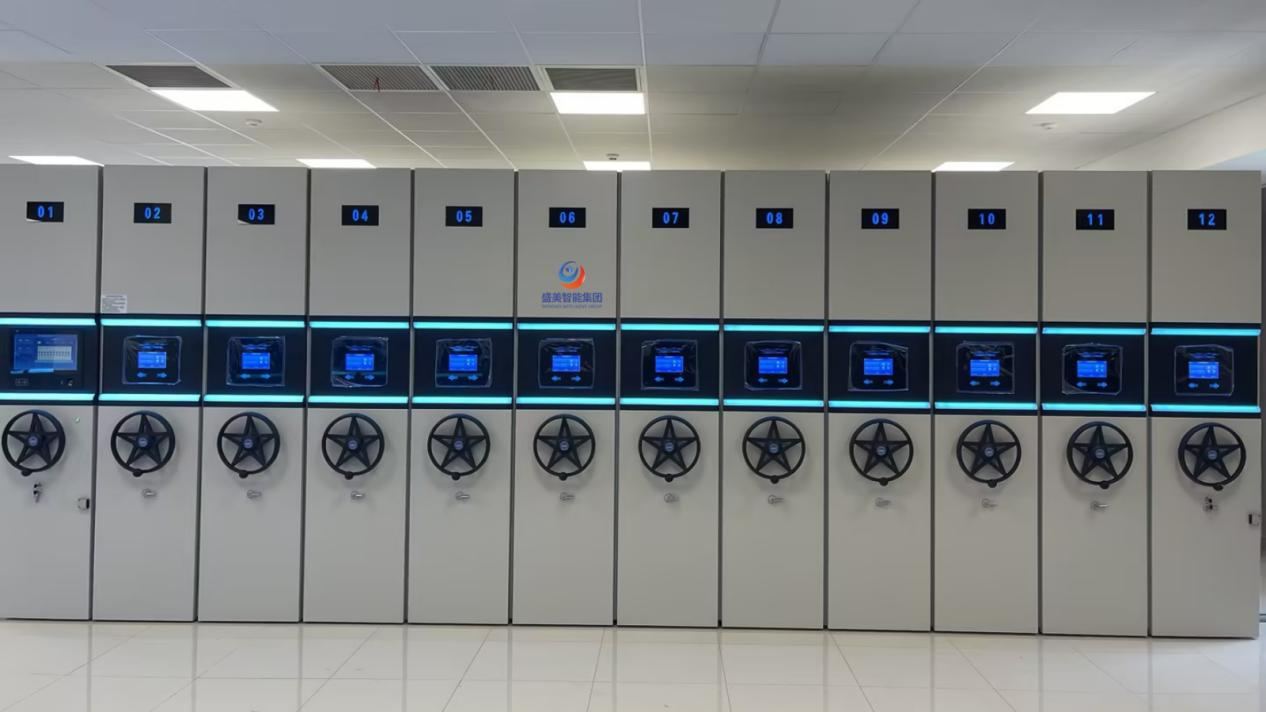
Numbered bays on a manual mobile compactor shelving range — zone labels keep every audit pull on target
5. Manual or Smart Mobile Compactor Shelving for Audit Scenarios
Enterprise compliance archiving lives on high-frequency access, frequent opening and bulk pulls — so selection should prioritize smooth travel, running stability and shelf flexibility, unlike low-frequency engineering repositories.
Option A · Manual mobile compactor shelving — SMBs and routine audits
For smaller teams, fixed filing processes and moderate budgets. Physical zoning plus label indexing delivers standardized archiving; smooth cranking, simple maintenance and strong value fully cover monthly internal audits and routine annual checks.
Option B · Smart mobile compactor shelving — large and cross-border enterprises
For large volumes, multi-department sharing, frequent special inspections and audit-trail requirements: record-number search, one-touch opening, precise locating, tiered permissions and full operation logs. Each role accesses only its own compliance zone — no mispickup, leakage or loss, and every audit trace is queryable, meeting strict overseas compliance demands.
Common hardware baseline
- Standard flat shelves with adjustable heights for A4 files, voucher boxes and bound ledgers of different thickness
- Sealed anti-dust gaskets, anti-tilt devices and quiet drive structures as standard
- Built for high-frequency opening over a long service life — for lifespan factors, which core components decide the service life of mobile compactor shelving is worth reading as plain guidance
6. Long-Term Protection Hardware for Mobile Compactor Shelving Archives
Retention runs 5–10 years or even permanent; paper vouchers and contracts age fast in bad environments. Storage hardware must meet four long-term protection standards:
7. Daily Management Rules That Keep Audit Archiving Compliant
Hardware only pays off with standardized management — simple to run, sustainable for years:
- File monthly, seal yearly: finance and compliance records go into the bays monthly — no backlog; at year-end, archive and seal by year range to end old-new mixing for good.
- One zone, one index: label every zone with type, years and purpose, and mirror it in an electronic index so audits locate the exact range directly.
- Return on retrieval: every audit pull or loan goes back the same day to its slot — no casual placement, no cross-zone stacking.
- Quarterly self-check: inventory alongside each internal audit to catch missing, misplaced or damaged files before external auditors do.
- Permission management: finance, legal and admin zones run separately; smart ranges add role-based permissions so confidential compliance files never leave their zone uninvited.
8. Mobile Compactor Shelving for Compliance Records: FAQ
Why do enterprise compliance records need high-frequency retrieval capability?
Compliance records include annual audit reports, financial vouchers, legal contracts and qualification files. Internal audits, third-party audits and government inspections can require retrieval at any time. Disordered storage means slow retrieval and missing files — directly hurting audit pass rates.
Why is mobile compactor shelving better than ordinary filing cabinets for audit archives?
Mobile compactor shelving combines high-density zoned storage, label indexing, sealed dust and moisture protection, and fast location retrieval — covering both long-term bulk archiving and high-frequency access for monthly internal audits, annual external audits and special inspections.
How should compliance records be zoned for audit retrieval?
Zone physically into a high-frequency audit area, a mid-frequency annual archive area, a qualifications-and-contracts area, and a low-frequency sealed area. Keep current audits, finance and qualification files easy to reach, and seal expired records together — retrieval efficiency improves sharply.
Should SMBs choose manual or smart mobile compactor shelving for audits?
Small and mid-size businesses with lower archive volumes and fixed staff get the best value from manual mobile compactor shelving, which fully covers daily audit retrieval. Large cross-border enterprises with multiple departments and audit-trail requirements should choose smart mobile compactor shelving first.
Conclusion
The real value of enterprise compliance record storage is not “putting files somewhere” — it is always retrievable, precisely located, fully traceable and permanently compliant. With internal audits, external audits and government checks now routine, rough stacking and ordinary cabinets cannot keep up with modern audit frequency, and the compliance and operational risks compound quietly.
With frequency zoning, type subdivision, sealed protection and fast retrieval as one system, mobile compactor shelving covers the full range of finance, legal, annual-audit and qualification archives — solving slow daily retrieval and long-term safe retention at once. A standardized, well-regulated archiving system lifts audit pass rates and cuts compliance risk, making it the optimal storage solution for overseas enterprises and cross-border institutions.
Disclaimer: this article is general guidance for enterprise compliance archiving and archive-room procurement. Retention obligations follow local commercial regulations, audit standards and archive management rules; final plans follow each enterprise's compliance policies.
Enterprise Archive Project Consultation
Need a compliance archive-room layout, an audit-zoning design, or technical parameters for an overseas tender? SHENGMEI provides free customized plans for overseas distributors, enterprise procurement and cross-border institutions.
📩 Business email: info@shengmeicabinet.com
💬 Overseas projects WhatsApp: Kerwin +86 189 3280 1260
Email subject format: Compliance audit archive consultation + room area + enterprise type + country/region