Multi-Level Access Control Compactor Shelving for Canadian Hospital Record Centres
Patient files are not ordinary documents. This is how a hospital HIM department locks down privacy with four-tier role permissions, per-zone encryption, time-window locking and a tamper-proof audit trail — without slowing down daily retrieval.
Introduction
A Canadian hospital records environment is judged on a different standard from an ordinary administrative archive. Patient health information sits under PHIPA, Canada's Personal Health Information Protection Act, plus provincial privacy legislation — which means an unauthorised look-up, an unattributed file movement or a missing log line is not a filing error, it is a compliance event. Multi-level access control compactor shelving exists because of that gap.
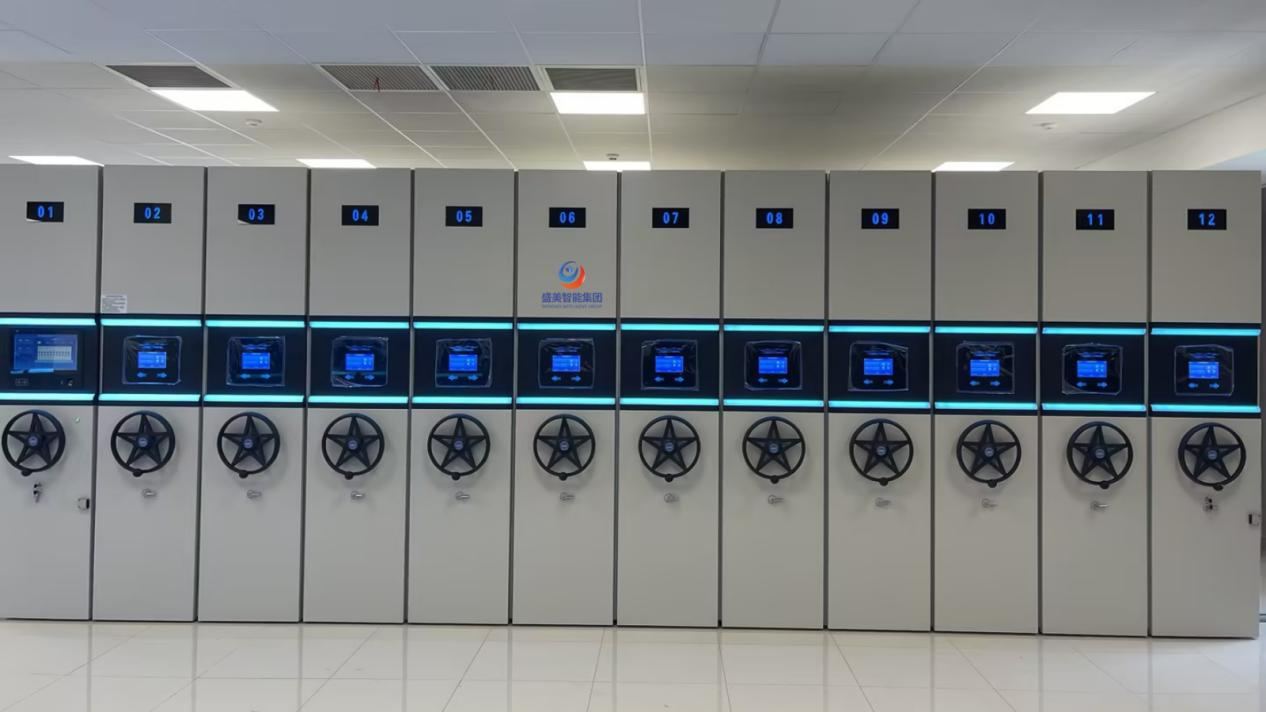
Conventional mobile shelving has no systematic permission layer. Anyone with physical access can open a bay, and nothing is recorded when they do. That is unworkable against the privacy standard Canadian healthcare runs on. Multi-level access control compactor shelving adds a role-based system layer on top of the same high-density steel structure, so staff permissions, zone isolation, action logging and end-to-end traceability all become part of the hardware itself. If you want the wider retrieval-versus-privacy trade-off first, our guide to mobile compactor shelving for medical records covers balancing the two.

1. Compliance Pain Points Inside Canadian Hospital Record Centres
Across Canadian medical archive practice, four permission problems show up again and again. They are also the four requirements that drive most record-centre upgrade projects, and a multi-level access control compactor shelving specification is usually written straight from this list. Tap or click any item to open it.
Clinicians, residents, administrative staff and outsourced maintenance contractors all move through the record room. Traditional equipment sets no permission boundary, so it is easy for an unapproved person to read, photocopy or pull patient files — a direct breach of PHIPA privacy expectations and, for the hospital, a reportable incident.
Hospitals have to store ordinary visit records, sensitive specialty files and legal or audit-only archives in one facility. A traditional room cannot separate permissions zone by zone, so the most sensitive material cannot be independently encrypted and controlled. That is where privacy protection leaks.
Canadian healthcare runs a mandatory records audit every year, and every file retrieval and room operation is expected to be fully traceable. Ordinary compactor shelving keeps no log. If a privacy breach or a missing file occurs, there is no way to establish responsibility — and no way to clear the audit.
Traditional rooms can be opened at any hour. Overnight, at weekends and on public holidays — exactly the unattended windows — records are exposed to theft, alteration and loss, which does not meet Canadian healthcare storage security practice. It is also the specific window that multi-level access control compactor shelving is deployed to close.
2. What Multi-Level Access Control Compactor Shelving Actually Is
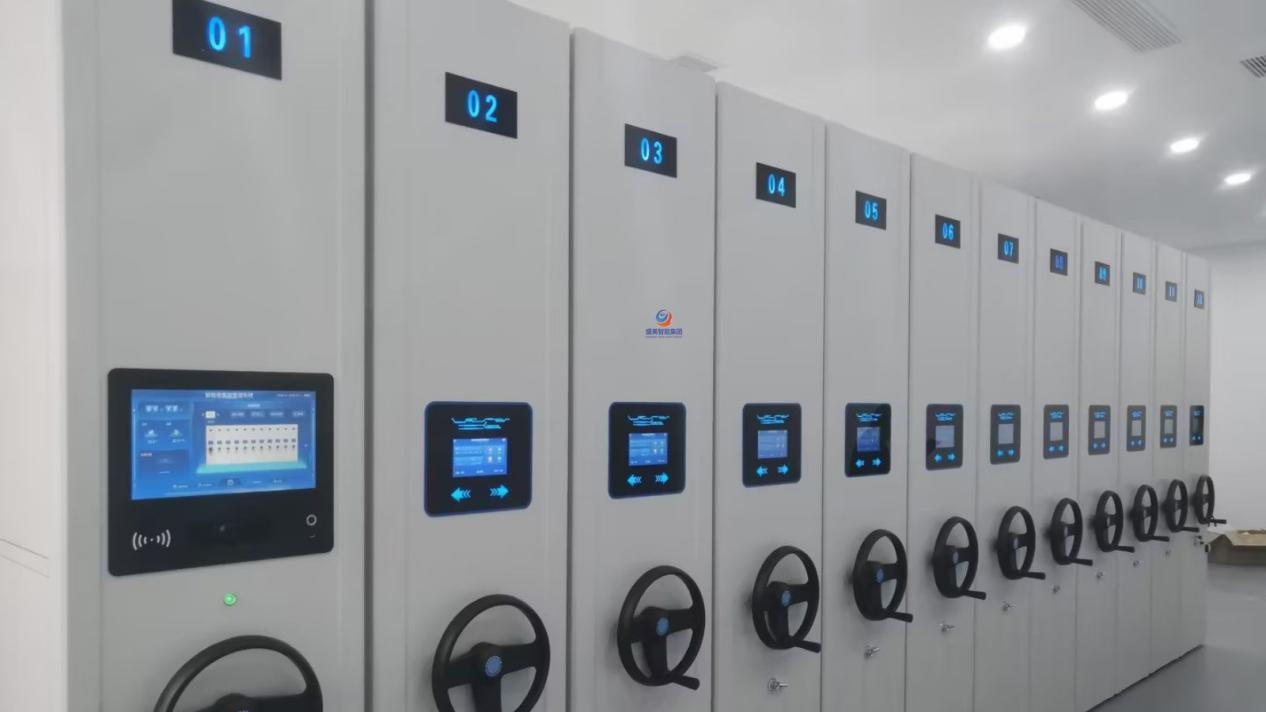
Multi-level access control compactor shelving is a role-based, fine-grained and fully traceable security system built specifically for the Canadian medical archive context. It is not a single password lock and not a door reader bolted onto a rack. The system splits permissions by hospital job function and combines four core modules: identity verification, zone authorisation, time-window control and log retention.
The result maps directly onto the working permissions of HIM records officers, departmental clinicians, record-room supervisors and internal auditors. Everyone holds a defined permission set, every zone is isolated, and every action is recorded — so each bay opening and each file operation can be shown to comply with PHIPA. For hospitals comparing the wider class of equipment, the same access-control thinking used in smart compactor shelving for confidential case files transfers directly to patient records.
3. The Four-Tier Role Model Mapped to Hospital HIM Teams
The system mirrors the standard structure of a hospital record centre and builds four independent permission tiers. Responsibilities stay clear, and no tier can reach into another:
Tier 1 — Clinician or departmental requester (basic read permission)
Can submit a file-borrowing request and read authorised records. Cannot open a bay independently, cannot modify a record and cannot delete data. Access is confined to the corresponding authorised zone, so restricted material stays out of reach. Every action is logged automatically and cannot be altered afterwards, which formalises retrieval behaviour at the source.
Tier 2 — HIM records operator (daily operational permission)
The permission set for dedicated hospital records staff: filing, borrowing, returning, room stock-taking and routine bay operation. Work is limited to assigned zones. There is no access to system settings, no ability to create accounts and no ability to delete logs, so day-to-day work stays efficient and compliant at the same time.
Tier 3 — Record centre super administrator (global control permission)
Held by the head of the hospital records centre. This tier carries the highest equipment management rights: adding and removing staff accounts, assigning job permissions, setting zone-level encryption, adjusting device parameters and approving access requests for specially restricted files. It governs both the permission structure and the operating state of the whole record room.
Tier 4 — Hospital internal audit or compliance auditor (read-only traceability)
A dedicated audit permission designed around the annual Canadian compliance review. The account reads without operating and checks without modifying: it can review every operator's activity log, bay-opening record, file movement record and exception event. That gives PHIPA audits and dispute investigations a complete evidence base.
4. Fine-Grained Controls PHIPA Auditors Look For
Against Canada's demanding privacy requirements, multi-level access control compactor shelving carries a set of fine-grained control functions that map onto the standard compliance checklist:
Multiple identity verification to block account sharing
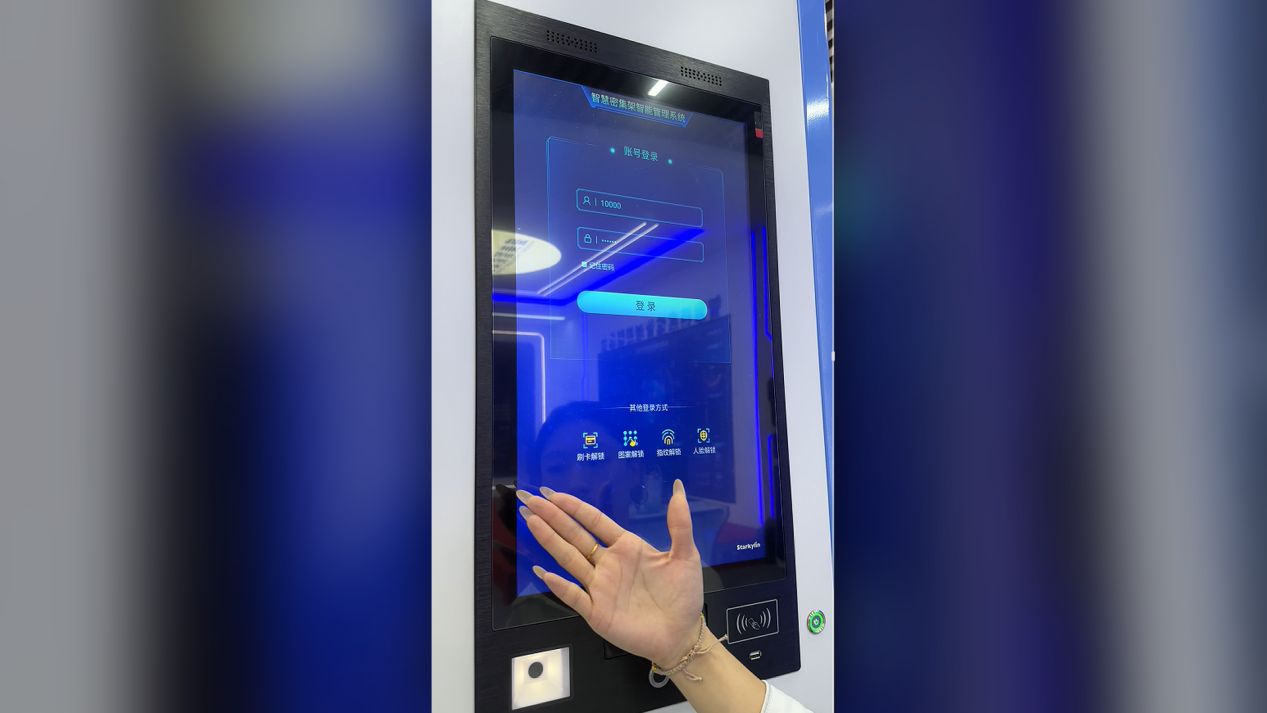
Card, fingerprint and account-password verification are all supported, and the verification depth can be matched to the sensitivity of the file tier — a single check for ordinary records, a two-step secondary authorisation for restricted ones. Without an approved identity, no bay will open at all, which removes the casual entry route into the room.

Independent per-zone authorisation to isolate restricted files
Permissions can be set independently for each column and each group of bays. Ordinary visit records, specialty files, audit-only archives and historical records can each be encrypted and isolated in their own zone, and staff from different job functions can only enter the zones they are cleared for. That is what turns multi-level access control compactor shelving into a graded, layered control rather than a single front door.
Time-window locking for round-the-clock protection
On multi-level access control compactor shelving, administrators define the hours during which the equipment may be operated. Normal permissions apply during working hours; overnight, at weekends and on holidays the system locks every bay automatically and refuses all operation. Unattended periods protect themselves, which closes the out-of-hours risk window.
Real-time warning on exception events
Repeated password failures, attempts to open a bay without clearance and improper device operation are recorded automatically and raise a warning. On multi-level access control compactor shelving those warnings reach the administrator console while the event is still small, instead of turning into a privacy breach or damaged files.
5. Tamper-Proof Logs and the Canadian Audit Trail
Log traceability is the single hardest requirement in a Canadian PHIPA compliance review, and the main weakness of ordinary storage equipment. The multi-level permission system on this shelving runs a fully automatic logging layer that covers every operating scenario.
The system records every bay opening and closing, staff login, file borrow and return, permission change, device commissioning event and exception event, and retains the operator ID, timestamp, device and action content precisely. Logs are encrypted and archived automatically. Ordinary operators and external parties cannot delete, alter or overwrite them — the record persists and stays traceable. During the annual medical audit, a privacy-compliance review or a dispute investigation, the full ledger exports in one action.
Because the same compliance logic applies across healthcare systems, our breakdown of EU and US smart compactor shelving safety compliance standards is a useful cross-check when a project has to satisfy more than one regulator.
6. Traditional vs Multi-Level Access Control Compactor Shelving
The table below compares the two configurations directly, line by line, on the points a Canadian hospital records project is assessed against. One column is ordinary compactor shelving; the other is multi-level access control compactor shelving.
| Comparison item | Traditional compactor shelving | Multi-level access control compactor shelving |
|---|---|---|
| Staff permission tiers | No graded permissions; anyone can operate | Four-tier role model matched to job function |
| Record isolation | No zone separation; restricted files unprotected | Independent per-zone authorisation and graded control |
| Operation logging | No log, no record, no traceability | Fully encrypted logs, tamper-proof and permanently retrievable |
| Security verification | Unlocked or a simple mechanical lock | Multiple identity checks with secondary authorisation |
| Time-window control | Operable at any hour, no restriction | Custom lock windows, automatic unattended protection |
| PHIPA readiness | Weak fit; difficult to clear a medical audit | Built to meet Canadian medical privacy requirements |
7. Overseas Buyer FAQ
Yes, closely. Graded authorisation, zone isolation, tamper-proof logs and end-to-end traceability are aligned with Canadian medical privacy expectations, and the exportable ledger supports both the annual hospital audit and compliance filing. It is built for Canadian healthcare records projects.
Fully. Roles can be added, permission scope redrawn, zone authorisation reassigned and operating windows changed to match departmental structure, job function and file sensitivity — at any scale of record centre.
Yes. The system generates standardised reports in one action and exports in multiple formats, ready for internal audit and compliance review, and consistent with Canadian healthcare ledger practice.
Immediately from the administrator console. Accounts can be created, retired or re-scoped in real time with no hardware change, so staff turnover, role changes and departmental reorganisations are absorbed without a site visit.
It can be set freely. On multi-level access control compactor shelving the lock windows follow the hospital's holiday calendar and shift rota, and a temporary authorisation can be issued for exceptional working situations — keeping security and operational convenience in balance.
Conclusion
For a hospital record centre, patient file storage is not only a space problem. It is a privacy-compliance obligation, a risk-control task and a condition of passing audit. Ordinary compactor shelving meets the storage need and nothing beyond it, which leaves unauthorised retrieval, privacy exposure and failed audits on the table — the three failures multi-level access control compactor shelving is specified to remove.
Multi-level access control compactor shelving closes that gap through four-tier role permissions, fine-grained zone isolation, a tamper-proof end-to-end log and round-the-clock security control. It gives hospitals and medical records centres a storage layer that is standardised, secure and demonstrably compliant — built into the equipment rather than bolted onto the process.

For a Canadian hospital record centre compliance upgrade, Shengmei Cabinet supplies the medical-specific permission scheme, customised system functions, English technical documentation and compliance liaison support — aligned with Canadian medical archive tendering and site acceptance.
Email subject format: Canadian Hospital Record Centre Permission Scheme + Project Requirements
Source: project requirements model comparing conventional compactor shelving with a multi-level access control configuration for Canadian hospital record centres (PHIPA-oriented).