From Simple Storage Shelving to Professional Mobile Shelving
Most enterprises, government-affiliated branches, and overseas trading companies follow a similar path when building their archive rooms: to control costs and get storage up and running quickly, they initially adopt simple storage shelving for basic document placement. Light-duty storage shelving is easy to install, low in unit price, and requires no complex construction — a perfect fit for the lightweight archiving needs of an early-stage business, and to this day the most common entry-level storage equipment in small and medium-sized archive rooms.
But as years of operation pile up — contracts, project documents, financial vouchers, HR records, and compliance files accumulating year after year — archive volume grows exponentially. Simple storage shelving that once seemed sufficient gradually reveals a series of industry-wide shortcomings: insufficient space, lack of protection, chaotic management, and compliance gaps. Open simple storage shelving only solves the basic problem of having somewhere to put things — it cannot meet the core needs of long-term preservation, security control, compliance auditing, and continuous capacity expansion.
Under modern archive management and overseas project acceptance standards, crude basic storage is being phased out. Manual mobile shelving — with its high adaptability, cost-effectiveness, and compliance — has become the core upgrade product for taking an archive room from basic storage to standardized, compliant storage. Unlike the high budget threshold of intelligent electric mobile shelving, manual mobile shelving is simple to operate, has a low failure rate, needs no electricity, and suits most traditional archive-room retrofit scenarios — the optimal way for enterprises to achieve file compliance upgrades at low cost and high efficiency.
This article starts from real-world operations, deeply analyzes the storage shortcomings and compliance loopholes of simple storage shelving, compares the professional storage advantages of manual mobile shelving, and delivers an actionable simple-shelving-to-mobile-shelving archive-room upgrade plan, helping enterprises say goodbye to crude archiving and achieve normalized, secure, and long-term file management.
ICurrent State of Enterprise Archive Rooms: The Limitations of Simple Storage Shelving
Simple storage shelving is a general-purpose office and warehouse device, designed for short-term, scattered, open storage — not developed for long-term paper-archive archiving. Many enterprises fall into the good-enough mindset and store core archives on simple storage shelving long-term. It looks like cost saving, but in reality plants a host of management hazards and compliance risks.
From the perspective of long-term archive-room operations and compliant storage, simple storage shelving has four structural limitations that cannot be avoided — and they are the core reasons enterprises must upgrade their equipment.
1. Extremely Low Space Utilization — Archive Rooms Fill Up Fast
Simple storage shelving uses a traditional fixed layout: every unit must reserve a fixed access aisle, and the aisle footprint far exceeds the actual storage area, wasting archive-room space severely. A typical simple-shelving archive room reaches only 35%–40% space utilization. As annual archive volume grows, capacity saturation and no place to put files occur within 2–3 years, forcing temporary stacking that crowds aisles and leaves the archive room messy.
2. Open, Unprotected Design — Accelerating Archive Aging and Wear
All simple storage shelving is fully open — no side panels, no doors, no sealed protection. Archives sit exposed in the air, continuously absorbing dust, moisture, and mold spores while suffering from light and temperature swings. They easily yellow and become brittle, fade, mildew, or suffer insect damage. For the core archives an enterprise must preserve permanently, open simple storage causes irreversible asset loss.
3. No Security Control System — Extremely High Archive Management Risk
Simple storage shelving has no locking, no zoned isolation, no anti-topple structure, and no security capability whatsoever. Sensitive contracts, legal documents, and classified materials can be browsed, removed, and swapped at will, easily leading to lost files, mis-filing, leaks, and tampering. It cannot support a standardized ledger management system and completely fails enterprise archive risk-control requirements.
4. Weak Load-Bearing Structure — Deformations and Damage Under Long-Term Storage
Simple storage shelving uses thin boards and simple supports, so per-level load capacity is limited. Under long-term, fully loaded paper archives, shelves sag, frames loosen, and the whole unit wobbles. This not only crushes archive boxes and paper documents, but also ages equipment quickly, requiring frequent maintenance and replacement — driving up long-term operating costs.
IIThe Core of Compliant Upgrades: How Manual Mobile Shelving Rebuilds the Archive Storage System
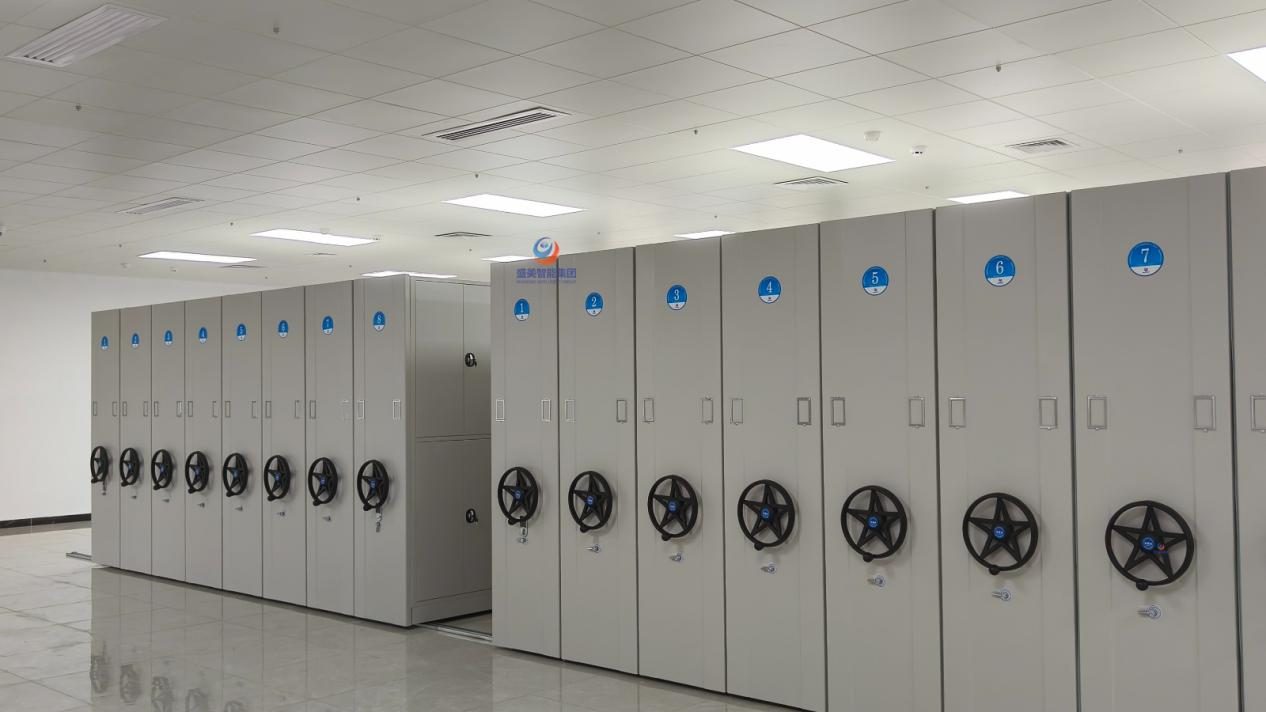
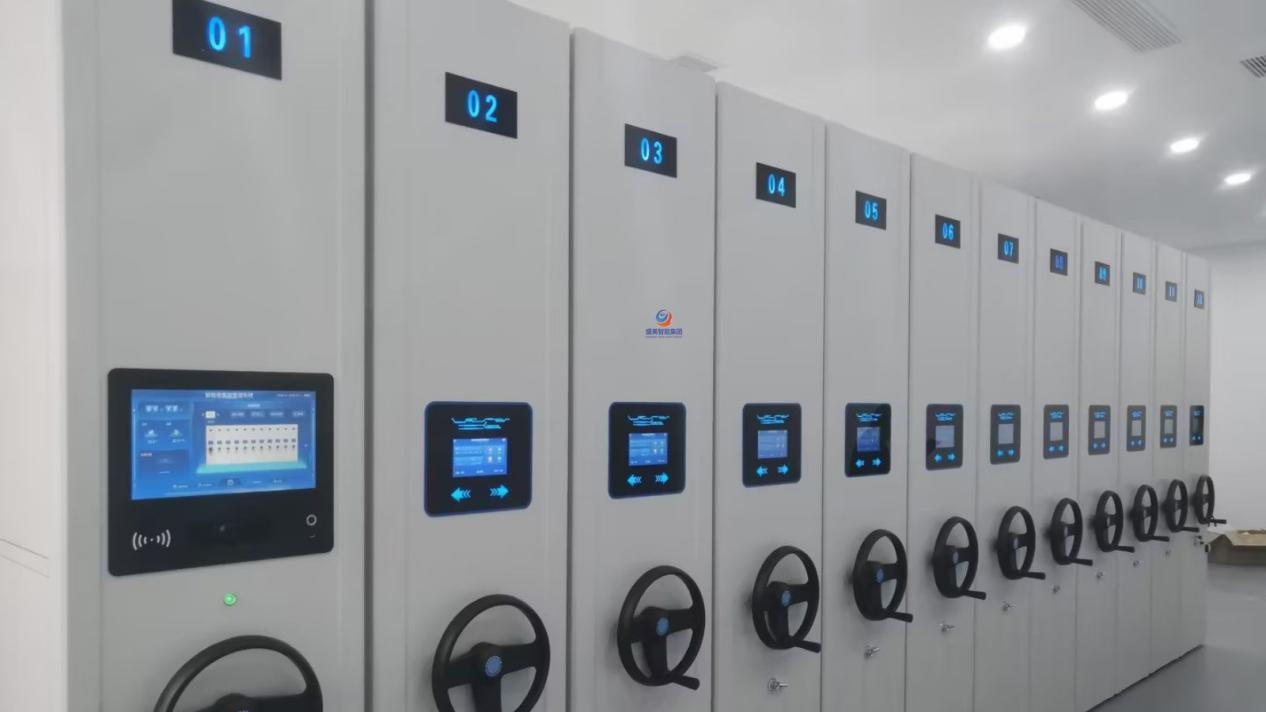
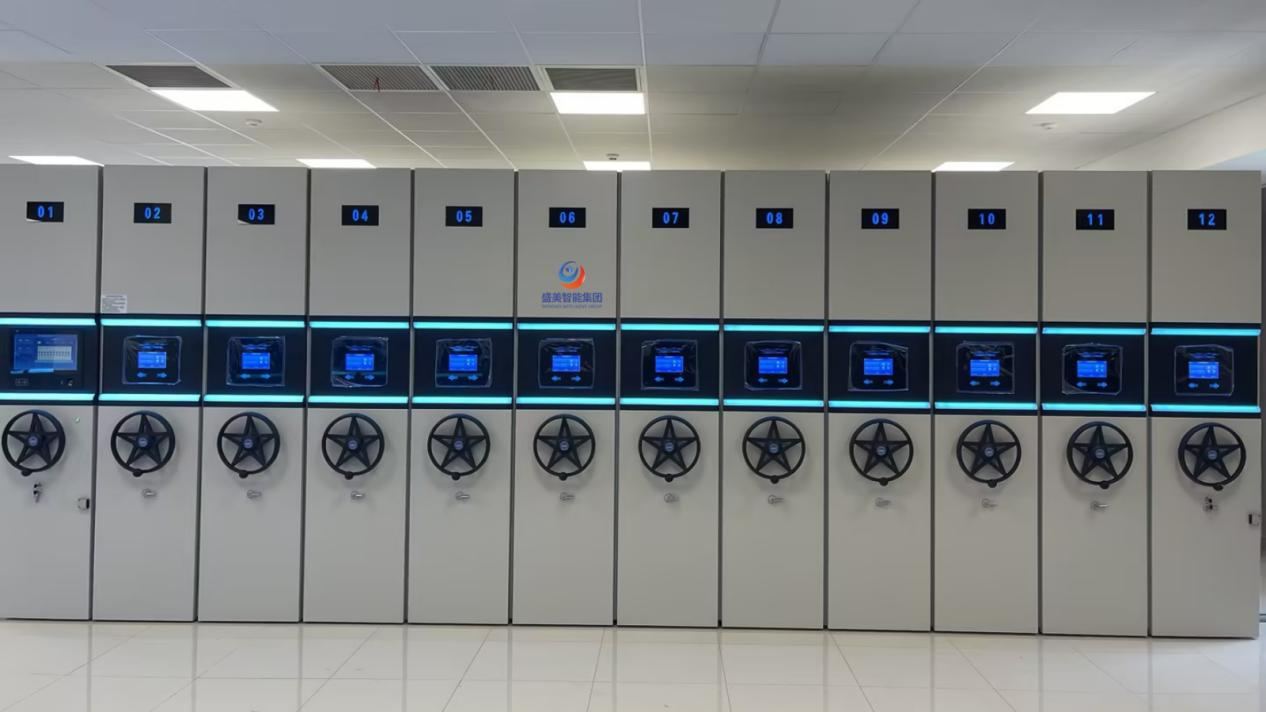
Compared with the crude design of simple storage shelving, manual mobile shelving is professional archiving equipment purpose-built for enterprise archive rooms, fully meeting the core needs of long-term paper preservation, compliant management, and continuous expansion. With no motors, pure manual push-and-pull operation, a stable durable structure, and controllable retrofit costs, it perfectly suits traditional archive-room upgrades and is the best bridge between basic storage and high-end intelligent storage.
Manual mobile shelving solves every shortcoming of simple storage shelving across four dimensions — space utilization, archive protection, security management, and long-term maintenance — delivering a compliant upgrade for enterprise archive storage.
1. Track-Mounted Movement Compresses Space — Doubling Storage Capacity
Manual mobile shelving abandons the multi-aisle fixed layout of simple storage shelving. It uses floor-embedded tracks so entire rows of units slide freely, opening just one working aisle when retrieving files while the rest stay tightly closed. By dynamically compressing wasted space, it lifts archive-room space utilization from under 40% to 85%–90%. At the same archive-room area, storage capacity becomes 2.5–3 times that of traditional simple shelving, thoroughly solving the capacity-expansion problem.
2. Fully Enclosed Cabinet Design — Long-Term Archive Preservation
Manual mobile shelving uses a fully enclosed cabinet structure with dedicated door panels, side panels, and dust-proof top panels. When closed, it forms an independent sealed storage space that effectively blocks dust, moisture, light, insects, and outside pollutants, stabilizes the archive room's micro-environment, slows paper oxidation and aging, and eliminates mildew, dust buildup, and damage — protecting paper archive integrity on all fronts.
3. Multiple Safety Protections — Building a Compliant Management System
Unlike the zero-protection design of simple shelving, manual mobile shelving comes standard with per-row locking, integral master locking, anti-topple limiters, anti-collision buffers, and braking devices. It enables classified, zoned storage, permission-based lock management, and access traceability registration, completely eliminating lost, leaked, or mis-filed records and helping enterprises establish a standardized, compliant archive management system that passes annual audits and compliance inspections.
4. Reinforced Load-Bearing Structure — For Decades of Long-Term Storage
Manual mobile shelving uses a fully welded chassis plus thickened cold-rolled steel plate and reinforced cross-beam structure, with a per-level uniformly distributed load of 80–120 kg — far above simple shelving's load standard. Stored at full capacity for years it does not deform, loosen, or wobble, and service life reaches 15–20 years without frequent maintenance or replacement, greatly reducing long-term archive-room operating costs.
IIISimple Storage Shelving vs. Manual Mobile Shelving: Full Parameter Comparison
To help enterprises benchmark quickly for procurement, project retrofit, and foreign-trade tender preparation, the following is a precise multi-dimensional comparison of core performance, compliance, practicality, and cost-effectiveness — clearly presenting the upgrade value.
| Dimension | Simple Storage Shelving | Manual Mobile Shelving |
|---|---|---|
| Space utilization | 35%–40%, severe space waste | 85%–90%, capacity doubled |
| Archive protection | Open, zero protection, prone to damp & aging | Fully sealed, dust- & moisture-proof, long-term preservation |
| Security management | No locking, no protection, uncontrolled | Multi-lock + anti-topple, safe & controllable |
| Per-level load | 40–50 kg, prone to sag & deform | 80–120 kg, stable under full load |
| Service life | 3–5 years, aging & loosening | 15–20 years, stable use |
| Compliance fit | Temporary storage only, no compliance audit | Meets domestic & overseas archive compliance standards |
| Expansion capacity | Fixed layout, no expansion | Modular design, expandable on demand |
IVArchive-Room Upgrade Implementation: From Simple Shelving to Manual Mobile Shelving
Many enterprises worry that archive-room retrofits take long, cost a lot, and disrupt file migration. Shengmei Cabinet has developed a low-cost, low-disruption, fast-to-deploy process for upgrading simple shelving to manual mobile shelving, suited to both new and old archive-room iterations.
1. Site Survey and Customized Design
Based on the existing archive room's area, ceiling height, fire conditions, and archive volume, we survey the site for free, remove the old simple storage shelving, and — factoring in 5–10 years of projected archive growth — customize a matched layout plan, track-laying plan, and zoning management plan, eliminating space waste and equipment mismatches.
2. Modular Installation — Short Lead Time, Low Disruption
Manual mobile shelving is installed with modular assembly. Floor tracks fit the vast majority of ordinary floors, requiring no large-scale excavation or renovation. The installation is standardized, low-noise, and fast, minimizing impact on daily office work and archive management — ideal for archive rooms still in active operation.
3. Classified Archive Migration and Standardized Filing
The retrofit simultaneously reorganizes, classifies, dusts, and tidies old archives, grouping scattered files into unified, zoned placement. Leveraging the zoning function of manual mobile shelving, it establishes a standardized archive storage ledger, achieving orderly storage, traceable retrieval, and controlled management.
4. Acceptance Delivery and Operation Training
We deliver a full set of equipment qualifications, acceptance documents, and English technical documentation suited to domestic and overseas project audits, and provide training on manual mobile shelving operation, locking use, and daily maintenance — so enterprise staff quickly master standardized archive management.
VAnalyzing the Upgrade Value: From Good Enough to Compliant and Usable
Upgrading from simple storage shelving to manual mobile shelving is not a simple equipment swap — it is a fundamental upgrade of the enterprise archive-management model.
On management: it says goodbye to crude stacking, disorderly searching, and archive wear, achieving normalized, refined, and secure management and reducing the business risk of leaks, loss, and damage.
On compliance: it thoroughly resolves the non-compliant pain points of simple shelving, meets domestic and overseas archive-management audit standards, and supports core work such as compliant operations, project bidding, and qualification review.
On cost: manual mobile shelving is a single investment with long-term benefit — no frequent replacement of simple shelving, no repeated archive-room retrofits, no archive-damage repair costs — significantly lowering the archive room's whole-lifecycle operating cost.
VIFAQ: Common Enterprise Upgrade Questions
Q1: My archive room is small. Is it really necessary to replace the simple storage shelving?›
Q2: Is manual mobile shelving complicated to operate? Is it suitable for daily office use?›
Q3: My archive volume is small. Can I keep using simple storage shelving as a transition?›
Q4: Can I keep part of the old simple storage shelving and mix it with mobile shelving?›
Simple storage shelving is a temporary transition tool for enterprise archive management. It only meets basic storage needs and cannot match the modern, compliant, long-term archive-storage standard. Manual mobile shelving — with its high space utilization, professional protection, complete safety system, and strong cost-effectiveness — has become the core equipment for taking an archive room from crude, simple storage to standardized, compliant storage.
For enterprises in a growth phase, upgrading to manual mobile shelving is not only about optimizing the archive-room layout and solving capacity shortages — it is a key move to improve the compliance system, avoid operational risk, and consolidate core archive assets. Replacing general-purpose shelving with professional equipment ensures every file is stored safely, standardized, and long-term.
Want to calculate the retrofit budget, capacity-increase ratio, and archive-room layout for upgrading from simple storage shelving to manual mobile shelving? Shengmei Cabinet offers free archive-room surveys, customized upgrade designs, old-vs-new equipment comparisons, and foreign-trade compliance documentation support — a one-stop solution to enterprise compliant-storage upgrades.