
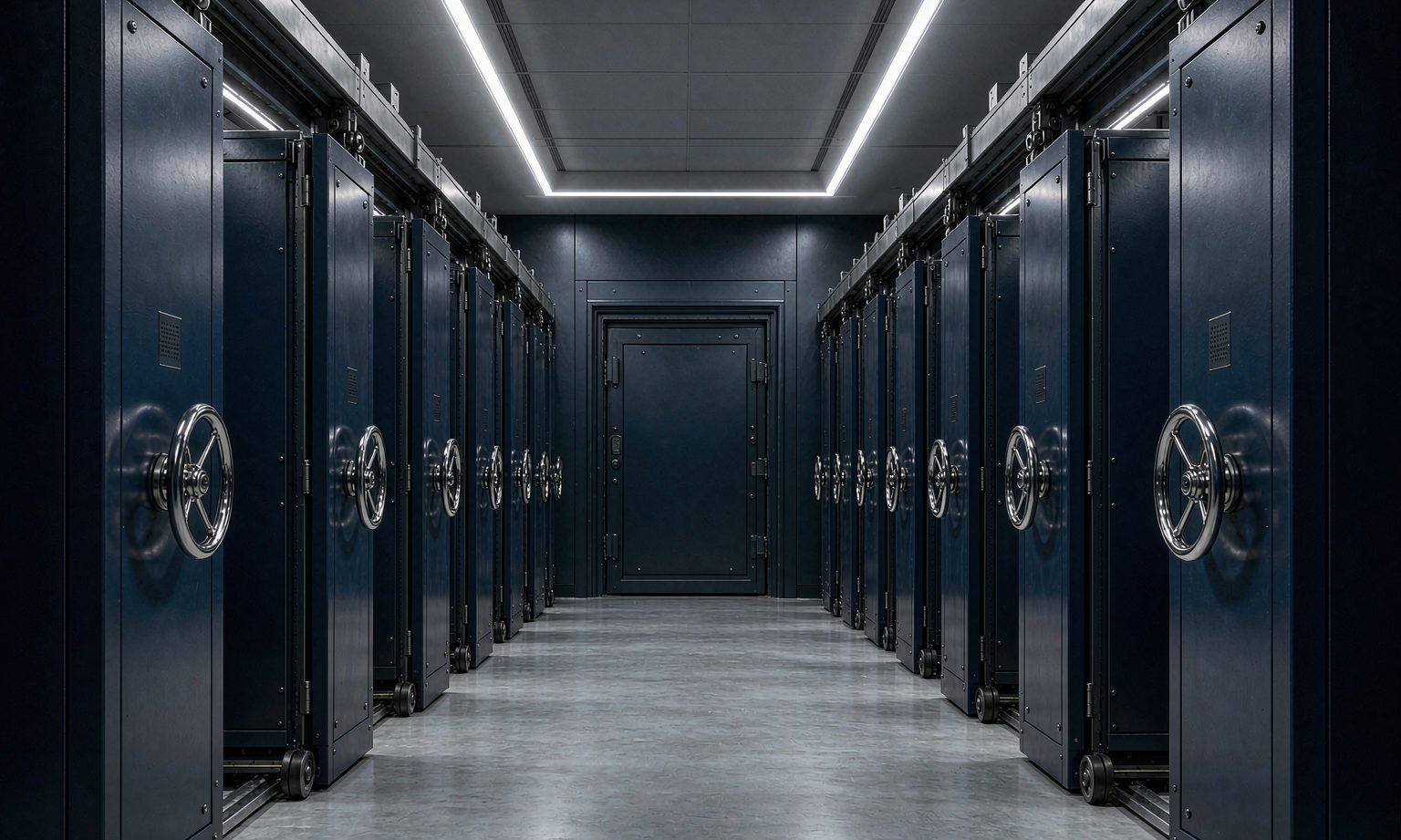
 Enterprise / Financial Records
The audit never waits for a missing file.
Invoices, payroll, bank records and tax filings each carry a retention clock — and auditors, inspectors and the year-end close all run on the same room. Financial storage is planned so a request resolves to one bay and one copy, in minutes.
A listed equipment maker takes three weeks of audit prep down to three days.
Group finance held seven years of paper across two buildings, boxed by whoever happened to be closing the month. External audit meant a scramble; the tax inspection meant two days of pulling boxes with no index.
“The auditors asked for a 2019 bank reconciliation. We handed them a copy before they finished the sentence.”Group Financial Controller · representative profile
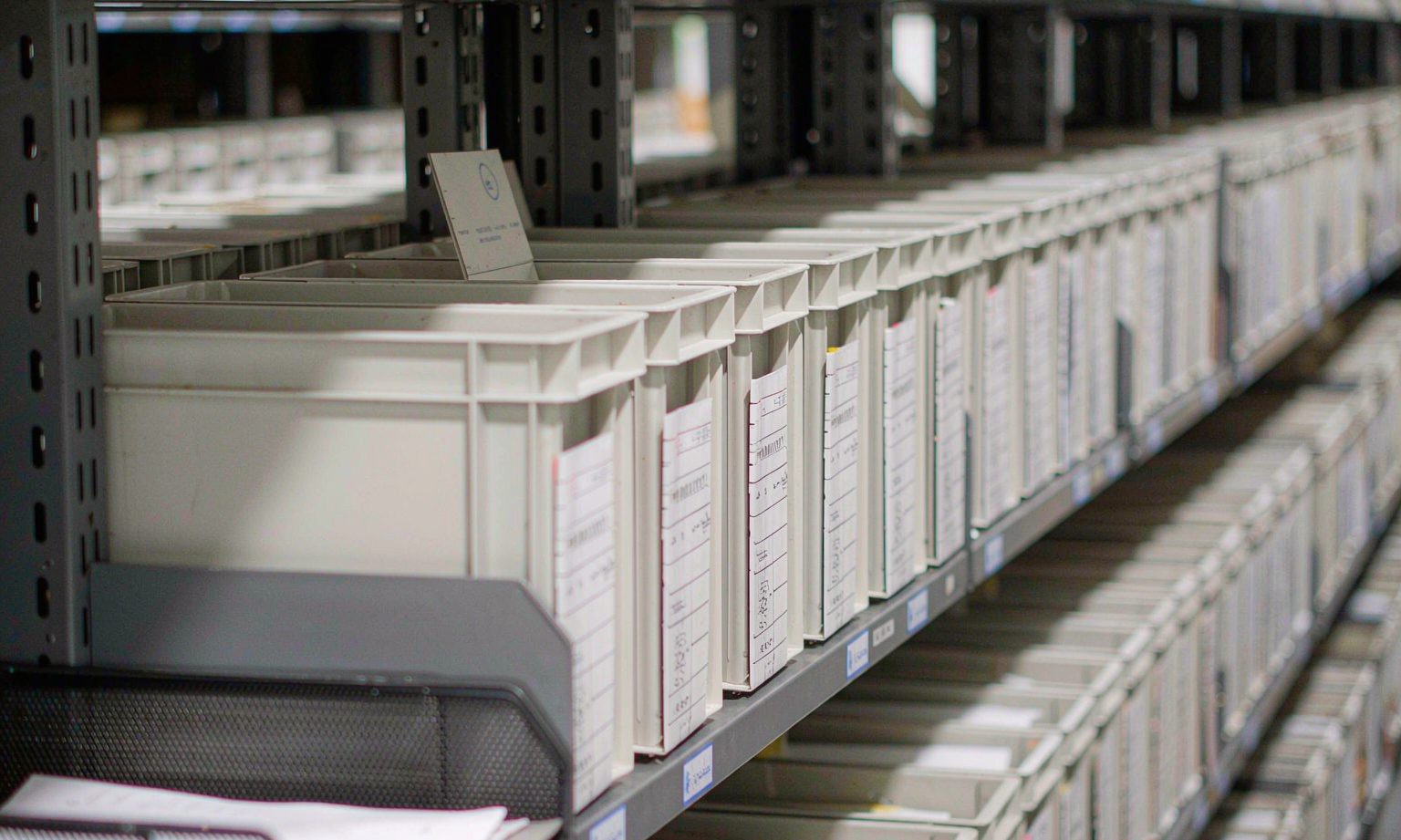 Boxed by fiscal year, one bay per year
Seven years is the floor, not the plan.
Audit-relevant records run on a seven-year clock — for audit workpapers it starts at the conclusion of the audit, not the end of the fiscal year. The room is zoned by those clocks, so each fiscal year clears as one block.
| Record series | Typical retention | Storage implication |
|---|---|---|
| Invoices & receivables | 7 years | Boxed by fiscal year nearest the finance counter; each year’s block clears at once. |
| Accounts payable & purchase records | 7 years | Audit-year zoning, so one request opens one bay instead of the whole run. |
| Payroll & employment tax records | 7 years | Locked personnel zone; access limited to HR and finance, logged per pull. |
| Bank statements & reconciliations | 7 years | Filed by statement period in monthly blocks — no re-sorting on audit day. |
| Tax filings & supporting workpapers | 7 years after filing | Vault zone boxed by filing year, return copy on top of each box. |
| Audit workpapers (SOX) | 7 years after conclusion | Retention clock runs from the audit conclusion; destruction suspended while any review is open. |
| Board minutes & resolutions | Permanent | Locked permanent zone near the vault core, growth space reserved for the next decade. |
| Contracts & cap-table records | 7 years after expiry / Permanent | Contract expiry years zoned for scheduled destruction; cap table never leaves the vault. |
Retention periods shown are common patterns under SOX and general corporate practice; the schedule your finance team and auditors operate is the one the room is zoned to.
Segregation of duties, enforced by the shelving.
Financial controls assume the custodian of records is not the person who authorizes transactions. The vault range turns that assumption into hardware: one locked zone per office of record, with custody that can be shown to an auditor on paper.
- Vault ranges locked per office of record, keys signed out on a custody log
- System lock securing every carriage when the room closes for the day
- Keypad or card control on powered systems, logged per operator
- Dual-key or two-person access on cap-table and board materials
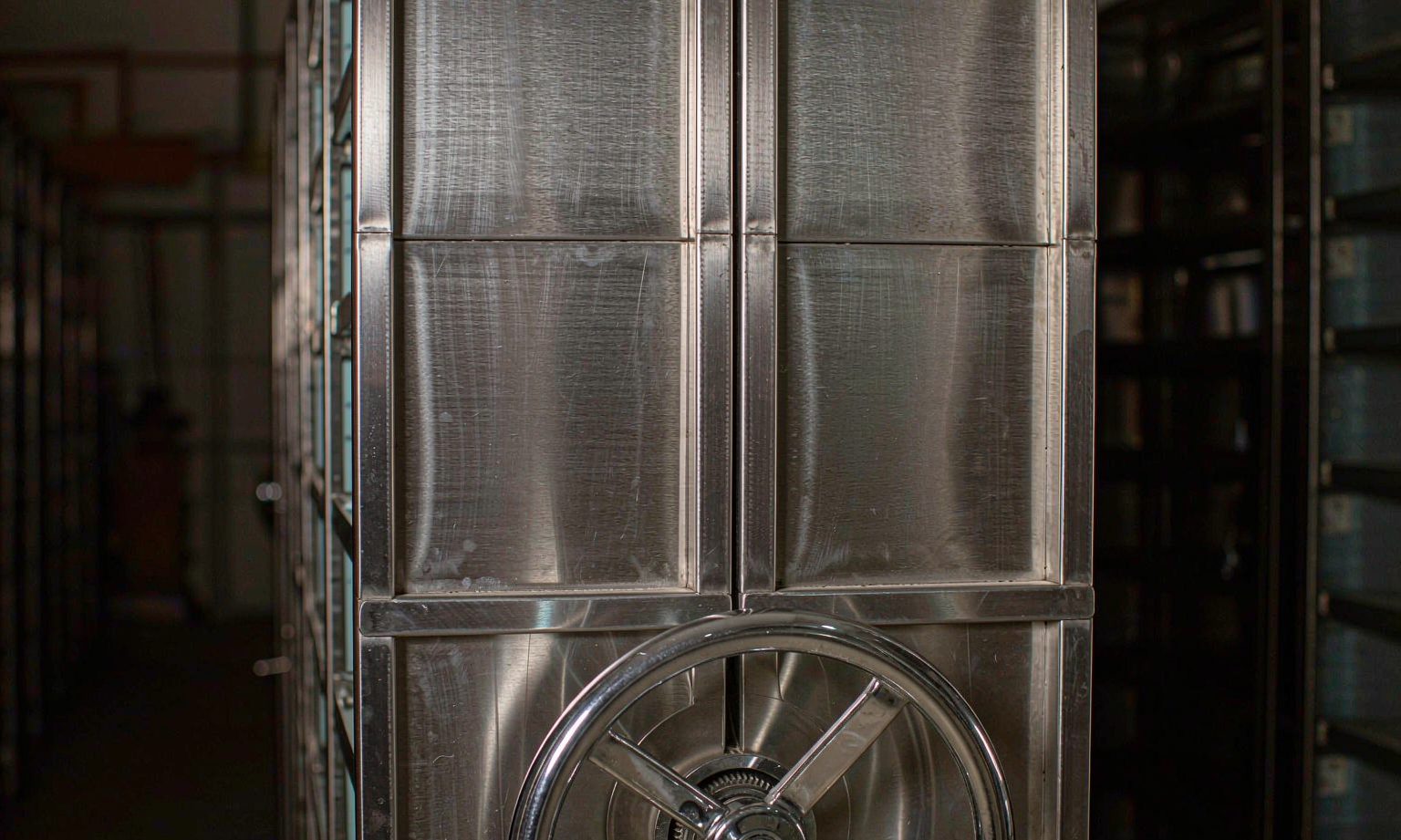
Audit week, without the box shuffle.
The external audit lands on a calendar the company does not control. The room is laid out so the pull list resolves before anyone opens an aisle — and the working collection stays sealed while copies are made.
Pull list from the index
The auditor’s request list resolves to bay labels and box numbers before anything moves.
One bay at a time
Aisles open in index order; counts are confirmed against the box label as boxes come out.
Copies, not originals
Scanning at the counter serves the audit; originals go straight back to their bay.
Same-day reshelving
Every box returns to its labelled bay the same day; the census stays clean all week.
The room also serves the year-end close.
Financial records are pulled for more than compliance. The same zoning that satisfies an auditor is what makes these recurring requests fast.
See what your records room could become.
Send the record classes, volumes and room dimensions. The proposal returns with vault zoning, key custody design and load calculations for controller review.