
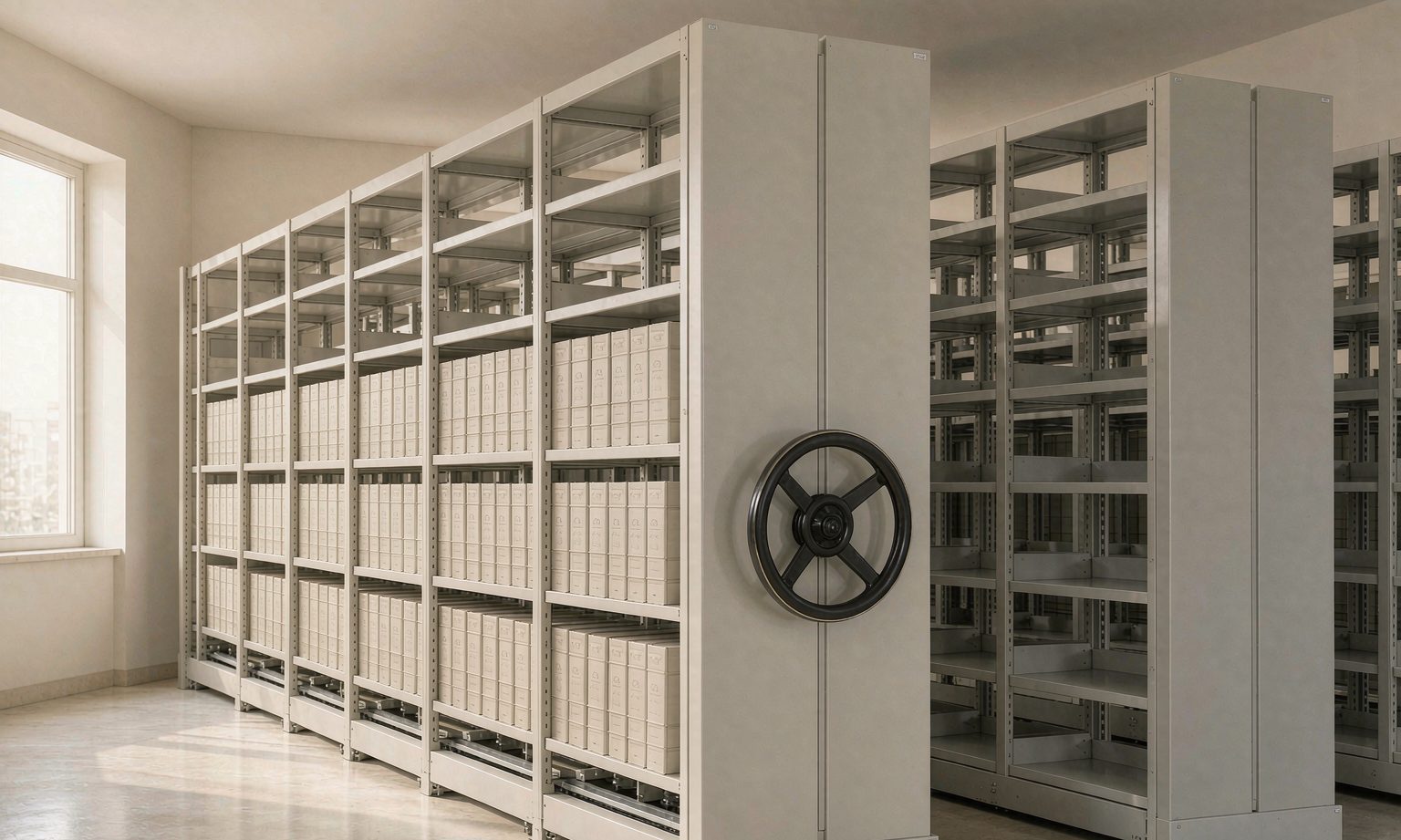
One room that keeps every promise the company ever signed.
Contracts, board minutes, legal files, HR records and general correspondence each carry a different retention period and a different audience. A corporate document center exists to hold all of them — findable by class, locked by sensitivity, and destruction-ready on schedule.
A listed retail group consolidates three head offices into one standard.
Three acquired head offices, three filing conventions, and a legal team that could not answer a simple question: if litigation starts tomorrow, which boxes are frozen? The programme built one document center standard and rolled it out site by site.
“The first audit after the rollout, the answer came in minutes. That had never happened before.”General Counsel · representative profile
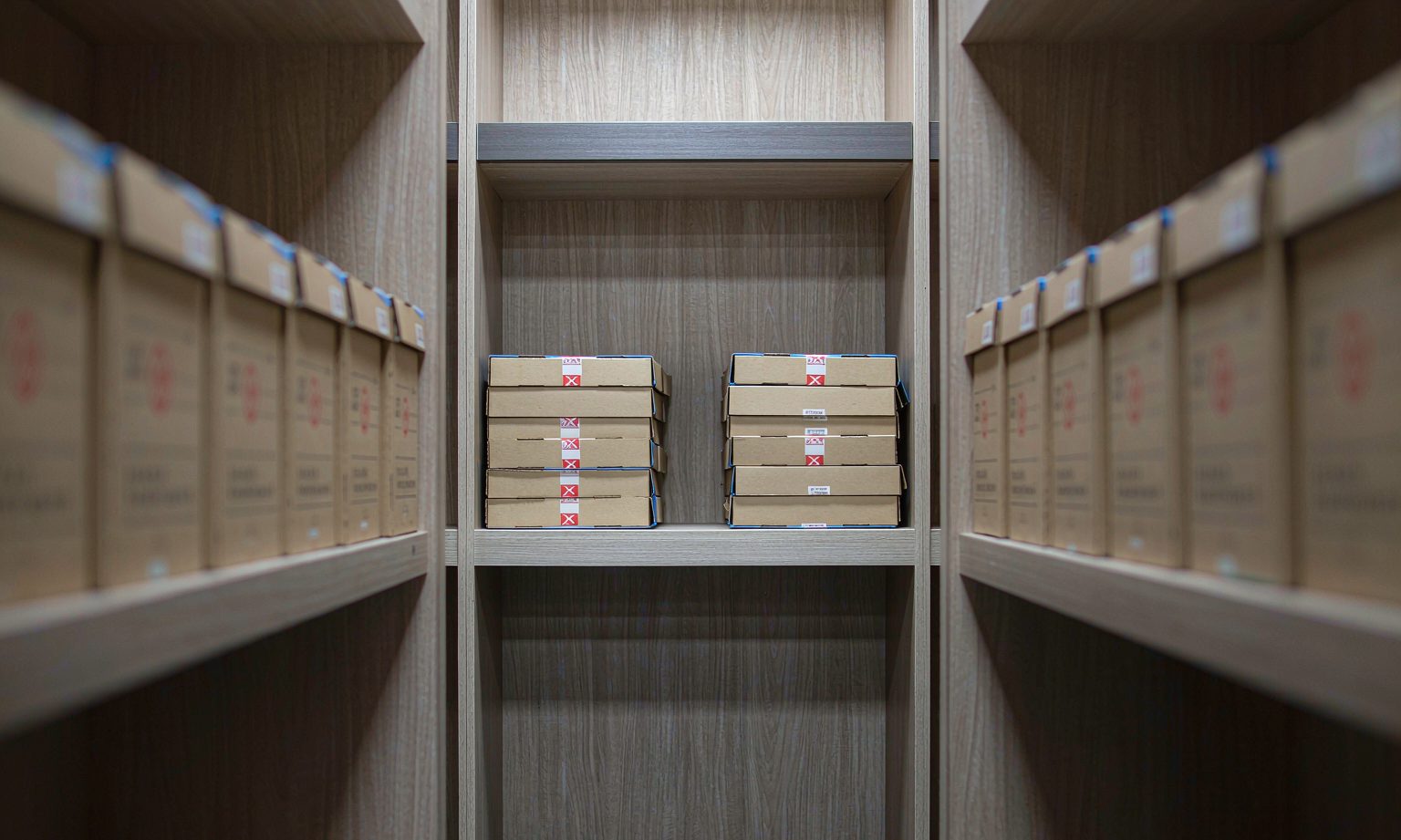 Holds bay, marked and separated
Class by class: what stays, what rotates, what goes.
The schedule is the room’s operating system. Every bay label, every destruction cycle and every audit pull is derived from it — so the schedule is agreed with legal and finance before the first bay is labelled.
| Record class | Typical retention | Storage implication |
|---|---|---|
| Contracts & agreements | 7 years after expiry | Boxed by expiry year so scheduled destruction clears one bay at a time. |
| Board minutes & resolutions | Permanent | Locked permanent zone near the vault core, with growth space reserved. |
| Legal files & correspondence | Matter-dependent | Zoned by matter; anything under litigation hold moves to the holds bay on notice. |
| HR & personnel records | Employment + retention period | Locked personnel ranges, access limited to HR, with privacy-aligned destruction. |
| Policies & procedures | Current + superseded set | Current set at the counter; superseded sets stamped and shelved by version year. |
| General correspondence | 2–3 years | Short-cycle ranges nearest the door, on the fastest turnover rhythm. |
| Insurance & claims | 10 years after settlement | Audit-ready zone boxed by settlement year for long-tail claims defence. |
Retention periods shown are common corporate patterns; the room is zoned to the schedule your legal and finance teams actually operate, and re-zoned when it changes.
Four zones every document center needs.
Zoning by record class — not by which department sent the boxes — is what keeps a records request a two-minute job and an audit a one-afternoon job.
Active files
Contracts in play and current policies, shelved nearest the counter on carriages that open on demand.
Retention archive
Closed files waiting out their periods, boxed by class and expiry year for clean destruction cycles.
Holds bay
Matters under legal hold, physically separated so no hold ever enters a destruction batch.
Destruction staging
Eligible material assembled by cycle, certificates issued, and whole bays cleared at once.
When legal says keep it, the room obeys.
A litigation hold overrides every retention schedule in the building. The storage system’s job is to make that override physical: one marked bay that legal can point at, and a destruction process that can never touch it.
- Holds bay marked and locked, with the matter reference on the bay label
- Destruction lists screened against the hold register before any cycle is approved
- Locking end-panel doors on restricted ranges; keys held by the office of record
- Release of a hold closes the bay label and returns material to its class zone
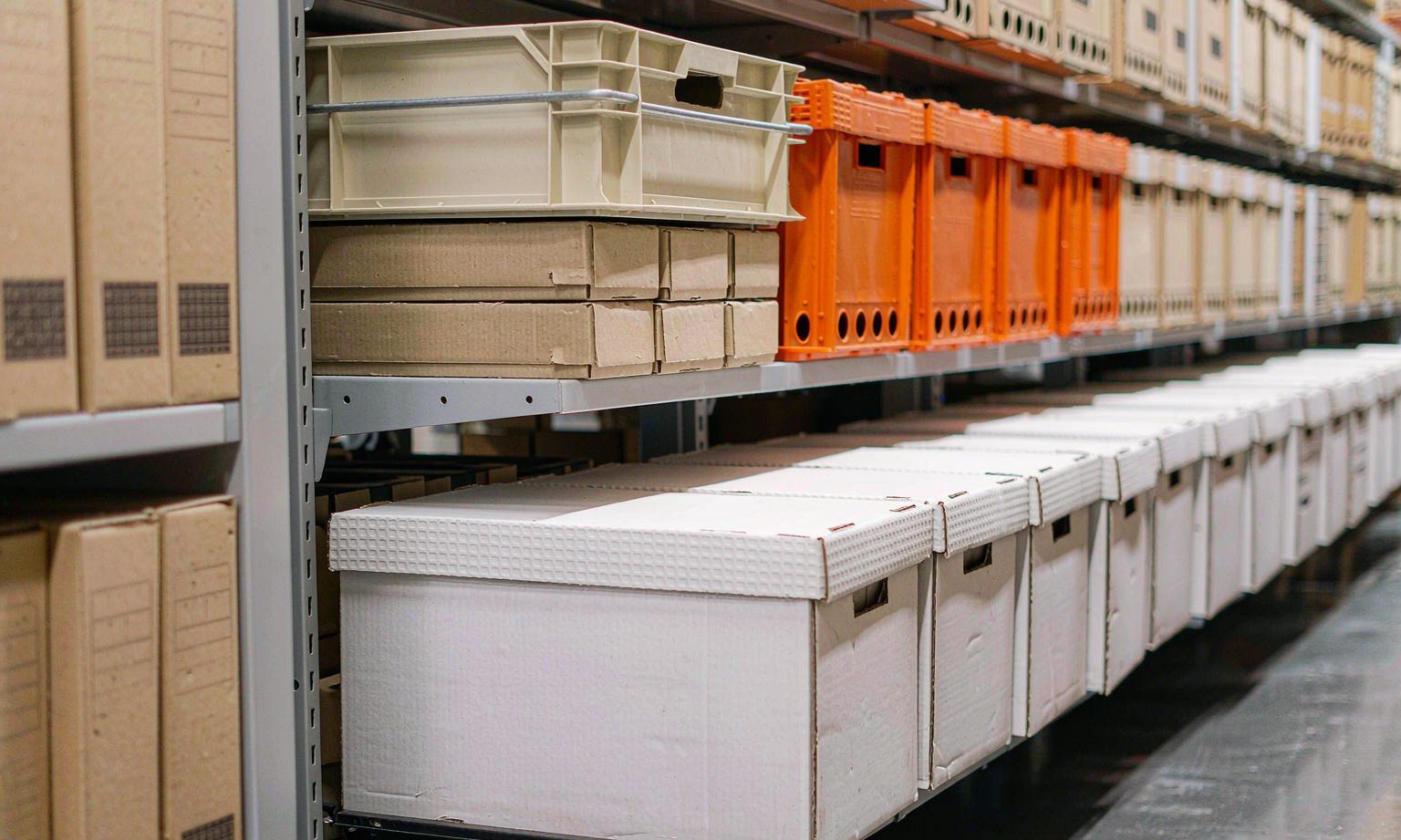
Destruction is a process, not an event.
Getting rid of records on schedule is as much a control as keeping them. Each cycle follows the same four steps, and every step leaves a document the auditor can read years later.
Digitize without losing the audit trail.
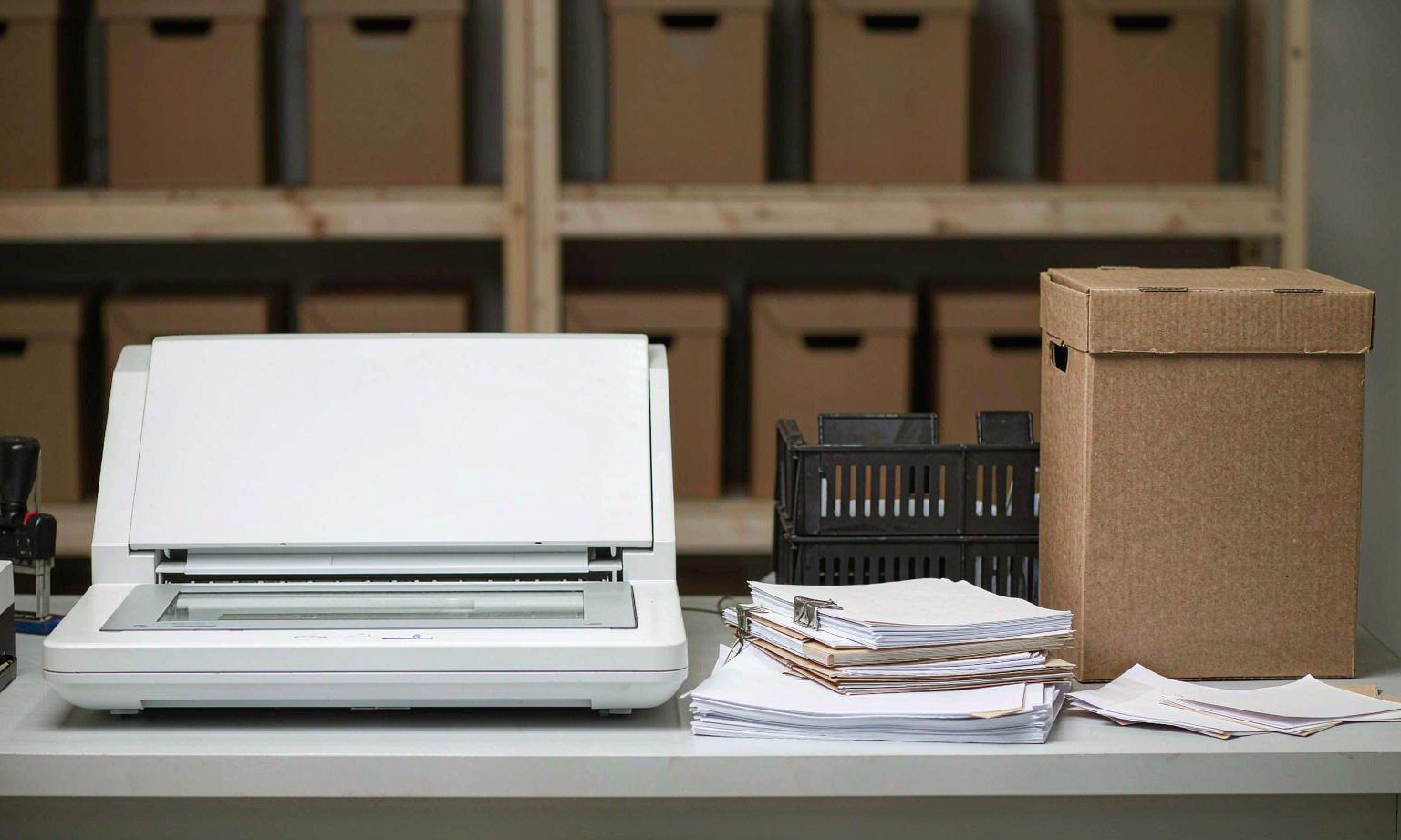
Most enterprises migrate in slices, not in one project. The room supports that: paper stays the authority until its scan is verified, and the index carries both the shelf location and the file reference until the paper is retired.
- Scan-on-demand by class — the material auditors ask for moves first
- Originals remain shelved and labelled until scans verify against the box index
- Box-level index: range, bay and box labels stay in sync with the digital register
- Certified destruction of paper only after verification sign-off, never before
See what your records room could become.
Send the record classes, volumes and room dimensions. The proposal returns with zoning drawings, load calculations and the retention schedule mapped onto the room — ready for controller or committee review.