
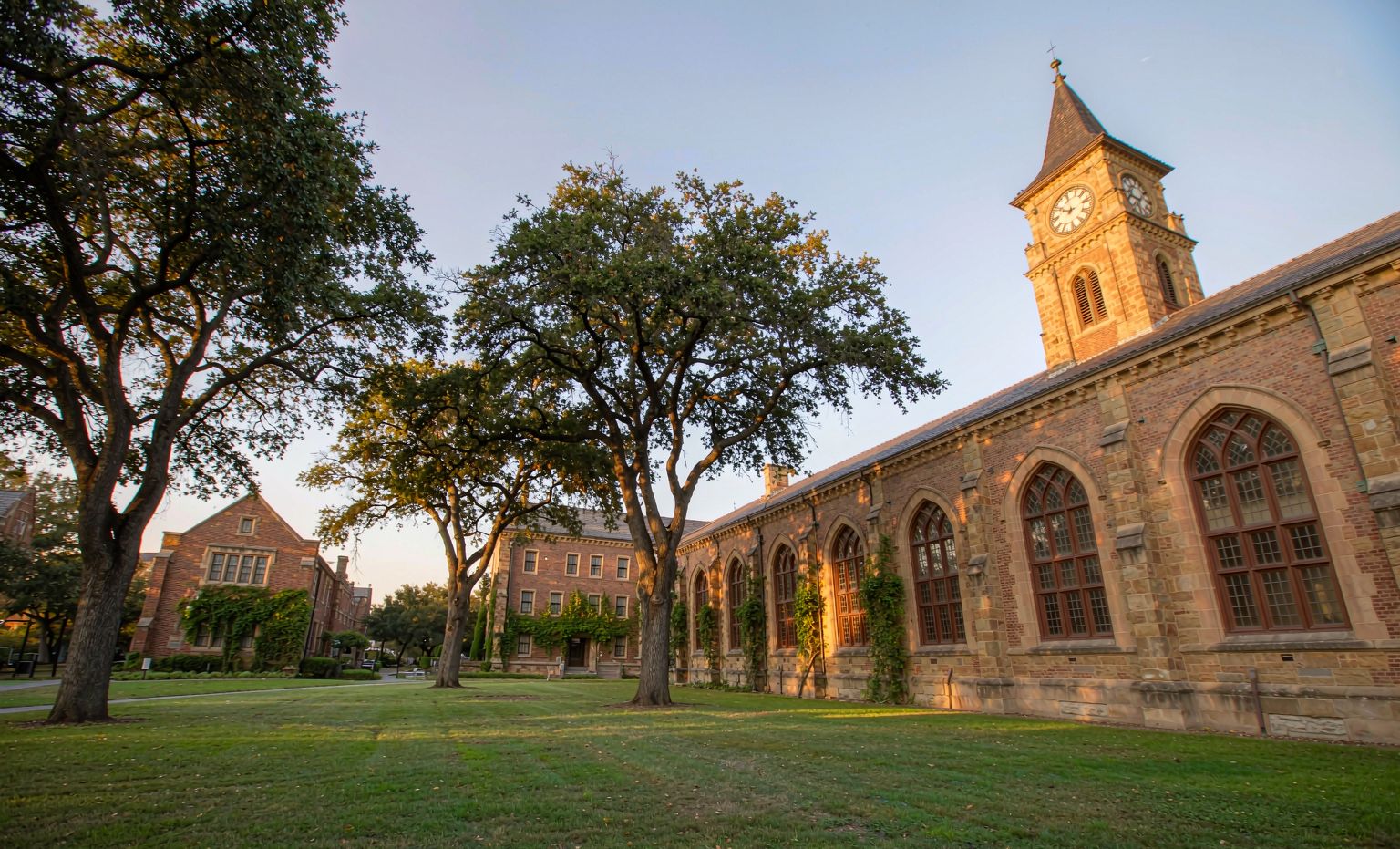
A campus archive runs on retention, not square metres.
Registrar files, theses and sponsored-research records each obey a different clock. The archive room is planned around those clocks — so the material that never leaves has a home, and the material that does leave can leave one aisle at a time.
- Retention classes and where each one is shelved
- FERPA-grade access control in hardware
- Capacity planned for term-time peaks
Series by series: what stays, what rotates, what goes.
Every campus records room holds three populations — a small active set touched daily, a large inactive block waiting out three-to-six-year periods, and a permanent collection that only grows. The shelving plan mirrors that split.
| Record series | Typical retention | Storage implication |
|---|---|---|
| Student transcripts & academic records | Permanent | Locked ranges near the vault core, stable conditions, growth space reserved for the next decade. |
| Theses & dissertations | Permanent | Bound-format shelving in the permanent zone; high-density compactor rows for long-tail volumes. |
| Admissions & application files | 5 years after separation | Active-to-inactive rotation by class year; each year’s disposal clears one shelving block. |
| Financial aid records | 5 years after separation | Audit-ready locked zone, boxed by series and destruction year for clean review. |
| Sponsored research records | 6 years after final action | Project-based inactive zone; grant holds flagged and shelved apart from routine destruction. |
| Registration & housing records | 3 years | Short-term rotation ranges nearest the door, on the fastest turnover cycle. |
| Records under legal or audit hold | Until released | Marked hold bay, physically separated so holds never enter a destruction batch. |
Retention periods shown are common institutional patterns; the room is zoned to the schedule your registrar and records office actually operate.
Six zones every campus archive room needs.
Zoning by how records move — not by which department sent the boxes — is what makes an annual disposal review take one afternoon instead of one week.
Active files
Current-term pulls. Nearest the door, or on static shelving outside the mobile system when access is constant.
Inactive, in retention
Closed files waiting out 3-, 5- or 6-year periods, boxed by series and destruction year.
Permanent collection
Transcripts, minutes and theses. Locked ranges, stable conditions, room to grow for a decade.
Holds bay
Records under legal, audit or privacy holds. Marked and separated from every destruction batch.
Transfer staging
Boxes being prepared for the university or state archives, kept apart from the working collection.
Growth space
Empty shelving reserved for next year’s inactive files, so the room is never full in year one.
FERPA-grade privacy, enforced by the shelving itself.
Registrar, admissions and financial aid files are education records. Policy decides who may open them — the storage system is the layer that makes the policy physical.
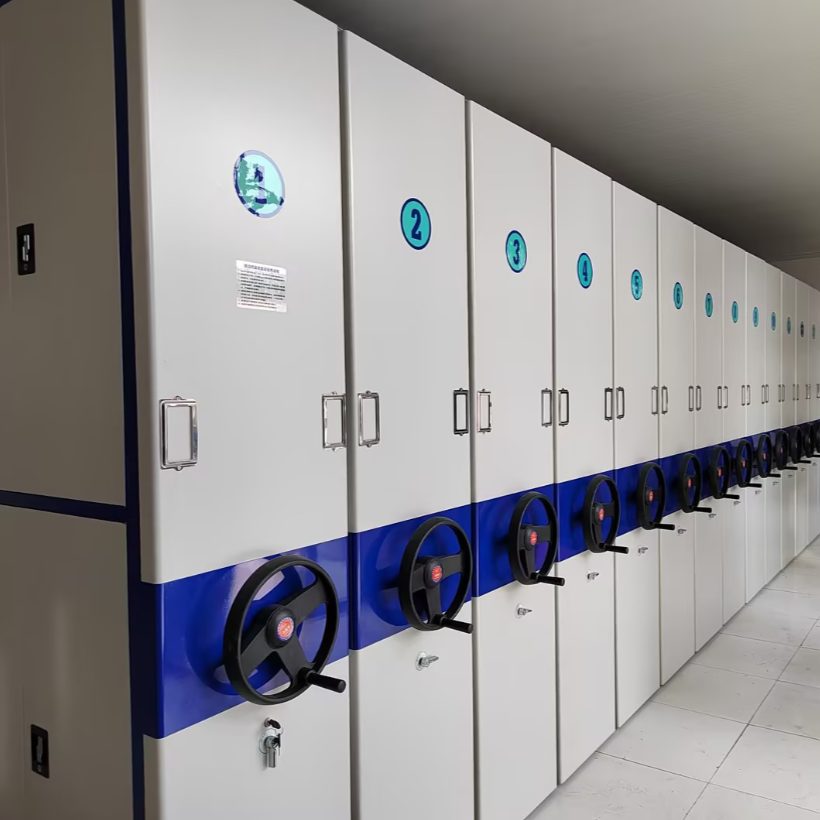
A closed compact system is itself a barrier: when ranges close, the collection is sealed behind steel end panels, and the aisle that would expose it no longer exists.
- System lock securing every carriage when the room is closed
- Locking end-panel doors on restricted ranges
- Keypad or card control on powered systems, logged per operator
- One office of record per range, matched to campus policy
Term-time peaks, planned on the academic calendar.
Retrieval volume is not flat across a semester. Registration, graduation audit and archives transfer weeks each spike the room, and the layout absorbs them without extra floor space.
One afternoon, one aisle, one year’s paperwork.
When the schedule says a series expires, the review is physical: open the bay that holds that destruction year, confirm against the schedule, and clear the block. Zoning is what keeps it that small.
Schedule extract
The registrar exports this year’s eligible series with destruction dates, matched to bay labels by year.
Hold check
Legal, audit and privacy holds are re-verified first; anything flagged returns to the holds bay untouched.
Aisle-by-aisle confirm
One bay opens at a time; counts are signed off on a shelf list printed for the review.
Destruction & update
Certified destruction, certificates filed, and the bay label closed so the cycle is auditable years later.
Every box findable without opening one.
A retention schedule only works if the material it describes can be found. The room is labelled in layers, so a request resolves to a bay before anyone opens an aisle.
| Label layer | What it carries | Who relies on it |
|---|---|---|
| Range label | Department and retention class — the office of record for that run. | Registrar and records office staff. |
| Bay label | Record series plus destruction year, so expiry work starts in the right bay. | Records staff during annual review. |
| Box label | Accession number and date span, written on the box end and spine. | Anyone pulling a known accession. |
| Shelf list | Digital index synced to the physical labels; updated on every move. | All authorized requesters. |
Optional RFID box tags turn the same hierarchy into a handheld audit: scan the run, reconcile the shelf list, and flag any box that has drifted from its labelled bay.
Bring us the retention schedule.
Six zones, one aisle, and a room that still has growth space in year ten — the layout proposal returns with drawings and load calculations.