

Institutions are judged by their records.
Universities, libraries, museums and teaching hospitals hold collections that outlive budgets, buildings and the people who created them. Shengmei engineers high-density storage around the duty each institution carries — retention, conservation and public accountability.
An institutional archive is infrastructure, not furniture.
A corporate file room can be reorganized in a weekend. An institutional collection cannot. Accession registers, classification schemes and conservation requirements are settled decades deep, and the storage system has to slot into them without disturbing a single finding aid.
That is why institutional projects start with the collection, not the catalog. We survey what is held, how it moves and who is allowed to touch it, then configure carriages, shelves and controls around that evidence. The result is a system the registrar, the librarian and the conservator can each defend in front of their own board.
Three institutional settings, three configuration paths.
Each environment page carries the retention rules, environmental targets and configurations its collection is judged on.
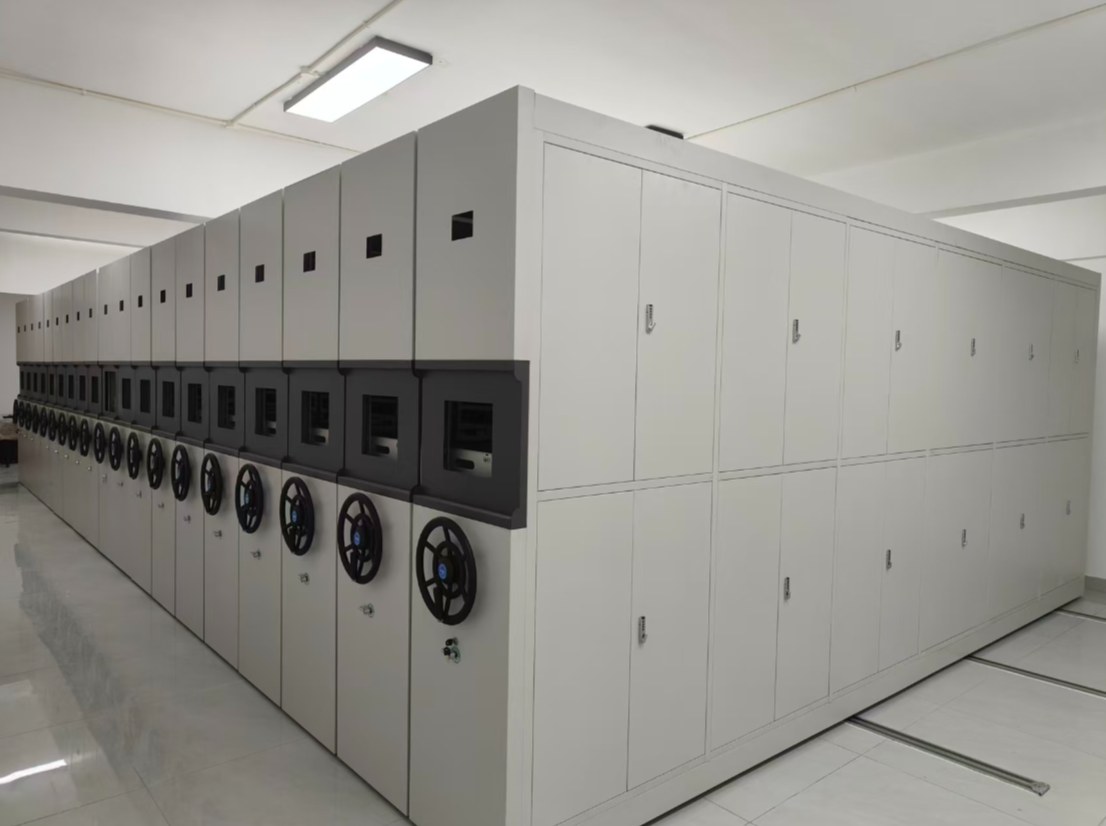
University Archives
Student records, theses and sponsored-research files zoned by retention class, with FERPA-grade access control and term-peak capacity.
Open environment →
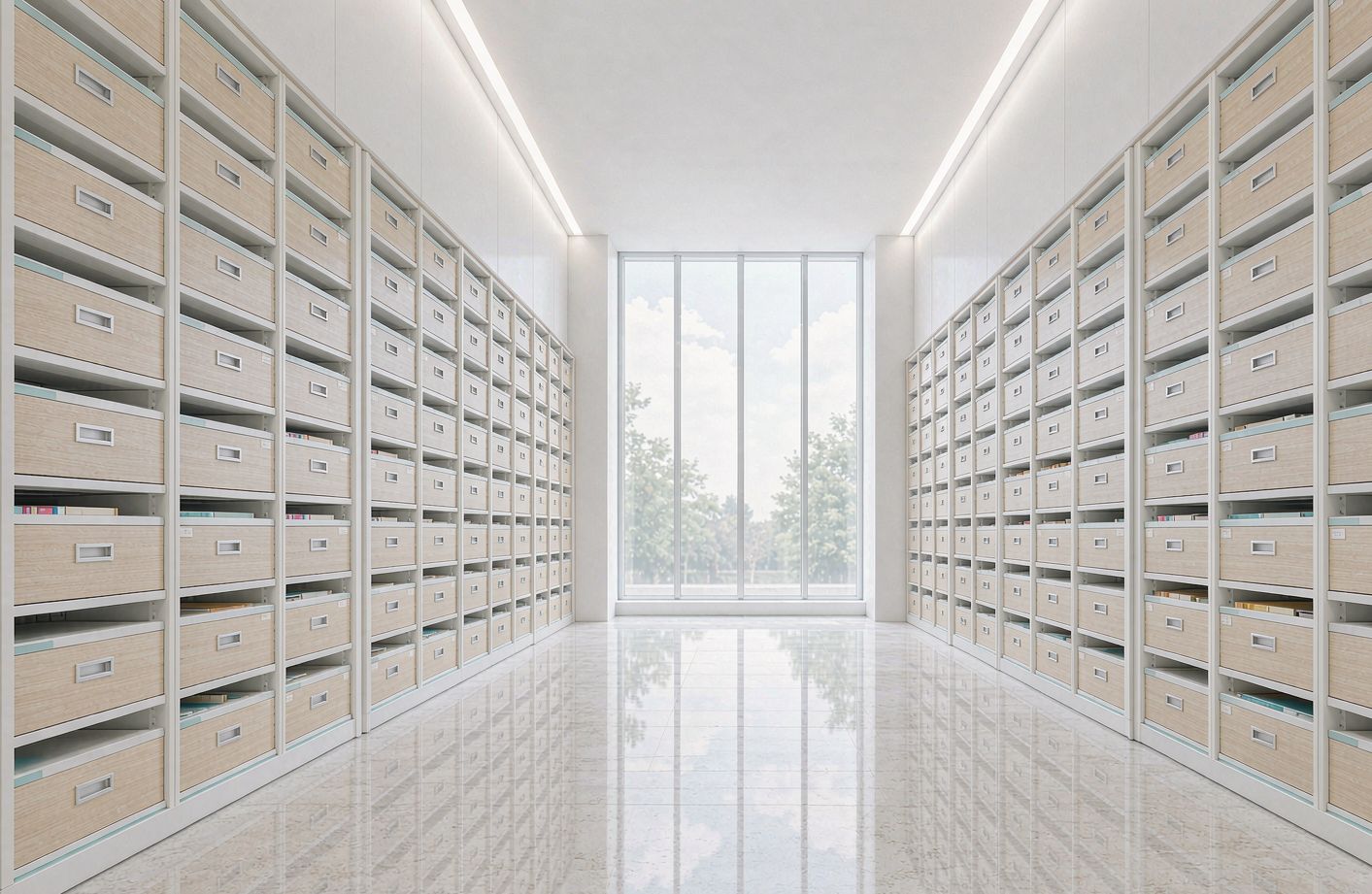
Libraries and Museums
Closed stacks and collection depots built to ISO 11799 climate targets, with plan drawers, textile trays and conservation-grade finishes.
Open environment →
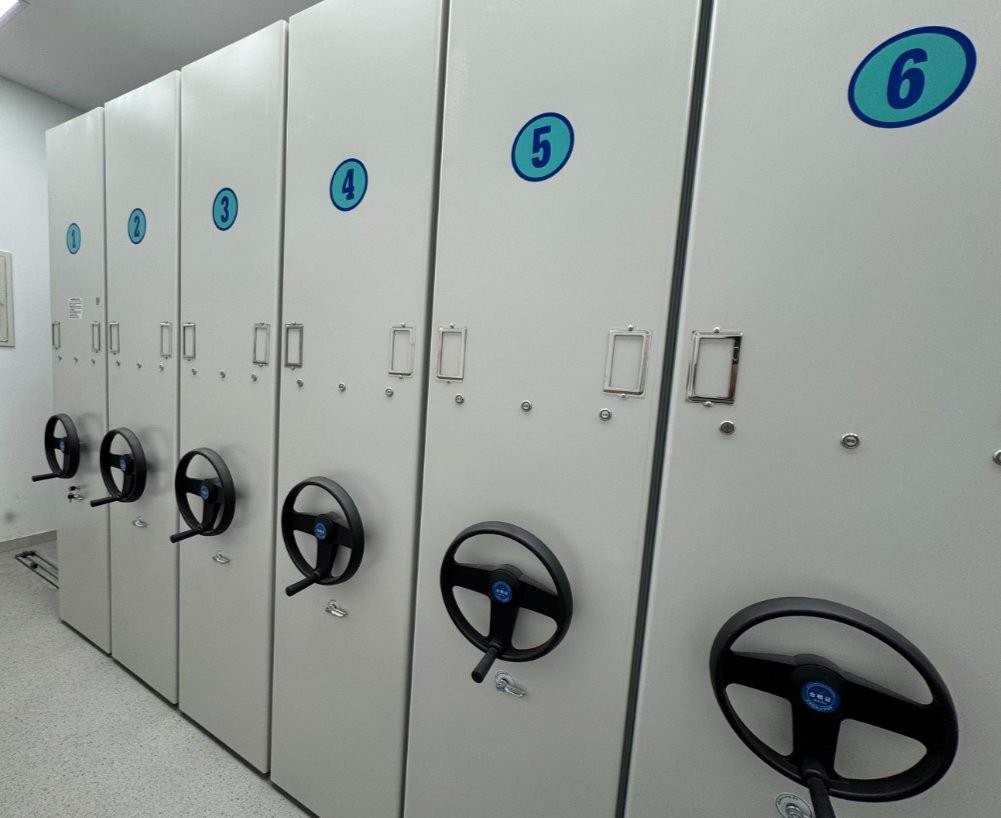
What every institutional project shares.
The standards committees ask about.
| Requirement | Reference | How the system answers it |
|---|---|---|
| Archive and library storage climate | ISO 11799 | Steel configurations compatible with 18±2°C / 50±5% RH rooms; powder-coat finishes that do not off-gas into paper collections. |
| Student record privacy | FERPA-equivalent policy | Locked ranges per office of record, system-level lock securing all carriages, optional card or keypad aisle control. |
| Structural load | Floor-load survey per project | Load calculations supplied with drawings before committee review; carriages rated for full archival box loads without deflection. |
| Safety of operators | Anti-pinch and aisle sensing | Air-limiting anti-pinch protection, safety sweeps on powered carriages and locks that hold ranges closed during access. |
| Fire strategy in dense stacks | ISO 11799 mobile-stack provisions | Compartment partitions at configured intervals and clearances kept between closed carriages for suppression penetration. |
One platform across every repository on campus.
Institutions rarely need one room solved. The registrar, the library, the museum and the hospital each need a different configuration — and each suffers when three suppliers deliver three incompatible systems.
- Same carriage platform across all four environments, configured per collection
- One installation team, one commissioning standard, one O&M file
- Shared spare parts and a single service contract across buildings
- Expansion carriages that bolt onto any existing run years later
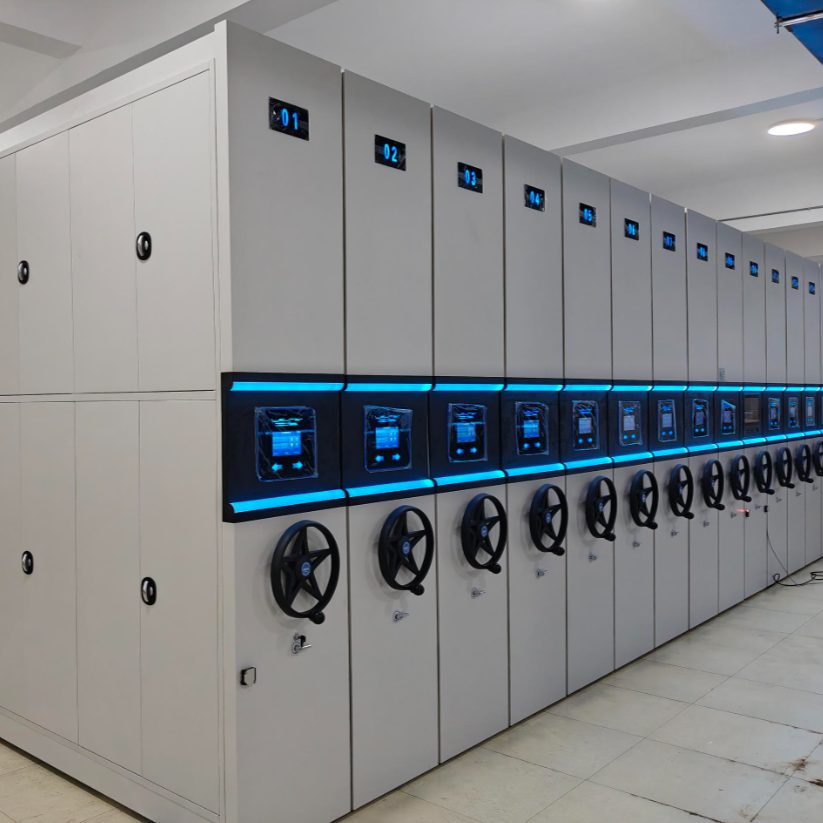
From committee approval to opening day, in five steps.
Institutional projects move at the speed of governance. The process is built around the calendar the committee actually keeps.
Collection survey
Every series counted, measured and photographed on site; growth projections agreed with the records office.
Layout & load drawings
Aisle counts, bay heights and floor loads resolved on plan before anything is priced.
Committee pack
Drawings, load calculations, standards compliance and references bound for evaluation.
Timed installation
Work sequenced around term dates; collections move bay by bay under supervised handling.
Handover file
O&M manuals, spare parts and operator training delivered; expansion points documented.
The contract after the contract.
A compact system is expected to run for decades. What matters after the invoice is the service model that keeps it running — planned, documented and predictable for the asset register.
| Commitment | What it covers | Why committees ask |
|---|---|---|
| Warranty | Carriage structure, locks and drive components under a defined warranty term per project contract. | Lifetime cost, not just purchase price. |
| Annual inspection | Scheduled check of rails, carriages, anti-pinch protection and lock function, with a written report. | Evidence for safety and audit reviews. |
| Spare-parts policy | Common parts held in stock for the installed generation, with drawings that match the original run. | No orphaned system after five years. |
| Expansion support | Bolt-on carriages and matching finishes for later budget cycles, engineered from the original drawings. | Phased funding without re-tender. |
| Operator refresher | Repeat training for new records staff as posts rotate, keeping safety and access discipline current. | Staff turnover is constant; the system must not drift. |
Service intervals and warranty terms are stated per contract; the structure of the commitment does not change between projects.
Plan the institution’s storage as one program.
Send the room list and the collection profile — we return per-environment configurations with drawings and load calculations for committee review.